

Home
Class 11
PHYSICS
A small particle of mass m is projected ...

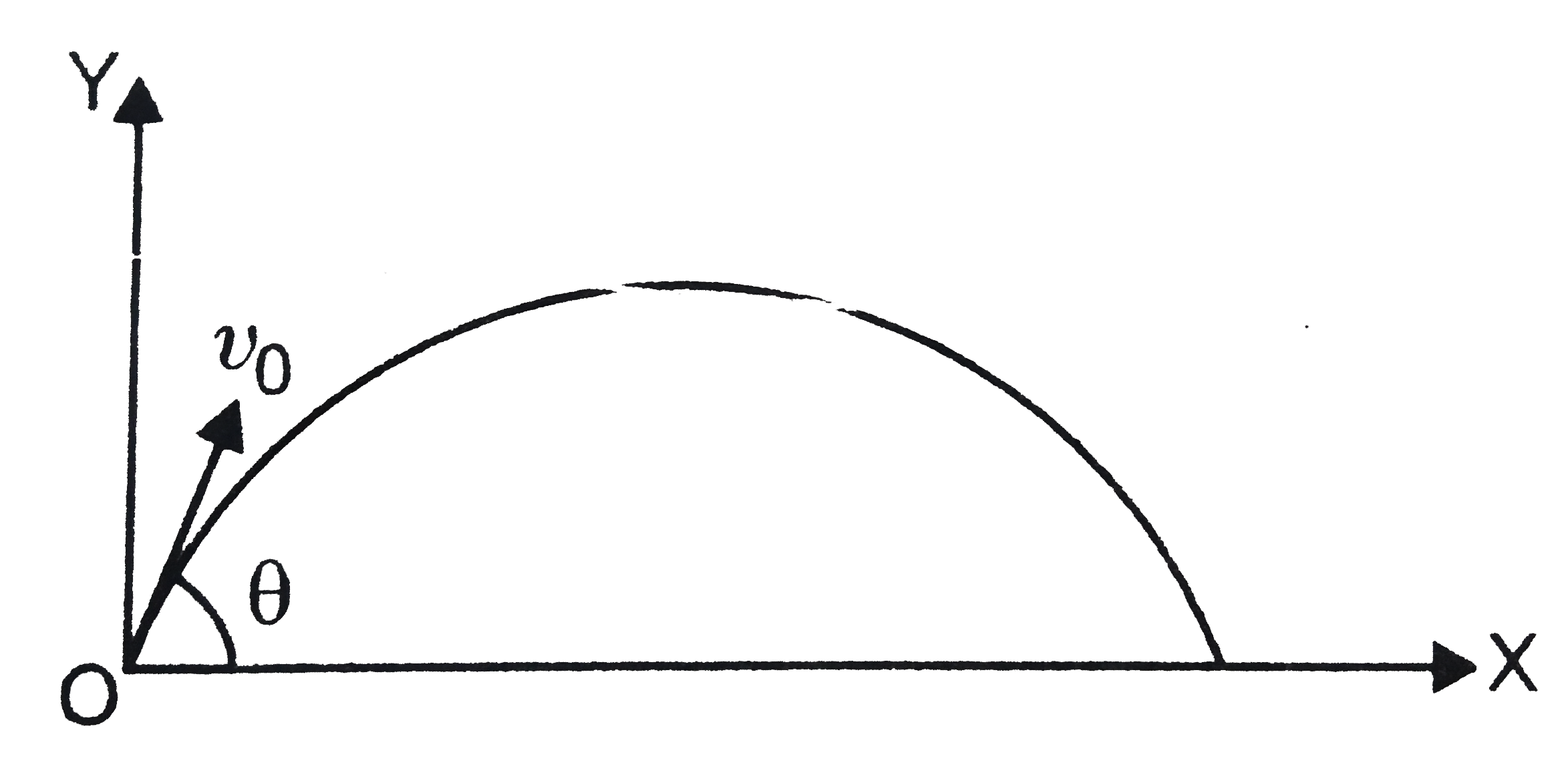
A small particle of mass `m` is projected at an angle `theta` with x-axis with initial velocity `upsilon_(0)` in x-y plane as shown in Fig. Calculate the angular momentum of the particle
at `t lt (upsilon_(0) sin theta)/(g)`.

Promotional Banner

Similar Questions

Explore conceptually related problems

A small particle of mass m is projected at an angle theta with x-axis with initial velocity upsilon_(0) in x-y plane as shown in Fig. Calculate the momentum of the particle at t lt (upsilon_(0) sin theta)/(g) .

A small particle of mass m is projected at an angle theta with the x-axis, with initial velocity v_0 in the x-y plane. Just before time (2v_0sin theta) /g , the angular momentum of the particle about the point of projection is

A small particle of mass m is projected at an angle theta with the x - axis with an initial velocity v_(0) in the x-y plane as shown in the figure . At a time t lt ( v_(0) sin theta)/(g) , the angular momentum of the particle is where hat (i) , hat (j) and hat(k) are unit vectors along x , y and z - axis respectively.

A small particle of mass m is projected at an angle theta with the x - axis with an initial velocity v_(0) in the x-y plane as shown in the figure . At a time t lt ( v_(0) sin theta)/(g) , the angular momentum of the particle is where hat (i) , hat (j) and hat(k) are unit vectors along x , y and z - axis respectively.

A small particle of mass m is projected at an angle 0 with the x- axis, with initial velocity V_0 in the x - y plane. Just before time (2V_0sin0)/g ,the angular momentum of the particle about the point of projection is

A small particle of mass on is projected with an initial velocity v at an angle 8 with x axis in X-Y plane as shown in Figure. Find the angular momentum of the particle.

A particle of mass m is projected at t=0 from the point P on the ground with speed v_(0) at an angle of theta to the horizontal. Find the magnitude and direction of the angular momentum of the particle at time t=(v_(0)sintheta)/(2g) .

If the particle of mass m is moving with constant velocity v parallel to x-axis in x-y plane as shown in (figure), Find its angular momentum with respect of origin at any time t .