

Home
Class 12
PHYSICS
A block tied between two identical sprin...

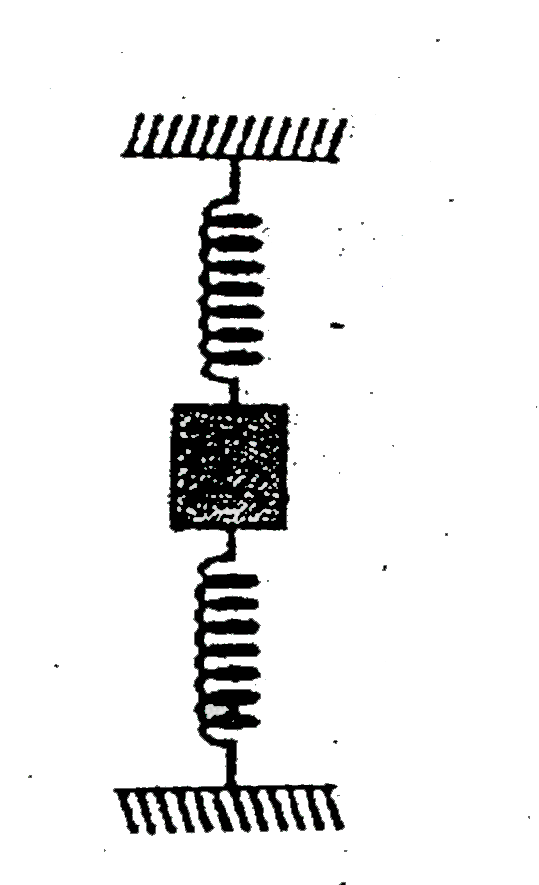
A block tied between two identical springs is in equilibrium. If upper spring is cut then the acceleration of the block just after cut is `6m//s^(2)` downwards. Now, if instead of upper spring, lower spring is being cut then the acceleration of the block just after the cut will be.

Promotional Banner

Similar Questions

Explore conceptually related problems

A block tied between identical springs is in equilibrium. If upper spring is cut, then the acceleration of the block just after cut is 5 ms^(1) Now if instead of upper string lower spring is cut, then the acceleration of the block just after the cut will be (Take g=10 m//s^(2) ).

A block tied between identical springs is in equilirium. If upper spring is cut, then the acceleration of the nlock just after cut is 5 ms^(1) Now if instead of upper string lower spring is cut, then the acceleration of the block just after the cut will be (Take g=10 m//s^(2) ).

The block shown in figure is in equilibrium cut. Find acceleration of the block just after the string is

Find the acceleration of block A immediately after the string is cut .

If the lower spring is cut, find acceleration of the blokcs, immediately after cutting the spring.

If the lower spring is cut, find acceleration of the blokcs, immediately after cutting the spring.

If the lower spring is cut, find acceleration of the blokcs, immediately after cutting the spring.

A block is attached with an ideal spring and string, and is in equilibrkum as shown in Figure. The acceleration of the block just after breaking the string is a_(1) and just after breaking the spring is a_(2) . Then

A block is attached with an ideal spring and string, and is in equilibrkum as shown in Figure. The acceleration of the block just after breaking the string is a_(1) and just after breaking the spring is a_(2) . Then

The system shown in the Fig. is in equilibrium. Find the initial acceleration of A, B and C just after the spring 2 is cut.