

Home
Class 12
PHYSICS
In the figure shown the spring is relaxe...

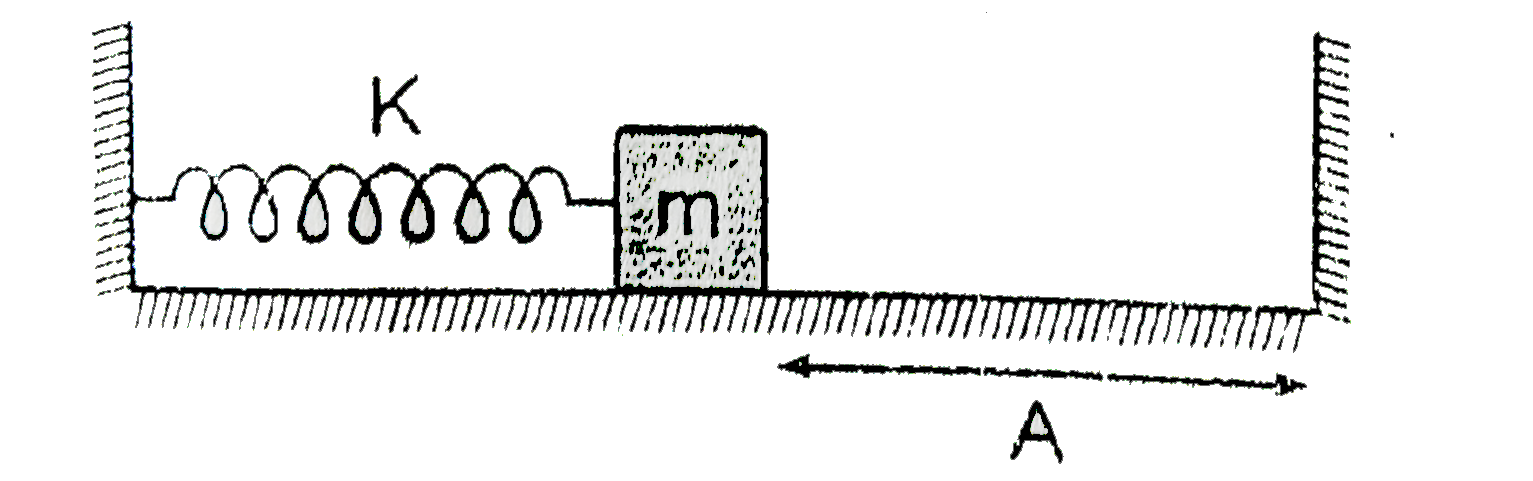
In the figure shown the spring is relaxed and mass `m` is attached to the spring. The spring is compressed by `2A` and released at `t = 0`. Mass `m` collides with the wall and loses two third of its kinetic energy and returns. Starting from `t = 0`, find the taken by it to come back to rest again (instant at which spring is given under maximum compression). Take `sqrt(m)/(k) = (12)/(pi)`

Promotional Banner

Similar Questions

Explore conceptually related problems

In the figure shown the spring is relaxed and mass m is attached to the spring. The spring is compressed by 2A and released at t = 0 . Mass m collides with the wall and loses two third of its kinetic energy and returns. Starting from t = 0 , find the time taken by it to come back to rest again (instant at which spring is given under maximum compression). Take sqrt(m)/(k) = (12)/(pi)

The block shown in figure is released from rest. Find out the speed of the block when the spring is compressed by 1 m

The spring is compressed by a distance a and released. The block again comes to rest when the spring is elongated by a distance b . During this

The spring is compressed by a distance a and released. The block again comes to rest when the spring is elongated by a distance b . During this

Find maximum compression is the spring from the given figure.

A spring is compressed by a toy cart of mass 150g. On releasing the cart, it moves with a speed of 0.2 m//s . Calculate the elastic potential energy of the spring.

For the arrangement shown in figure, the spring is initially compressed by 3 cm . When the spring is released the block collides with the wall and rebounds to compress the spring again. (a) If the coefficient of restitution is (1)/sqrt(2) , find the maximum compression in the spring after collision. (b) If the time starts at the instant when spring is released, find the minimum time after which the block becomes stationary.

For the arrangement shown in figure, the spring is initially compressed by 3 cm . When the spring is released the block collides with the wall and rebounds to compress the spring again. (a) If the coefficient of restitution is (1)/sqrt(2) , find the maximum compression in the spring after collision. (b) If the time starts at the instant when spring is released, find the minimum time after which the block becomes stationary.