Home
Class 11
CHEMISTRY
Which of the following carboxylic acid c...

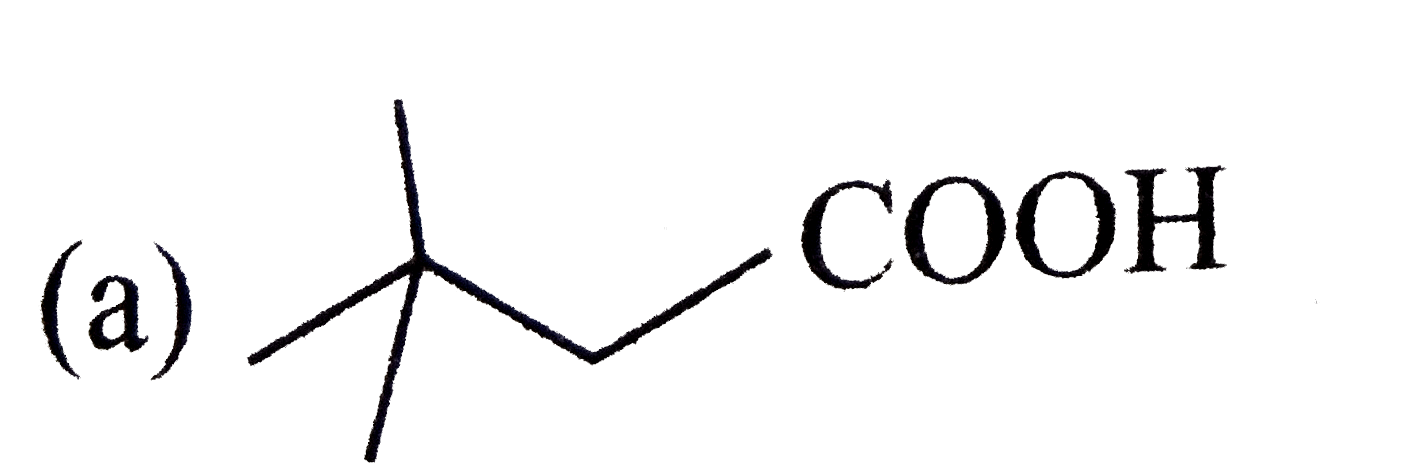
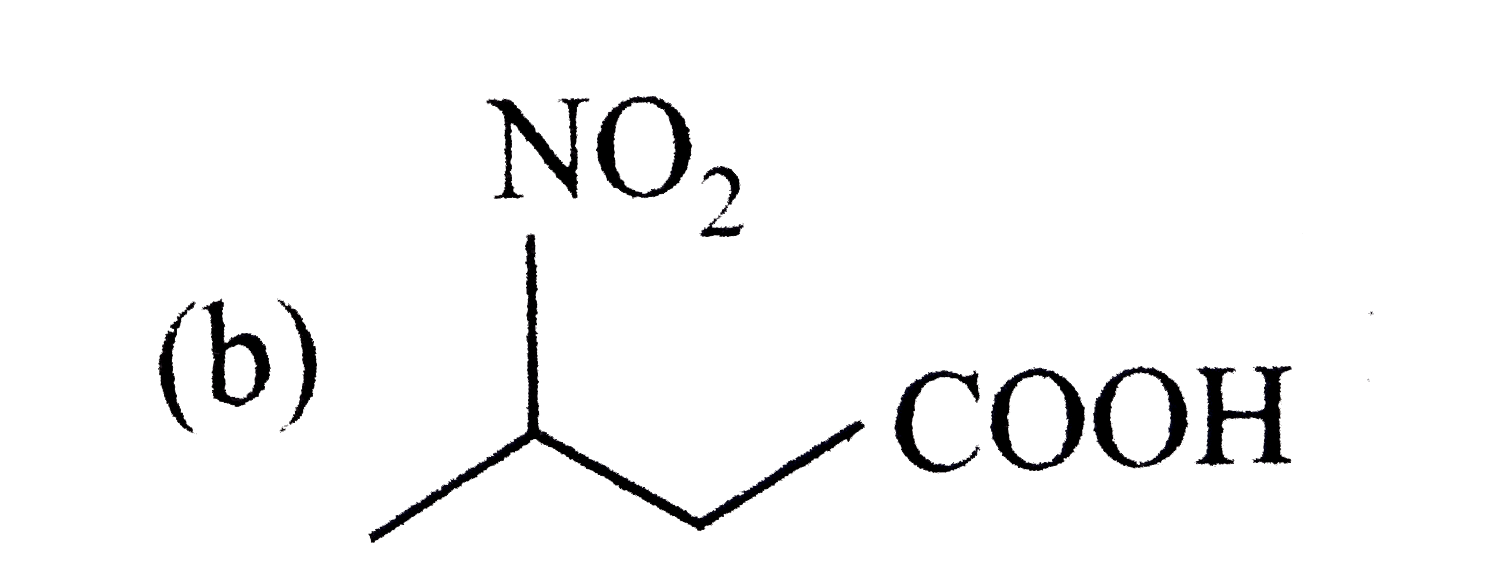
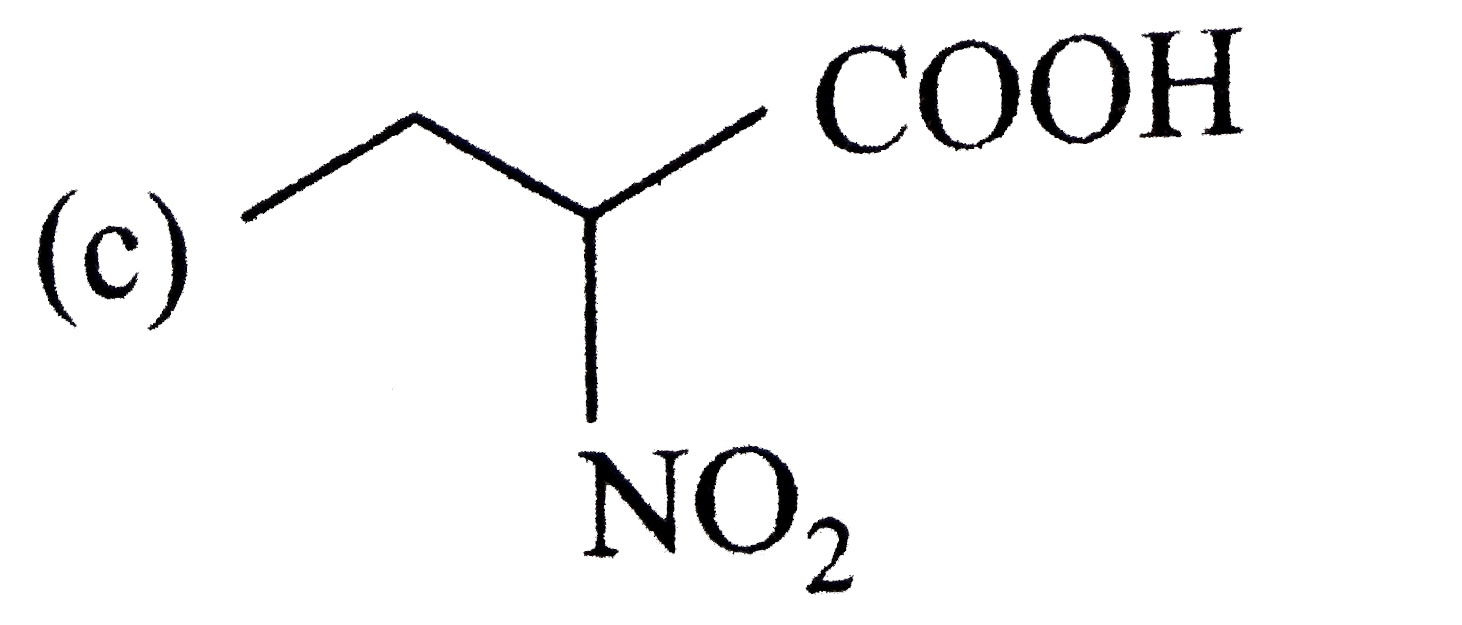
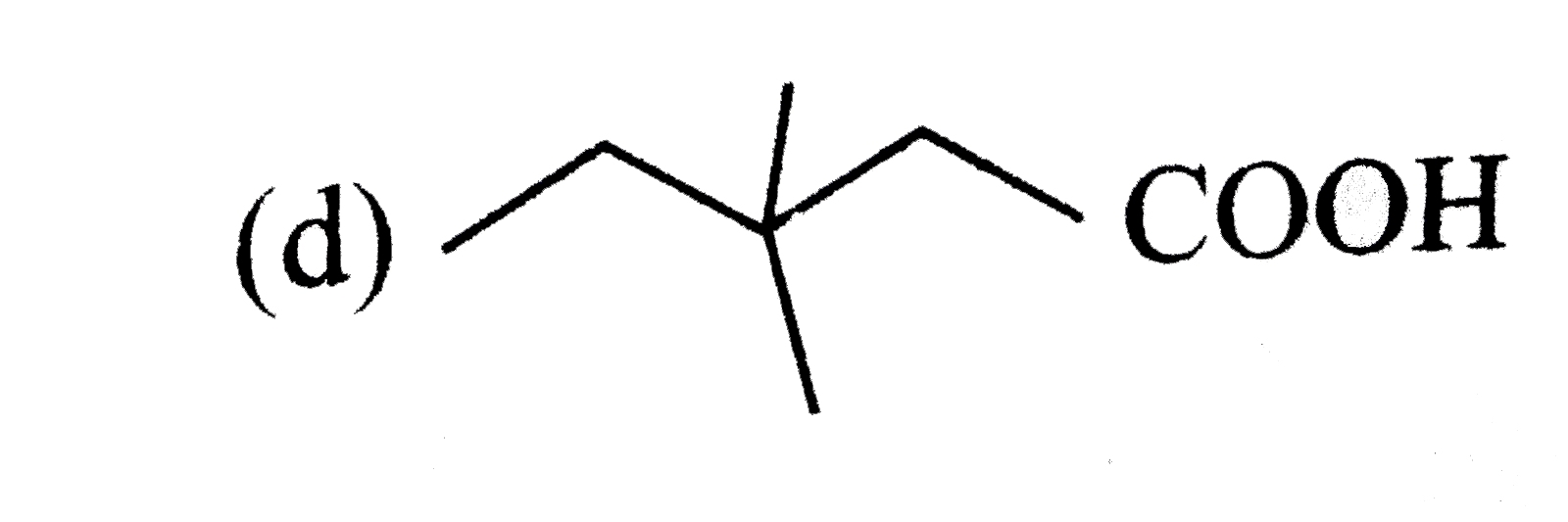
Which of the following carboxylic acid can undergo deccarboxylation on simple heating even in the absence of soda lime ?

A

B

C

D

Text Solution

AI Generated Solution

The correct Answer is:

To determine which carboxylic acid can undergo decarboxylation on simple heating without the need for soda lime, we will analyze each option provided in the question. ### Step-by-Step Solution: 1. **Understanding Decarboxylation**: Decarboxylation is a chemical reaction that involves the removal of a carboxyl group (-COOH) from a carboxylic acid, resulting in the formation of an alkane. This reaction can be facilitated by soda lime (a mixture of sodium hydroxide and calcium oxide), but some compounds can undergo decarboxylation even without it. 2. **Analyzing the Options**: - **Option A**: This carboxylic acid requires soda lime for decarboxylation. Without it, simple heating will not lead to the removal of the -COOH group. Therefore, this option is not correct. - **Option B**: Similar to Option A, this compound also requires soda lime for decarboxylation. Simple heating will not suffice to remove the -COOH group. Thus, this option is also not correct. - **Option C**: This carboxylic acid has a structure that allows for resonance stabilization. The presence of a nitro group (NO2) adjacent to the carboxyl group can facilitate the removal of the -COOH group through resonance effects. This means that upon simple heating, the -COOH group can be removed without the need for soda lime. Therefore, this option is a strong candidate for decarboxylation. - **Option D**: Similar to Options A and B, this carboxylic acid also requires soda lime for decarboxylation. Simple heating will not lead to the removal of the -COOH group. Hence, this option is not correct. 3. **Conclusion**: After analyzing all the options, we conclude that **Option C** is the only carboxylic acid that can undergo decarboxylation on simple heating even in the absence of soda lime due to the resonance stabilization provided by the adjacent nitro group. ### Final Answer: **Option C** is the correct answer. ---

To determine which carboxylic acid can undergo decarboxylation on simple heating without the need for soda lime, we will analyze each option provided in the question. ### Step-by-Step Solution: 1. **Understanding Decarboxylation**: Decarboxylation is a chemical reaction that involves the removal of a carboxyl group (-COOH) from a carboxylic acid, resulting in the formation of an alkane. This reaction can be facilitated by soda lime (a mixture of sodium hydroxide and calcium oxide), but some compounds can undergo decarboxylation even without it. 2. **Analyzing the Options**: ...
Promotional Banner

Topper's Solved these Questions

  • HYDROCARBONS

    A2Z|Exercise Chemical Properties Of Alkanes|97 Videos
  • HYDROCARBONS

    A2Z|Exercise Methods Of Preparation Of Alkanes|31 Videos
  • ENVIRONMENTAL CHEMISTRY

    A2Z|Exercise Section D - Chapter End Test|30 Videos
  • HYDROGEN

    A2Z|Exercise Section D - Chapter End Test|30 Videos

Similar Questions

Explore conceptually related problems

Which of the following carboxylic acids undergoes decarboxylation easil?

Which of the following carboxylic acids undergoes decarboxylation easily

Which of the following carboxylic acids undergoes decarboxylation easily ?

Which of the following carboxylic acids undergoes decarboxylation most easily ?

Which of the following Carboxylic acids donot undergo decarboxylation on heating?

A2Z-HYDROCARBONS-Section D - Chapter End Test
  1. Which of the following carboxylic acid can undergo deccarboxylation on...

    Text Solution

    |

  2. Anti- Markovwnikoff's addtion of HBr is not observed in

    Text Solution

    |

  3. Which of the following reactions will yield 2,2-dibromopropane ?

    Text Solution

    |

  4. The products formed by the ozonolysis - hydrolysis of compound of form...

    Text Solution

    |

  5. When acetylen reacted with hydroxylic acid in presence of HgCl(20 the ...

    Text Solution

    |

  6. When propyne reacts with aqueous H(2)SO(4) in the presence of HgSO(4)...

    Text Solution

    |

  7. Which one of the following does not dissolve in conc. H(2)SO(4)?

    Text Solution

    |

  8. Which one of the following compounds will give in the presence of pero...

    Text Solution

    |

  9. Which of the following alkene in acid catalysed hydration form 2-methy...

    Text Solution

    |

  10. Which of the following compounds yields only one product on monobromin...

    Text Solution

    |

  11. Aqueous solution of the following compounds are electrolysed . Acetyle...

    Text Solution

    |

  12. Dehydration of butan -2-ol with conc. H(2)SO(4) gives preferred produc...

    Text Solution

    |

  13. CH(3)-C-=C-CH(3)overset(NaNH(2))rarr'X'. What is X ?

    Text Solution

    |

  14. Identify the compound 'Y' in the following sequency of reaction HC-=...

    Text Solution

    |

  15. Dehydration of 1-butanol gives 2-butene as a major product , by which ...

    Text Solution

    |

  16. The prinicipal organic product formed is the reaction : CH(2)=CH(CH(...

    Text Solution

    |

  17. Which of the following decolorizes Potassium permanganate?

    Text Solution

    |

  18. CH(3)C-=C CH(3) overset((i)X) underset((ii)H(2)O //Zn)rarr X in the...

    Text Solution

    |

  19. Which of the following is Friedel - Craft's reaction

    Text Solution

    |

  20. Condition for maximum yield of C(2)H(5)Cl is

    Text Solution

    |

  21. When ethyl alcohol is heated with red phosphorus and HI, then which o...

    Text Solution

    |
