Home
Class 12
CHEMISTRY
Which is most reactive in base cataysed ...

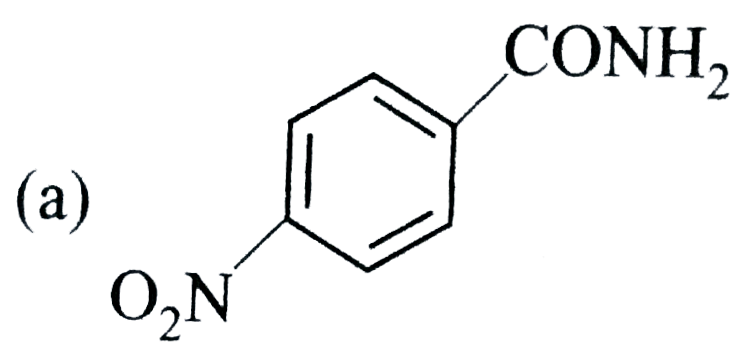
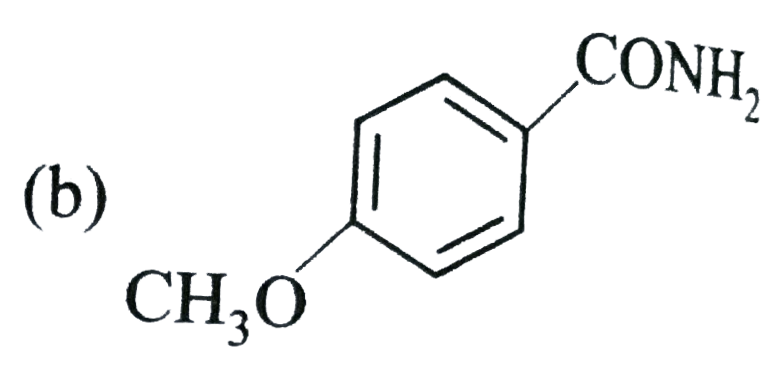
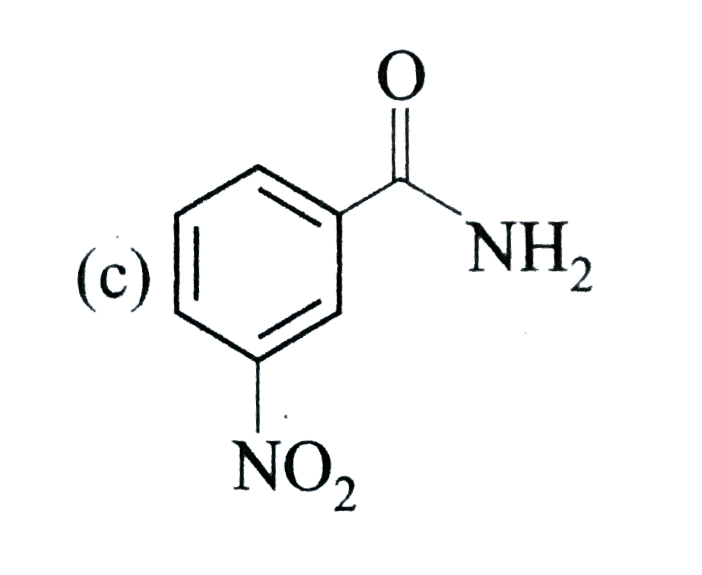
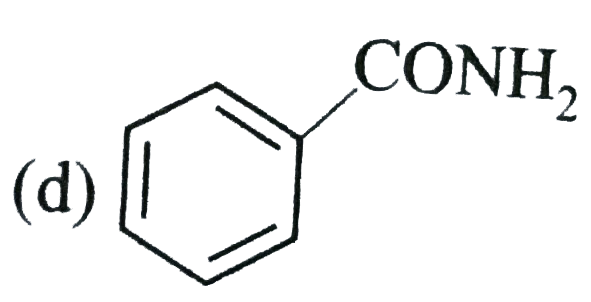
Which is most reactive in base cataysed hydroysis reaction?

A

B

C

D

Text Solution

AI Generated Solution

The correct Answer is:

To determine which compound is the most reactive in a base-catalyzed hydrolysis reaction, we need to analyze the reactivity of the four amides based on the presence of electron-withdrawing and electron-donating groups. ### Step-by-Step Solution: 1. **Identify the Compounds**: We have four amides to consider: - **Compound A**: Benzamide with a nitro group (NO2) - **Compound B**: Benzamide with a methoxy group (OCH3) - **Compound C**: Benzamide with a meta-substituted group - **Compound D**: Simple benzamide without any substituents 2. **Understand the Role of Electron-Withdrawing and Electron-Donating Groups**: - Electron-withdrawing groups (EWGs) increase the reactivity of the amide by stabilizing the negative charge that develops during the hydrolysis reaction. - Electron-donating groups (EDGs) decrease the reactivity of the amide by destabilizing the negative charge. 3. **Analyze Each Compound**: - **Compound A (NO2)**: The nitro group is a strong electron-withdrawing group (both -I and -R effects). This will significantly enhance the reactivity of the amide. - **Compound B (OCH3)**: The methoxy group is an electron-donating group (+R effect) and has a weak -I effect. This will decrease the reactivity of the amide. - **Compound C**: The meta-substituted group is less effective than the para or ortho positions for resonance but may have some -I effect depending on the specific group. - **Compound D**: This compound has no substituents, making it less reactive compared to compound A. 4. **Determine the Order of Reactivity**: Based on the analysis, the order of reactivity in base-catalyzed hydrolysis is influenced by the strength of the electron-withdrawing groups: - **Most Reactive**: Compound A (with NO2) - **Less Reactive**: Compound C (depending on the specific group) - **Even Less Reactive**: Compound D (no substituents) - **Least Reactive**: Compound B (with OCH3) 5. **Conclusion**: Therefore, the most reactive compound in base-catalyzed hydrolysis is **Compound A** (the one with the nitro group).

To determine which compound is the most reactive in a base-catalyzed hydrolysis reaction, we need to analyze the reactivity of the four amides based on the presence of electron-withdrawing and electron-donating groups. ### Step-by-Step Solution: 1. **Identify the Compounds**: We have four amides to consider: - **Compound A**: Benzamide with a nitro group (NO2) - **Compound B**: Benzamide with a methoxy group (OCH3) ...
Promotional Banner

Topper's Solved these Questions

  • ALDEHYDES, KETONES AND CARBOXYLIC ACID

    A2Z|Exercise Section A (Topicwise question|3 Videos
  • ALDEHYDES, KETONES AND CARBOXYLIC ACID

    A2Z|Exercise Section B - Assertion Reasoning|33 Videos
  • ALDEHYDES, KETONES AND CARBOXYLIC ACID

    A2Z|Exercise Carboxylic Acid|59 Videos
  • ALCOHOLS, PHENOLS AND ETHERS

    A2Z|Exercise Section D - Chapter End Test|30 Videos
  • BIOMOLECULES

    A2Z|Exercise Section D - Chapter End Test|30 Videos

Similar Questions

Explore conceptually related problems

Which is most reactive metal

Which is the most reactive metal ?

Which is most reactive acid derivatives?

Which metal is the most reactive?

Which is most reactive of the following ?

Which is most reactive towards nucleophilic addition reactions?

A2Z-ALDEHYDES, KETONES AND CARBOXYLIC ACID-Derivatives Of Carboxylic Acid
  1. Which of the following ester is most likely to undergo unimolecular ac...

    Text Solution

    |

  2. What is formed as the major organic product in the reaction? CH(3)CH...

    Text Solution

    |

  3. Which is most reactive in base cataysed hydroysis reaction?

    Text Solution

    |

  4. Name the end product in the following series of reaction CH(3)COOH o...

    Text Solution

    |

  5. Which reaction given a polymeric amide?

    Text Solution

    |

  6. Benzoyl chloride is prepared from benzoic acid by :

    Text Solution

    |

  7. Ethyl ester overset(MeMgBr) underset(excess)rarr P. The product P will...

    Text Solution

    |

  8. In the reaction the structure of the product T is:

    Text Solution

    |

  9. The compound P, Q and S were separtely subjected to nitration usi...

    Text Solution

    |

  10. The order of decreasing raye of reaction with ammount is

    Text Solution

    |

  11. CH(3)COOCH(3) + "excess" PhMgBr rarr "product" overset (H^(+)) to X Th...

    Text Solution

    |

  12. When acetamide is treated with NaOBr, the product formed is

    Text Solution

    |

  13. Saponification of ethyl benzoate with saustic soda as alkali gives

    Text Solution

    |

  14. Acetyl chloride is reduced with LiAIH(4) the product formed is

    Text Solution

    |

  15. In the preparation of an ester, the commonly used dehydrating agent is

    Text Solution

    |

  16. Acetamid reacts with P(2)O(5) (phosphorus pontoxide) to give

    Text Solution

    |

  17. Acetamid is

    Text Solution

    |

  18. Acetic anhydride reacts with diethyl other in presence of anhydrous AI...

    Text Solution

    |

  19. The regent which does not give acid chloride on treating with a carbox...

    Text Solution

    |

  20. An oganic compound is boiled with alcoholic potash. The product is coo...

    Text Solution

    |
