Home
Class 12
CHEMISTRY
Give decreasing order of the following t...

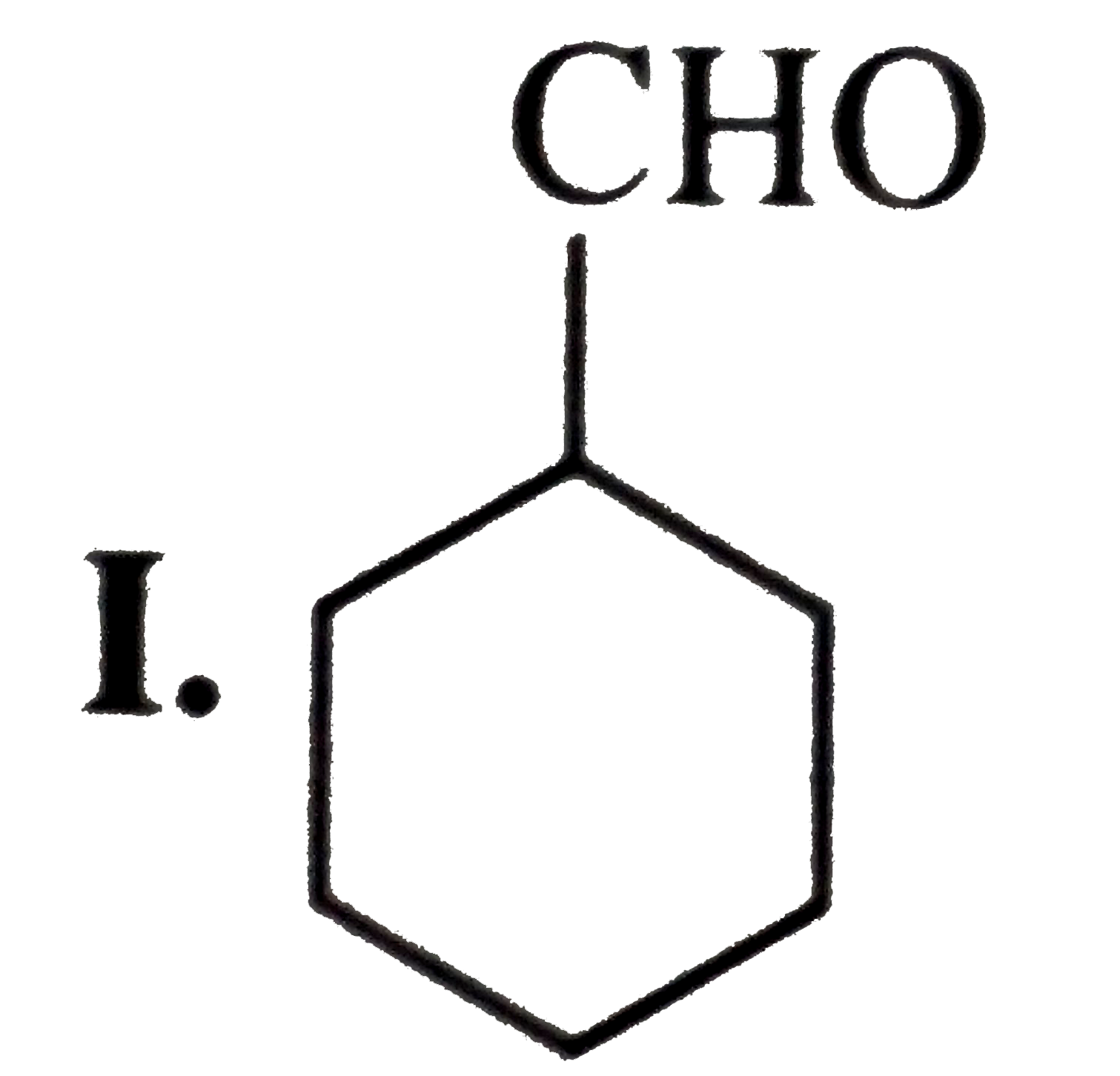
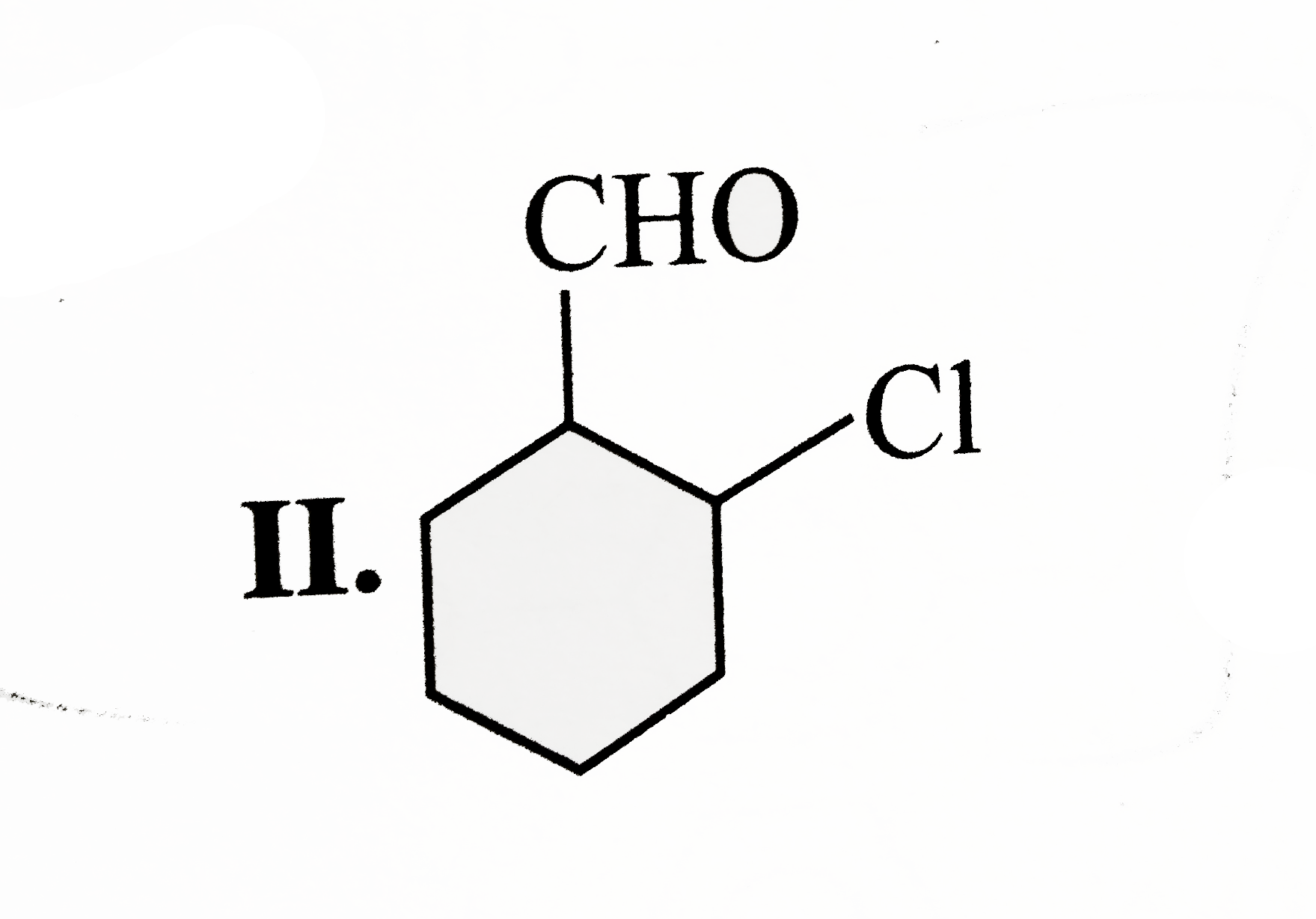
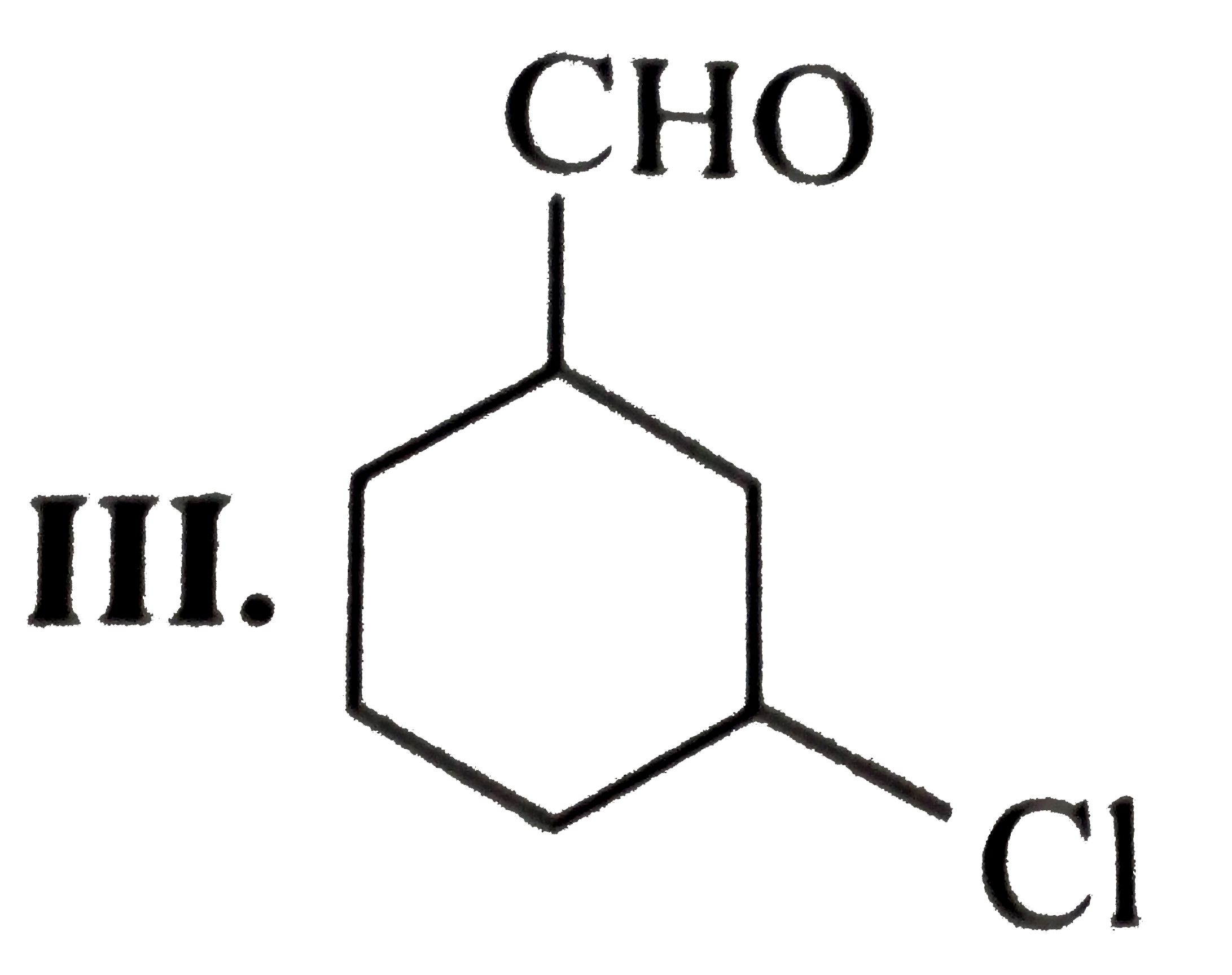
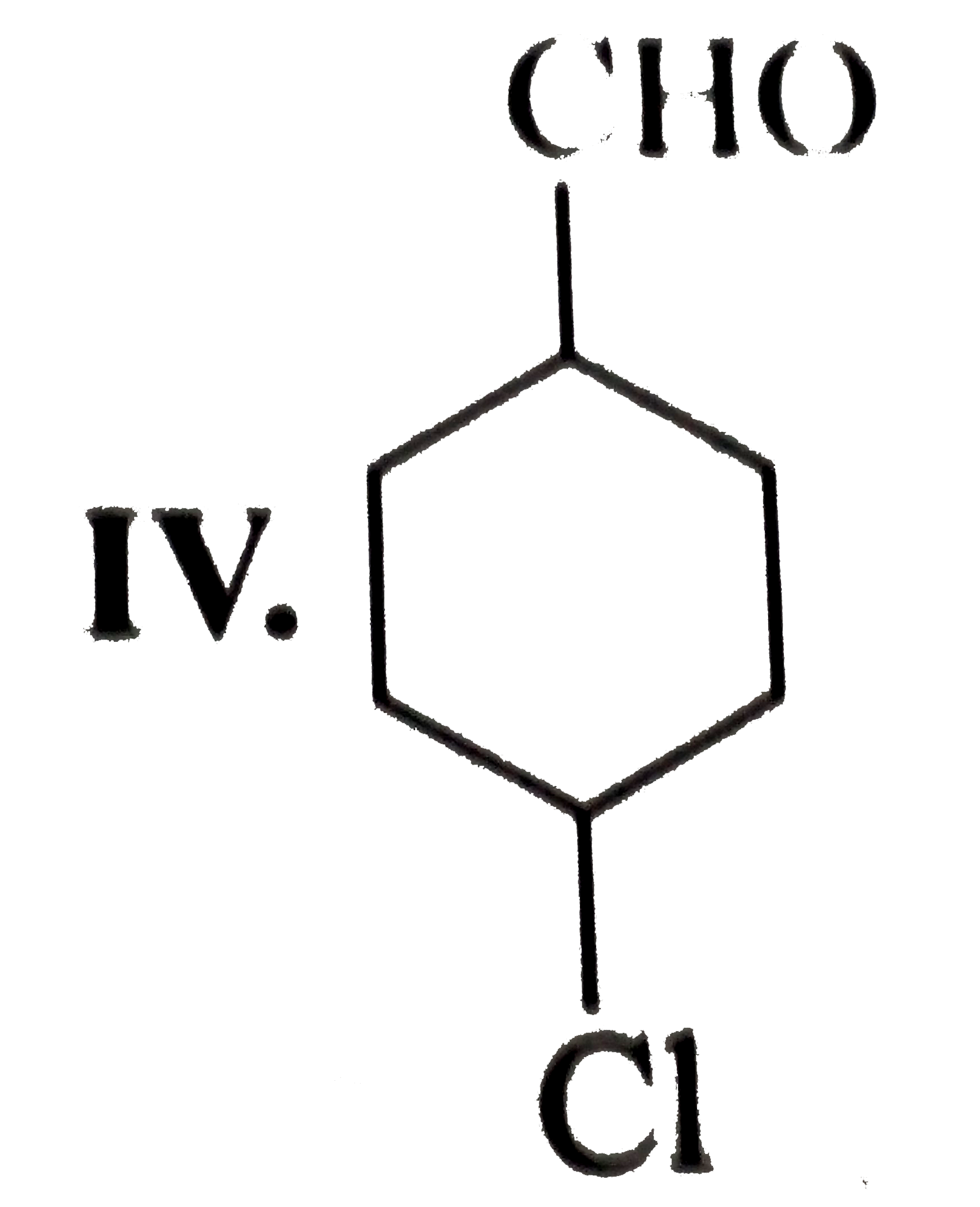
Give decreasing order of the following towards NA reaction.
I. II.
III. IV.

A

(I) gt (II) gt (III) gt (IV)

B

(IV) gt (III) gt (II) gt (I)

C

(II) gt (III) gt (IV) gt (I)

D

(I) gt (IV) gt (III) gt (II)

Text Solution

Verified by Experts

The correct Answer is:

C

All are aldehydes `-1` effect of `CI at C-2 gt at C-3 gt at C - 4` more the `-1` effect , more rective is the tedency of aldhyde towards `NA`reaction `[(II)gt (III) gt (III) gt (IV)gt (I)]`.
Promotional Banner

Topper's Solved these Questions

  • ALDEHYDES, KETONES AND CARBOXYLIC ACID

    A2Z|Exercise Assertion-Reasoning Questions|7 Videos
  • ALCOHOLS, PHENOLS AND ETHERS

    A2Z|Exercise Section D - Chapter End Test|30 Videos
  • BIOMOLECULES

    A2Z|Exercise Section D - Chapter End Test|30 Videos

Similar Questions

Explore conceptually related problems

The order of reactivity of the following alcohols towards conc. HCI is I. II. III. IV.

Arrange the following in the decreasing order of their melting points: I. Decane II. Nonane III. Octane IV. Heptane

The decreasing order of priority for the following functional group is I. C -= N II. -CONH_(2) III. IV -CHO

Give the reactivity in the decreasing order of the following alkynes towards nucleophilic addition reaction with MeO^(Θ)//MeOH . (I) (II) Me--=-Me (III) Me--=-H (IV) H--=-H

The decreasing order of -I effect of the following is : (I) COOH (II) F (III) OR (IV) NH_2 (V) OH (IV) Ph- .

Give the decreasing order of the following in the extent of hydration or towards NA (nucleophilic addition) reaction. I. , II. III. , IV.

Predict the order of reactivity of following compounds in dehydrohalogenation. a. I. II. III. IV. V. b. I. II. III. IV.

The decreasing order of priority of the following functional group is: I. -COOH II. -SO_(3) H III. -COOR IV. -COCl

The decreasing order of acidic character of the following is: (I) (II) (III) (IV)

A2Z-ALDEHYDES, KETONES AND CARBOXYLIC ACID-Section D - Chapter End Test
  1. (CH(3))(2) CHOH overset ("Mild") underset ("oxidation"[0]) to (X) over...

    Text Solution

    |

  2. The chemical reaction of acetaldehyde and ammonia results in:

    Text Solution

    |

  3. When diethyl cadmium [(C(2)H(5))(2)Cd] is treated with acetyl chloride...

    Text Solution

    |

  4. The product formed by the reaction of acetaldehyde with excess of etha...

    Text Solution

    |

  5. Which of the following will not be formed when calcium formate is dist...

    Text Solution

    |

  6. In order to prepare acetone from acetyl chloride in one step, which of...

    Text Solution

    |

  7. Which of the following reagents can help in separating a mixture of ac...

    Text Solution

    |

  8. The reagents used to convert

    Text Solution

    |

  9. Which of the following is the stronger acid?

    Text Solution

    |

  10. Of the following which compound is an acetal ?

    Text Solution

    |

  11. Which reagent can distinguish between pentanoic acid and pentanamide ?

    Text Solution

    |

  12. The major product of the reaction is:

    Text Solution

    |

  13. Which Hatom in the following ester is most acidic?

    Text Solution

    |

  14. Give decreasing order of the following towards NA reaction. I. I...

    Text Solution

    |

  15. Which of the following is the best method for the synthesis of ester (...

    Text Solution

    |

  16. How will you distinguish the products proucts obtained by acidic hydro...

    Text Solution

    |

  17. underset((A)) (PhCONH2) underset(KOBr)rarr (B) underset(MeOH)rarr (C) ...

    Text Solution

    |

  18. beta-Hydroxy propanoic acid on heating gives acrylic acid. Acrylic a...

    Text Solution

    |

  19. Both HCOOH (I) and CH3 COOH (II) give precipitate with aqueous AgNO3 s...

    Text Solution

    |

  20. Acetic acid on reaction with hydrazoic acid (N3 H) in the presence of ...

    Text Solution

    |
