Home
Class 12
CHEMISTRY
The most unlikely representation of reso...

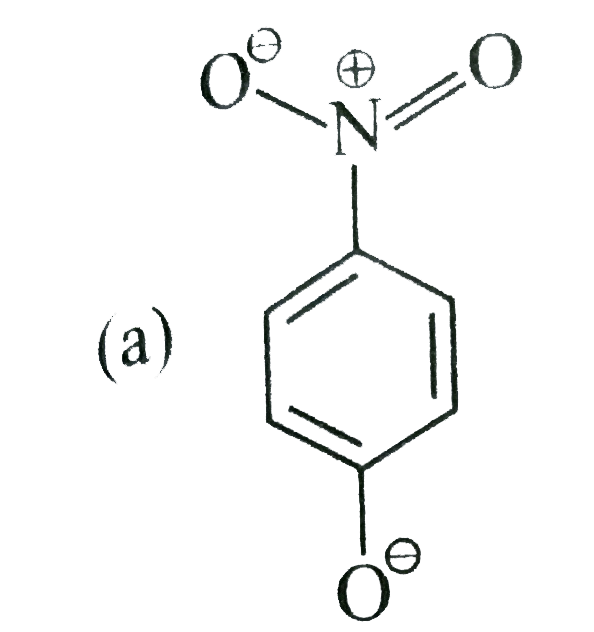
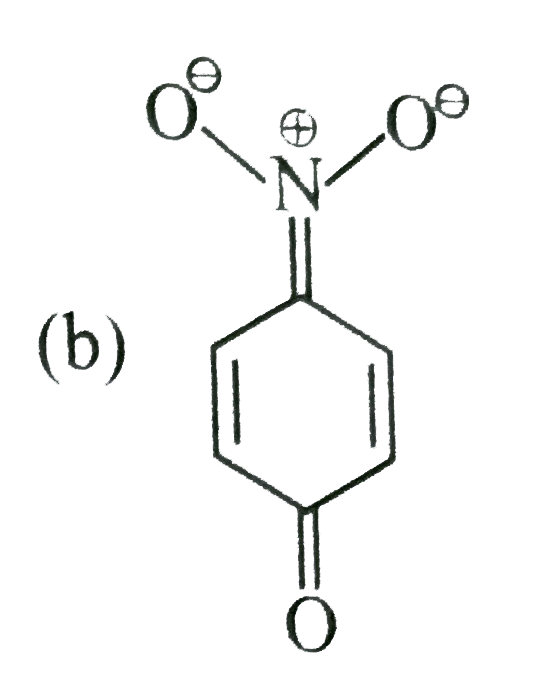
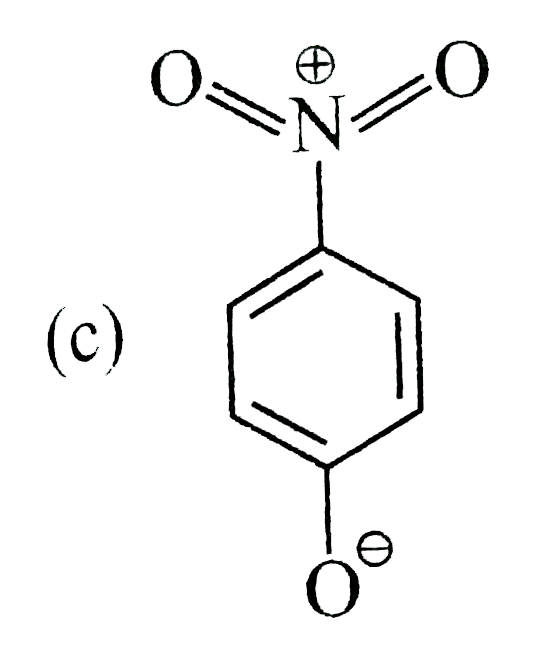
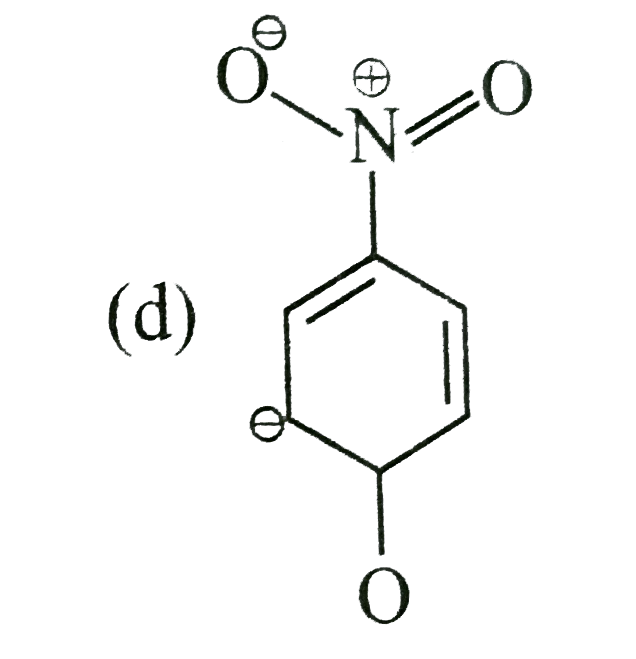
The most unlikely representation of resonance structures of p-nitrophenoxide ion is:

A

B

C

D

Text Solution

AI Generated Solution

The correct Answer is:

To determine the most unlikely representation of resonance structures for the p-nitrophenoxide ion, we need to analyze the possible resonance structures that can be drawn for this ion. Here’s a step-by-step solution: ### Step 1: Understand the Structure of p-Nitrophenoxide Ion The p-nitrophenoxide ion is derived from phenol by the substitution of a nitro group (-NO2) at the para position and the deprotonation of the hydroxyl group (-OH) to form the phenoxide ion. The structure can be represented as follows: - A benzene ring with a -NO2 group at the para position and a negatively charged oxygen atom. ### Step 2: Draw Possible Resonance Structures Resonance structures are different ways of drawing the same molecule that show the delocalization of electrons. For the p-nitrophenoxide ion, we can draw several resonance structures: 1. **Structure 1**: The negative charge on the oxygen atom, with the nitro group maintaining its structure. 2. **Structure 2**: The negative charge can be delocalized to the ortho position of the benzene ring. 3. **Structure 3**: The nitro group can also participate in resonance, where the oxygen of the nitro group can have a positive charge, and the negative charge can be on the benzene ring. 4. **Structure 4**: A structure where the nitro group has a positive charge and the negative charge is on the adjacent carbon of the benzene ring. ### Step 3: Identify the Most Unlikely Resonance Structure Among the structures drawn, the most unlikely resonance structure would be one that violates the octet rule or has an unfavorable charge distribution. For example, if we draw a structure where both the nitro group and the oxygen have positive charges, this would be highly unfavorable due to the repulsion between like charges and the violation of the octet rule. ### Conclusion The most unlikely representation of resonance structures for the p-nitrophenoxide ion is the one where both the nitro group and the oxygen atom carry a positive charge. ---

To determine the most unlikely representation of resonance structures for the p-nitrophenoxide ion, we need to analyze the possible resonance structures that can be drawn for this ion. Here’s a step-by-step solution: ### Step 1: Understand the Structure of p-Nitrophenoxide Ion The p-nitrophenoxide ion is derived from phenol by the substitution of a nitro group (-NO2) at the para position and the deprotonation of the hydroxyl group (-OH) to form the phenoxide ion. The structure can be represented as follows: - A benzene ring with a -NO2 group at the para position and a negatively charged oxygen atom. ### Step 2: Draw Possible Resonance Structures Resonance structures are different ways of drawing the same molecule that show the delocalization of electrons. For the p-nitrophenoxide ion, we can draw several resonance structures: ...
Promotional Banner

Topper's Solved these Questions

  • ORGANIC COMPOUNDS CONTAINING NITROGEN

    A2Z|Exercise Section B - Assertion Reasoning|11 Videos
  • ORGANIC COMPOUNDS CONTAINING NITROGEN

    A2Z|Exercise AIPMT/NEET Questions|26 Videos
  • ORGANIC COMPOUNDS CONTAINING NITROGEN

    A2Z|Exercise Aromatic Amines And Diazonium Salts|61 Videos
  • ORGANIC COMPOUNDS CONTAINING HALOGENS

    A2Z|Exercise Section D - Chapter End Test|30 Videos
  • P BLOCK ELEMENTS ( GROUP 15,16,17,18)

    A2Z|Exercise Section D - Chapter End Test|30 Videos

Similar Questions

Explore conceptually related problems

The most unlikely representation of resonance structure of p-nitrophenoxide ion is:

The most unlikely representation of resonance structure of p -nitrophenoxide ion is:

The most unlikely representation of resonance structure of p-nitrophenoxide is :

The most likely representation of resonance structure of p-nitrophenoxide is :

The most unlikely resonating structures of pnitrophenoxide ion is :

The pair represention valid resonating structure is

A2Z-ORGANIC COMPOUNDS CONTAINING NITROGEN-Nitrocyanide And Isocyanides
  1. In the reduction of nitrobenzene, which of the following is the interm...

    Text Solution

    |

  2. In the reaction CH3CN+CH3MgIrarrAoverset((H2O)/(H^(+)))toB The compo...

    Text Solution

    |

  3. Aniline when treated with conc. HNO3 gives

    Text Solution

    |

  4. p-Nitrobromobenzene can be converted to p-nitroaniline by using NaNH2....

    Text Solution

    |

  5. The mojor product (70% to 80%) of the reaction between m-dinitrobenzen...

    Text Solution

    |

  6. The most unlikely representation of resonance structures of p-nitrophe...

    Text Solution

    |

  7. What is formed, when nitrobenzene is reduced using zinc and alkali?

    Text Solution

    |

  8. Decreasing order basicity is (1) CH3CONH2 (2) CH3CH2NH2 (3) Ph-C...

    Text Solution

    |

  9. Nitrobenzene on further excessive nitration gives

    Text Solution

    |

  10. Hydrolysisi of acetonitrile in acidic medium produces

    Text Solution

    |

  11. Product A in above reaction is :

    Text Solution

    |

  12. Product obtained by electrolytic reduction of nitrobenzene in presence...

    Text Solution

    |

  13. A nitrogen containing organic compound gave an oily liqid on heating w...

    Text Solution

    |

  14. in the reaction CH3CH+2Hunderset(Ether)overset(HCl)toXunderset(H2O)o...

    Text Solution

    |

  15. The following reaction is:

    Text Solution

    |

  16. Benzamide on reaction with POCl3 gives

    Text Solution

    |

  17. Nitrobenzene can be prepared from benzene by using a mixture of conc. ...

    Text Solution

    |

  18. The major product obtained when (Be2)/(Fe) is treated with

    Text Solution

    |

  19. In the following reactions, the major product W is:

    Text Solution

    |

  20. Presence of a nitro group in a benzene ring.

    Text Solution

    |
