

Home
Class 12
PHYSICS
Two particles of mass 2m and m moving wi...

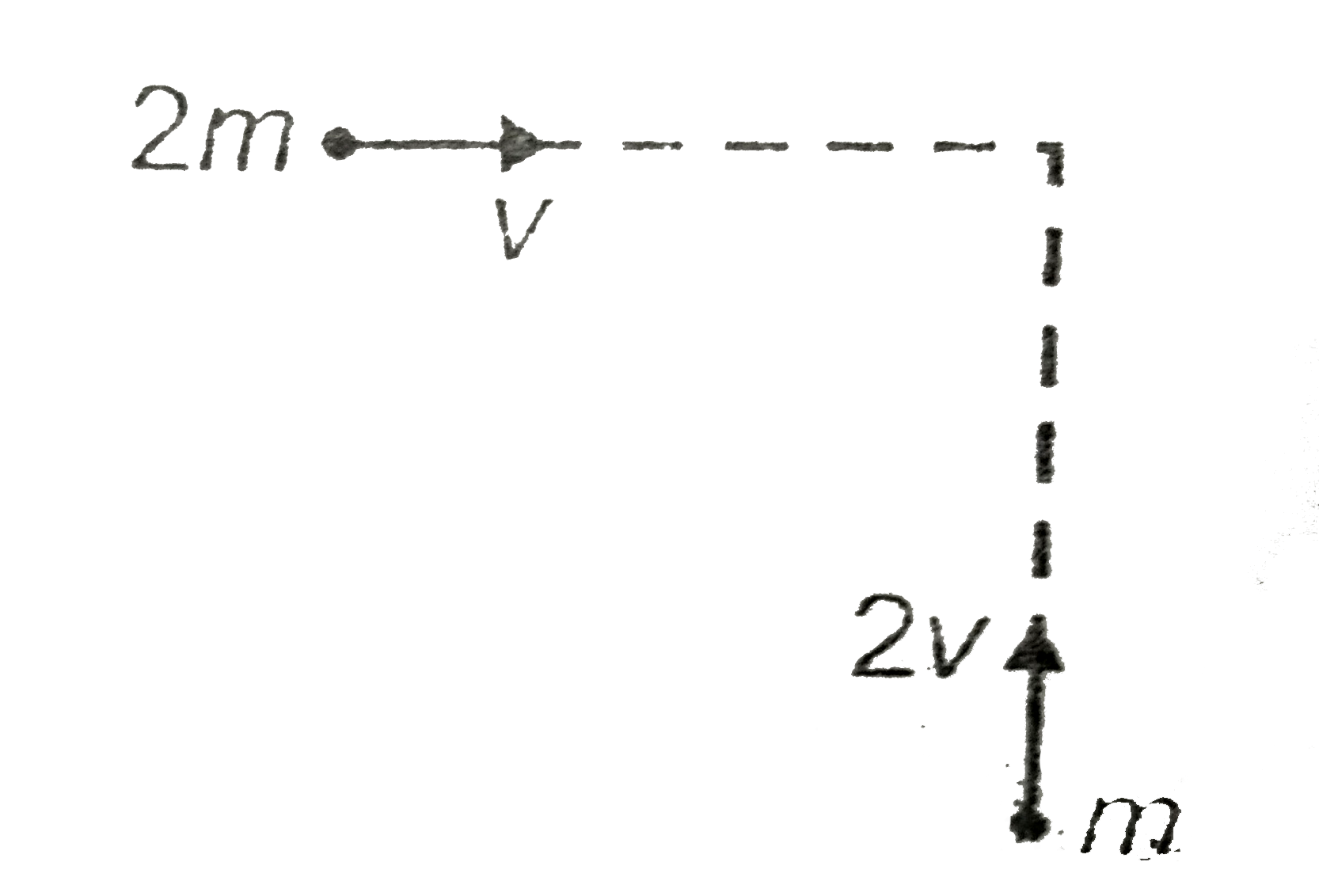
Two particles of mass `2m` and `m` moving with speed `v` and `2v` respectively pependicular to each other collides perfectly inelastically, then

Loss in kinetic energy of the system

Promotional Banner

Similar Questions

Explore conceptually related problems

Two particles of mass 2m and m moving with speed v and 2v respectively perpendicular to each other collides perfectly inelastically, then Loss in kinetic energy of the system

Two particles of mass 2m and m moving with speed v and 2v respectively pependicular to each other collides perfectly inelastically, then Speed of the particles after collision

Two particles of mass 2m and m moving with speed v and 2v respectively pependicular to each other collides perfectly inelastically, then Speed of the particles after collision

Two particles of mass 2m and m moving with speed v and 2v respectively pependicular to each other collides perfectly inelastically, then Find the angle with the horizontal to which the particles move after collision.

Two particles of mass 2m and m moving with speed v and 2v respectively pependicular to each other collides perfectly inelastically, then Find the angle with the horizontal to which the particles move after collision.

Two particles of equal mass m are moving with velocities vhati and v((hati+hatj)/(2)) respectively. If the particles collide completely inelastically, then the energy lost in the process is

Two particles of equal mass m are moving with velocities vhati and v((hati+hatj)/(2)) respectively. If the particles collide completely inelastically, then the energy lost in the process is

Two identical balls each moving with speed v at right angle to each other collide perfectly inelastically. Their speed after collision is

Two identical balls each moving with speed v at right angle to each other collide perfectly inelastically. Their speed after collision is