

Home
Class 11
PHYSICS
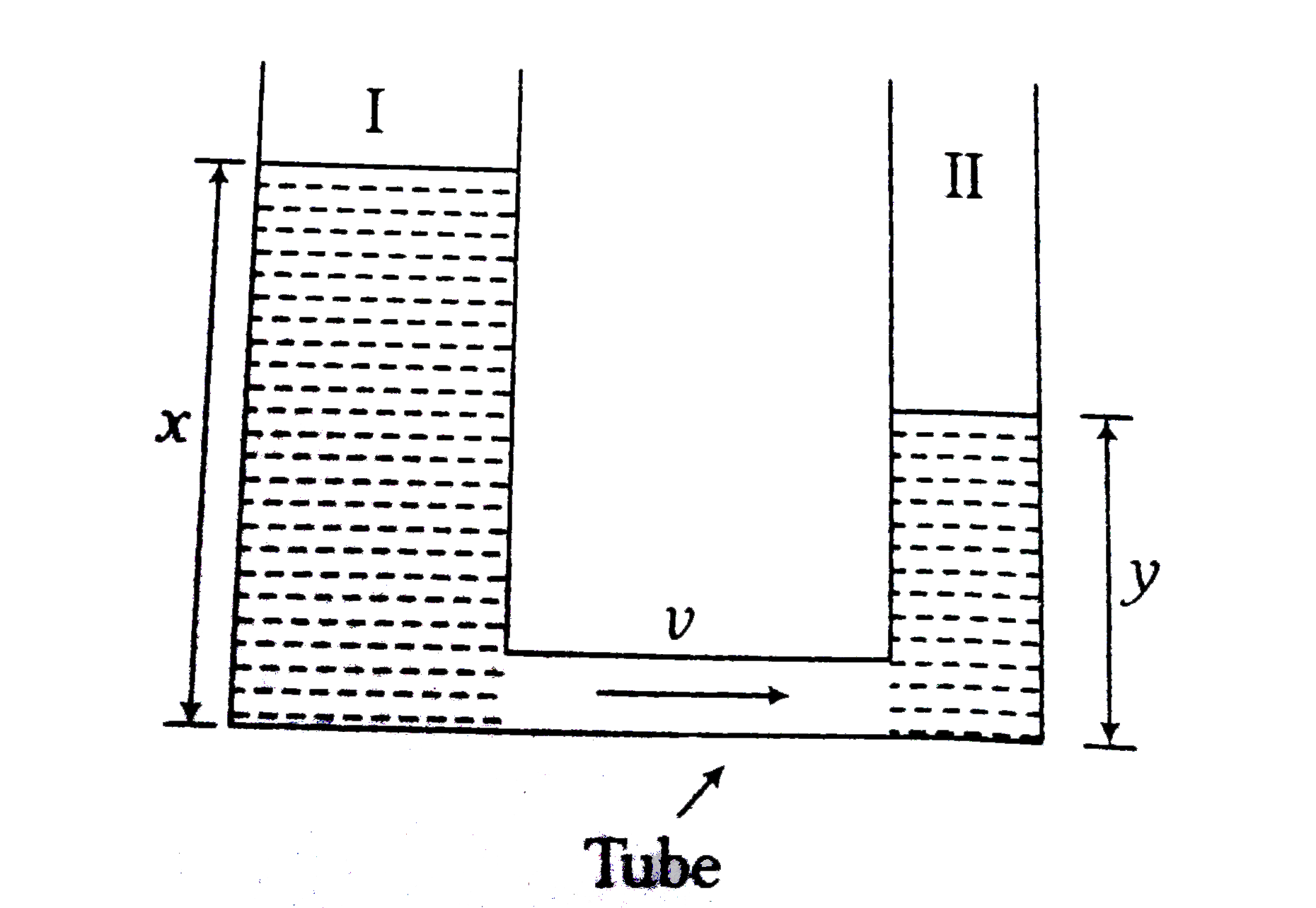
If cross- sectional area of limb I is A(...

If cross- sectional area of limb I is `A_(1)` and that of limb II is `A_(2)` then velocity of the liquid in the tube will be, (cross- sectional area of tube is very small)

Promotional Banner

Similar Questions

Explore conceptually related problems

How does the velocity of streamline flow of a liquid, depend on the area of cross section?

How does the pressure of liquid depend on the area 'of cross section of tube of flow?

In the figure, the cross-sectional area of the smaller tube is a and that of the larger tube is 2a . A block of mass m is kept in the smaller tube having the base area that of the tube. The difference between water levels of the two tubes is

In the figure, the cross-sectional area of the smaller tube is a and that of the larger tube is 2a . A block of mass m is kept in the smaller tube having the base area that of the tube. The difference between water levels of the two tubes is

In the figure, the cross-sectional area of the smaller tube is a and that of the larger tube is 2a . A block of mass m is kept in the smaller tube having the base area that of the tube. The difference between water levels of the two tubes is

In a movable container shown in figure a liquid of density rho is filled up to a height h the upper & lower the cross sectional areas are A_(2)&A_(1) respectively (A_(2)gtgtA_(1)) if the liquid leaves out the container through the tube of cross-sectional area A_(1) then find. (i). Velocity of liquid coming out. (ii). Backward acceleration of the container.

In a movable container shown in figure a liquid of density rho is filled up to a height h the upper & lower the cross sectional areas are A_(2)&A_(1) respectively (A_(2)gtgtA_(1)) if the liquid leaves out the container through the tube of cross-sectional area A_(1) then find. (i). Velocity of liquid coming out. (ii). Backward acceleration of the container.

In a movable container shown in figure a liquid of density rho is filled up to a height h the upper & lower the cross sectional areas are A_(2)&A_(1) respectively (A_(2)gtgtA_(1)) if the liquid leaves out the container through the tube of cross-sectional area A_(1) then find. (i). Velocity of liquid coming out. (ii). Backward acceleration of the container.

An ideal liquid of density rho is pushed with velocity v through the central limb of the tube shown in fig. What force does the liquid exert on the tube? The cross sectional areas of the three limbs are equal to A each. Assume stream-line flow.