Home
Class 12
CHEMISTRY
Cyclohexene on reaction with m-chloroper...

Cyclohexene on reaction with `m-`chloroperoxbenzpic acid forms a compound `(X)` which on treatement with dilute `H_(2)SO_(4)` produces a compound `(Y)`. The compound `(Y)` is

A

`(+)-`cis`-1,2`-cyclohexanediol

B

`(+-)`trans`-1,2-`cyclohexanediol

C

cyclohexanol

D

cyclohexanone

Text Solution

Verified by Experts

The correct Answer is:
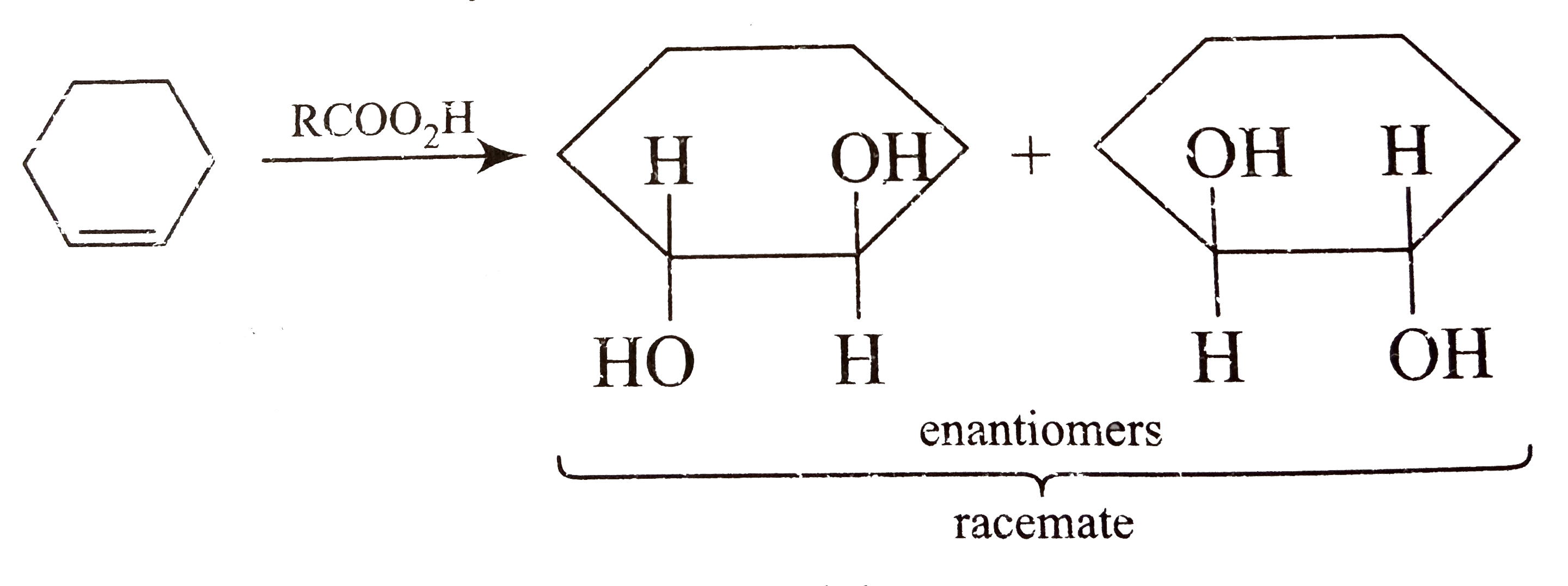
B

It is anti hydroxylation

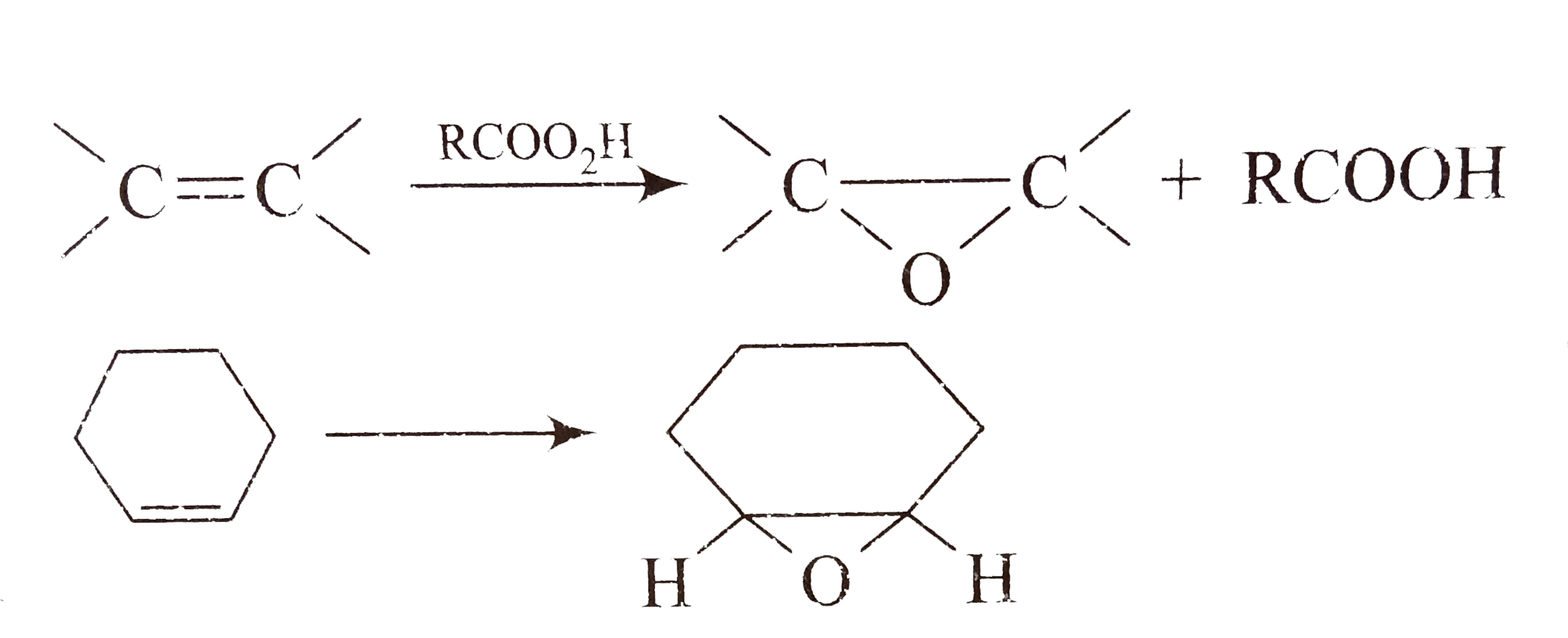
where `RCOO_(2)H` stands for `m-`chloroperoxbenzonic acid. The initial product of the reaction of a peroxyacid such as `m`-chloroperoxobenzoic acid is a `3-`membered ring ether called an epoxide or oxirane (Prileschaiev's reaction):

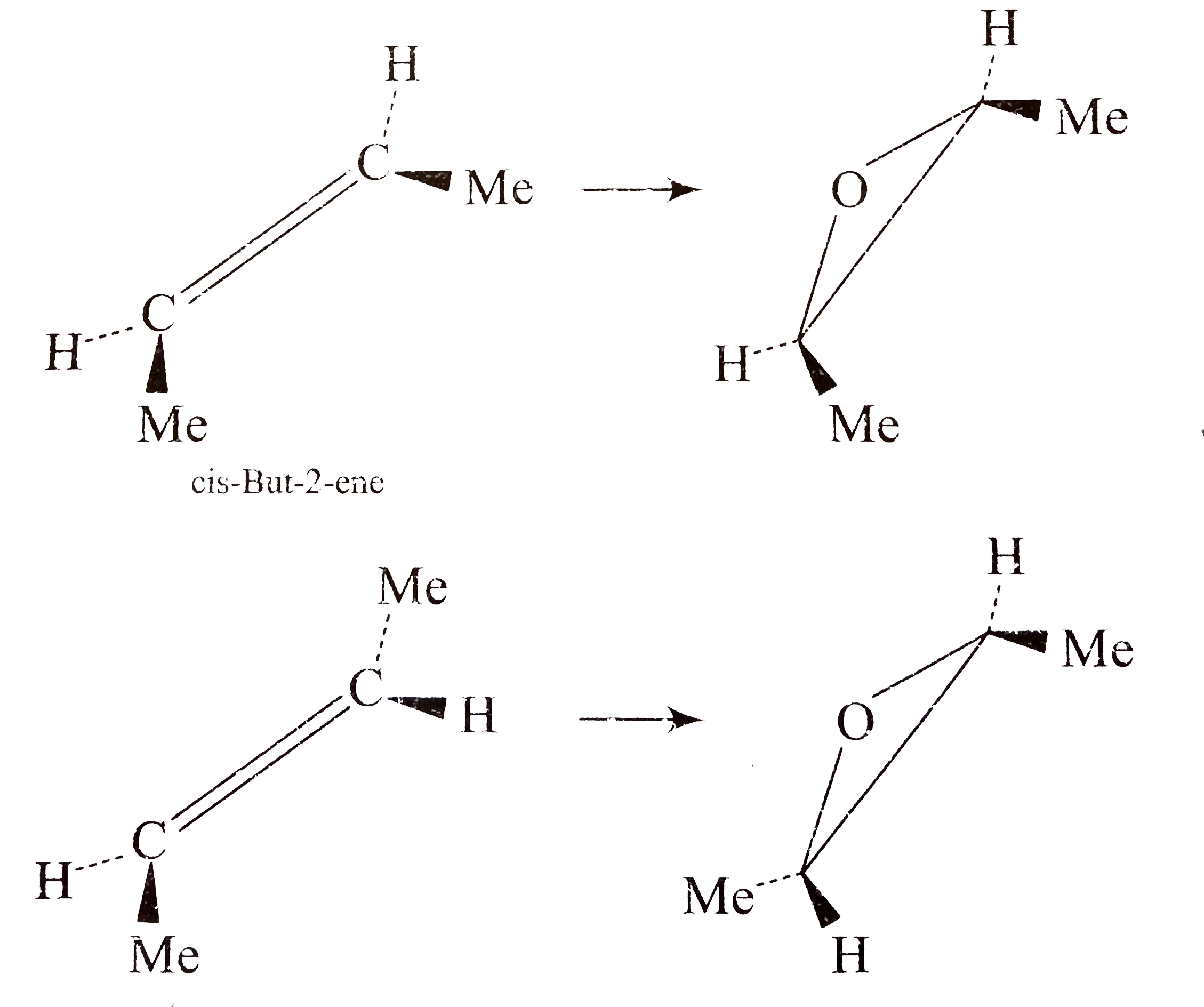
The epoxide has the same geometry as teh alkene reactant:

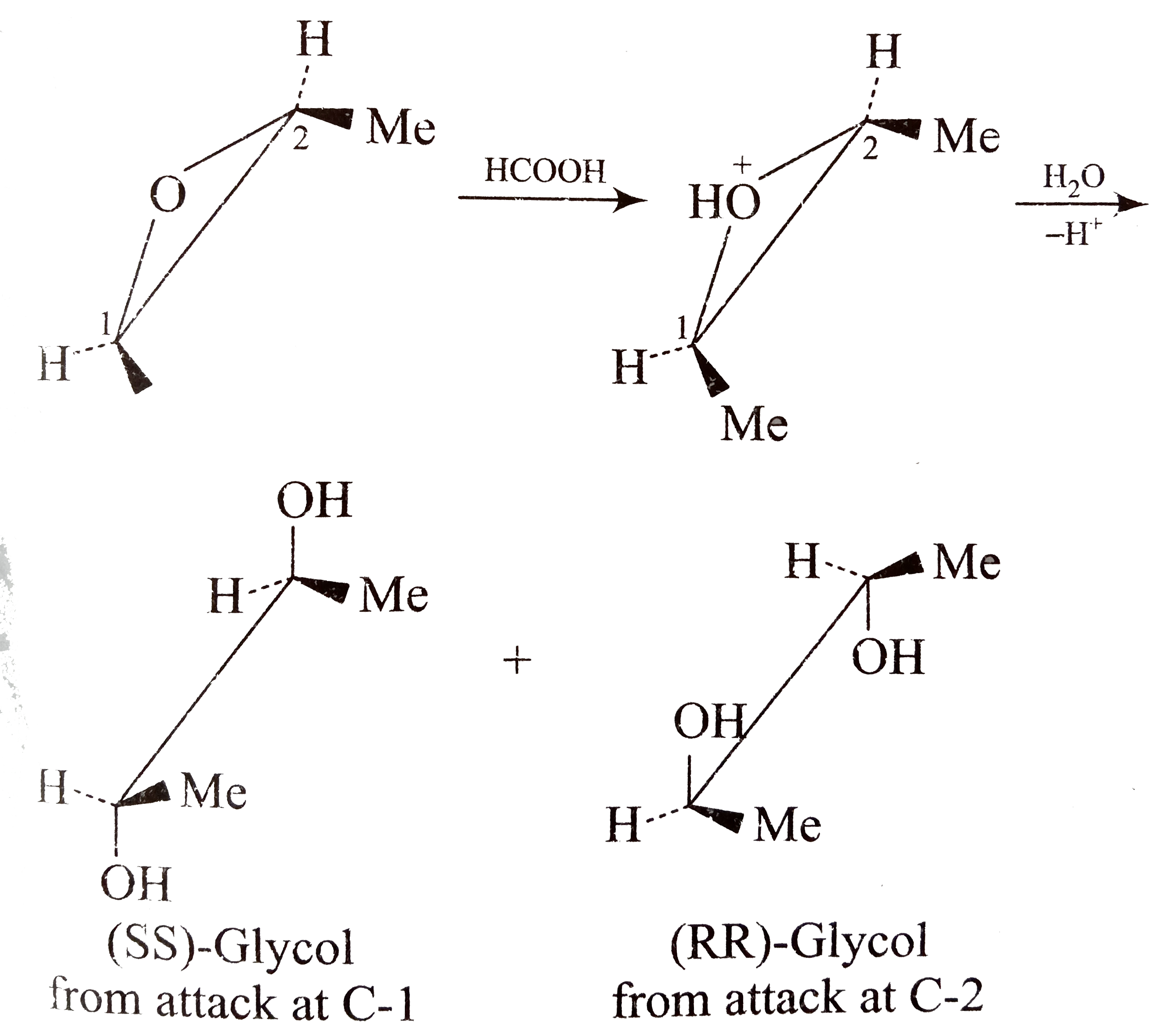
The epoxide can be considered as the oxygen analog of a halonium ion without a positive charge. however, it is isolable unlike the halonium ion. The `HO` of the peroxyacid can be considered as an `E^(+)`. However, the : `Nu^(-)` portion, `RCOO^(-)` removes the hydrogen from `OH` as the `O` bonds to the `C=C`, giving the epoxide directly. The `RCOOH` in the reaction mixture has sufficient acidity to catalyze the opening of the epoxide ring by `H_(2)O` in the same anto fashion as does the halonium ion ring:

Thus cis-but`-2-`ene yields rac`-CH_(3)CHOHCHOHCH_(3)` while trans-but`-2-`ene yields mseo -`CH_(3)CHOHCHOHCH_(3)`
Promotional Banner

Topper's Solved these Questions

Similar Questions

Explore conceptually related problems

Identify the compound which on reaction with dilute acid gives H_2O_2

The compound which gives H_2O_2 on treatment with dilute acid is

H_(2)S reacts with lead acetate forming black compound which reacts with O_(3) to form another compound Y. The colour of the compound Y is:

Radium is a radioactive substance. It dissolves in dilute H_(2)SO_(4) and forms a compound radium sulphate. The compound is

R SHARMA-STEREOCHEMISTRY-Level IV
  1. Which of the following is not corrrect?

    Text Solution

    |

  2. Which of the following is incorrect?

    Text Solution

    |

  3. The compound 1,3-ibromo-2-methy1 butane, CH(3)CHBrCH(CH(3))CH(2)Br, ha...

    Text Solution

    |

  4. Which of the following configuration represents a therosteroisomer?

    Text Solution

    |

  5. Which of the following moleules possesses a peseudoasymmetric carbon a...

    Text Solution

    |

  6. Which of the following molecules has a pro-chiral centre?

    Text Solution

    |

  7. How may 2,3,4,5-terahydroxyadipic acids are possible?

    Text Solution

    |

  8. How many optically active stereoisomers are possible for tri-sec-buty1...

    Text Solution

    |

  9. How many steroisomers are possible for tetra-sec-buty1 methane?

    Text Solution

    |

  10. Which of the following molecules is chiral?

    Text Solution

    |

  11. Cyclohexene on raction with cold dilute KMnO(4) solutioon gives

    Text Solution

    |

  12. Hydrogenation of the compound with H(2) in the presence of Lindle...

    Text Solution

    |

  13. Cyclohexene on reaction with m-chloroperoxbenzpic acid forms a compoun...

    Text Solution

    |

  14. Consider the following sequence of reactions How many structures ...

    Text Solution

    |

  15. In the reaction the major product formed is

    Text Solution

    |

  16. Which one of the following conformations of cyclohexane is chiral?

    Text Solution

    |

  17. P and Q are isomers of dicarboxylic acid C(4)H(4)O(4). Bothdecolorize ...

    Text Solution

    |

  18. Which of the following is correct? (i) The smallest alkene which can...

    Text Solution

    |

  19. The total number of acylic isomers (including steroisomers) of C(4)H(7...

    Text Solution

    |