

Home
Class 12
PHYSICS
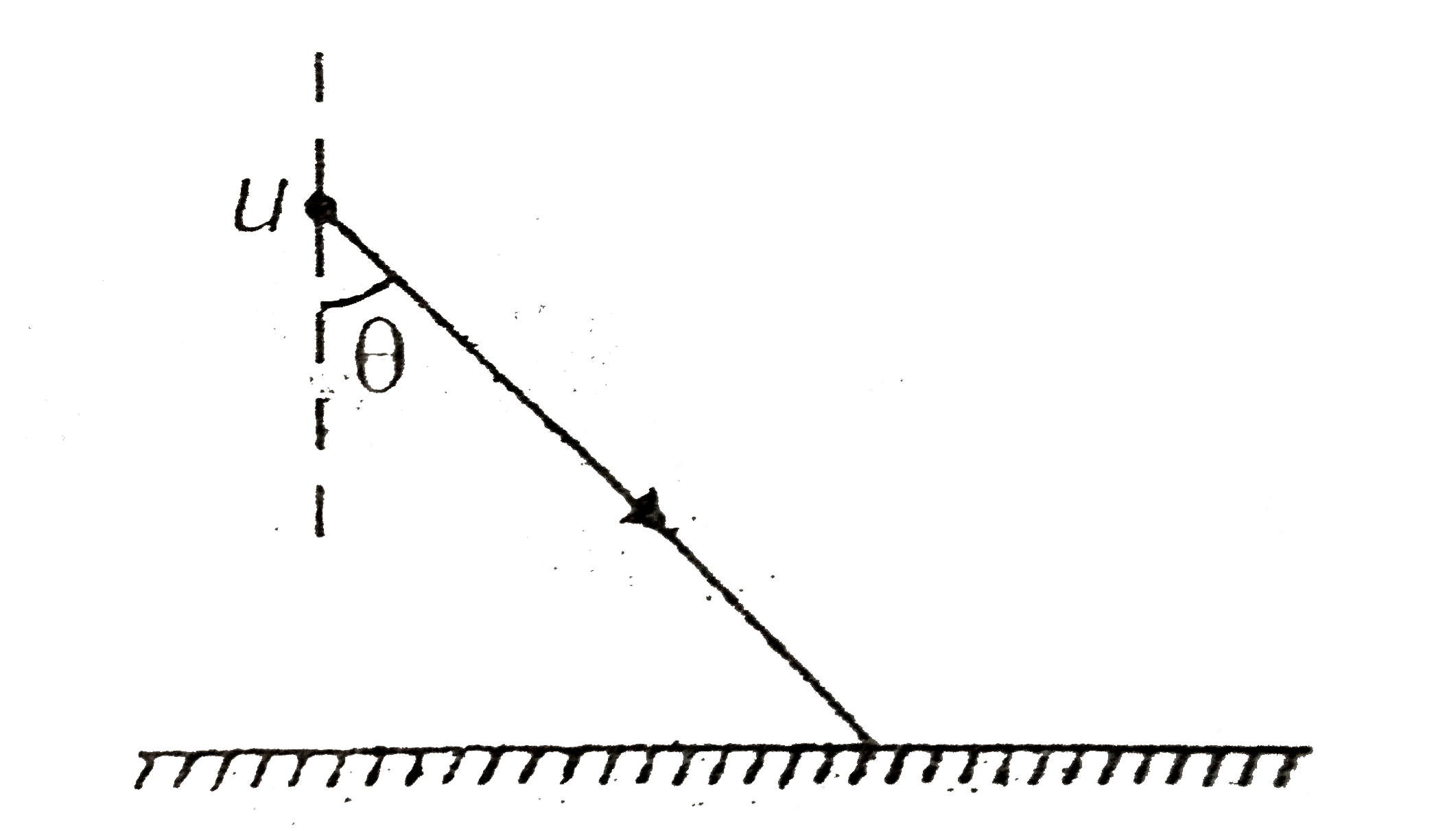
A particle collides with a smooth, surfa...

A particle collides with a smooth, surface with speed `u` at an angle `theta`. Coefficient of restitution is `e`. Find the ratio of the horizontal ranges of two consecutive projectile motions

Promotional Banner

Similar Questions

Explore conceptually related problems

A ball of mass m is projected with a velocity 'u' at angle theta with the horizontal. It collides with a smooth box of mass 'M' at its highest position. If the co-efficient of restitution is 'e' . Find the horizontal distance travelled by the ball before collision.

A ball is thrown from the ground with velocity u at an angle theta with horizontal. If the coefficient of restitution is e , find the time of flight , the maximum height and the horizontal range after the first collision.

Find the ratio of horizontal range and the height attained by the projectile. i.e. for theta = 45^(@)

A projectile is fired with a speed u at an angle theta above the horizontal field. The coefficient of restitution between the projectile and field is e. Find the position from the starting point when the projectile will land at its second collision

A projectile is fired with a speed u at an angle theta above a horizontal field. The coefficient of restitution of collision between the projectile and the field is e. How far from the starting point does the projectile makes its second collision with the field?

A projectile is fired with a speed u at an angle theta above a horizontal field. The coefficient of restitution of collision between the projectile and the field is e. How far from the starting point does the projectile makes its second collision with the field?

A particle strikes a horizontal frictionless floor with a speed u, at an angle theta with the vertical, and rebounds with a speed upsilon , at an angle phi with the vertical. The coefficient of restitution between the particle and the floor is e. The angle phi is equal to :

For a projectile motion, the horizontal range of projectile is same for any two angles which are