Home
Class 11
PHYSICS
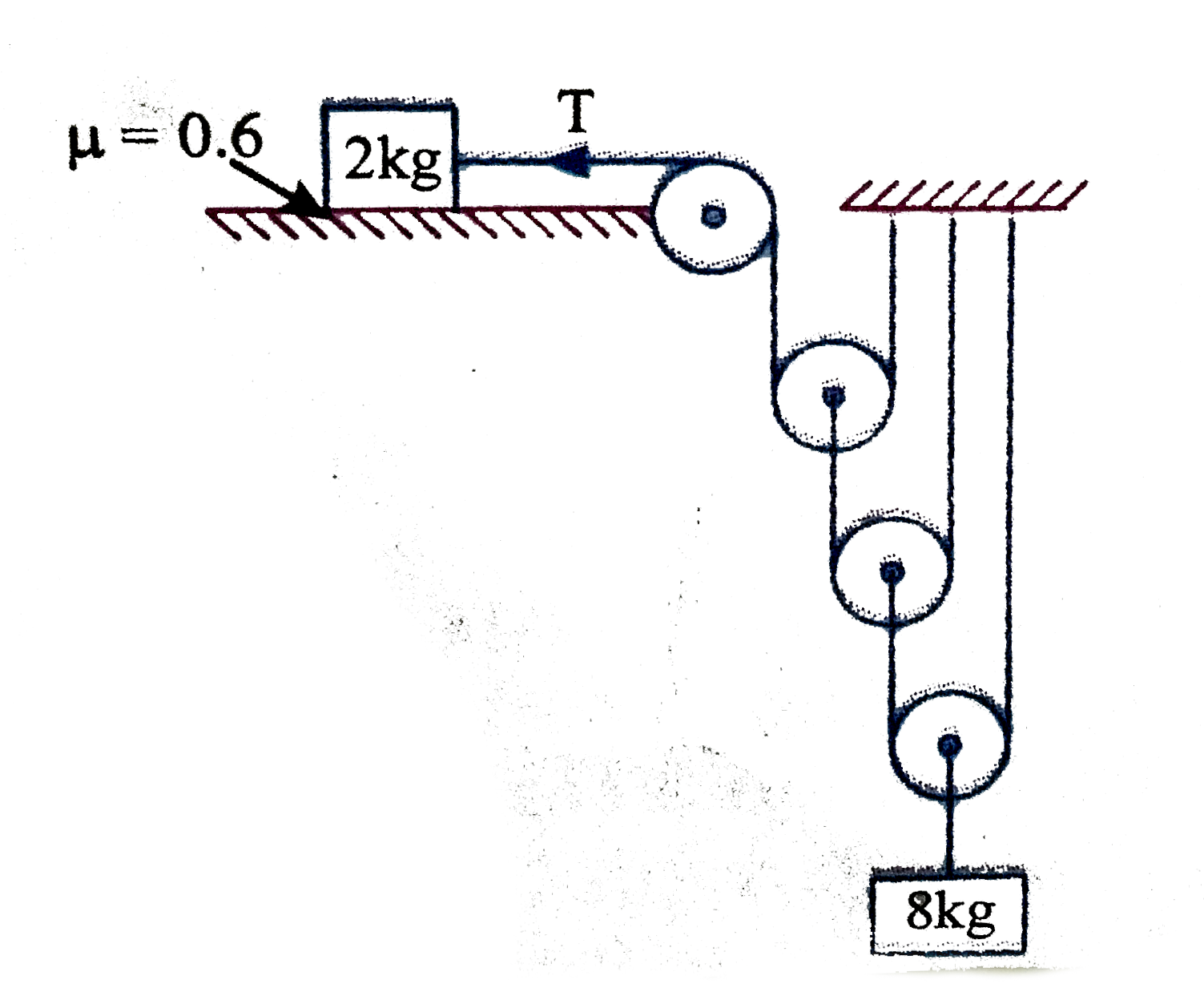
If friction develop between 2 kg block a...

If friction develop between `2 kg` block and surface is `K`. Calculate the value of `K`

Text Solution

Verified by Experts

The correct Answer is:
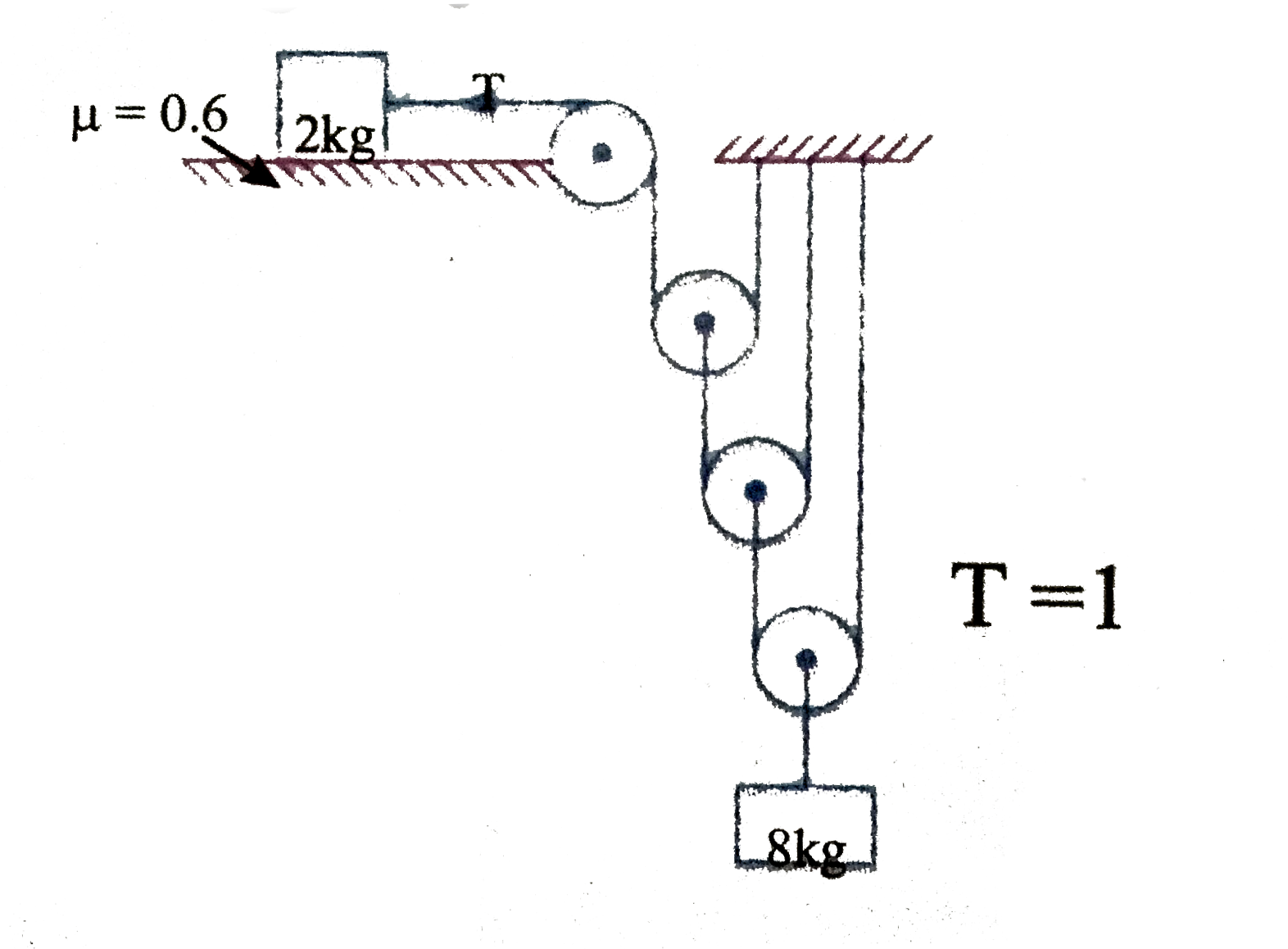
1


`T=1` , `f=1`
Promotional Banner

Topper's Solved these Questions

  • FRICTION

    NARAYNA|Exercise Passage type of questions I|6 Videos
  • FRICTION

    NARAYNA|Exercise Passage type of questions|6 Videos
  • COLLISION

    NARAYNA|Exercise Level-II (H.W)|54 Videos
  • GRAVITATION

    NARAYNA|Exercise EXERCISE -IV|40 Videos

Similar Questions

Explore conceptually related problems

Block A weight 20 kg placed on a smooth surface. Weight B of 2 kg is mounted on the block . The coefficient of friction between the block and the weight is 0.25 Calculate the acceleration of the block and the weightand also the frictional force between the block and the weight when a horizontal force 2 N applied to the weight as shown in fig What will these quantities be if the horizontal force is 20 N? (g = 10ms^(-2))

Two blocks of mass 10 kg and 2 kg are connected by an ideal spring of spring constant 1000 N/m and the system is placed on a horizontal surface as shown. The coefficient of friction between 10 kg block and surface is 0.5 but friction is assumed to be absent between 2 kg and surface. Initially blocks are at rest and spring is unstretched then 2 kg block is displaced by 1 cm to elongate the spring then released. Then the graph representing magnitude of frictional force on 10 kg block and time t is : (Time t is measured from that instant when 2 kg block is released to move)

A block of mass 1 kg lies on a horizontal surface in a truck. The coefficient of static friction between the block and the surface is 0.6. If the acceleration of the truck is 5m//s^2 , the frictional force acting on the block is…………newtons.

Three blocks of masses 5 kg, 3 kg and 2 kg are placed on a rough surface as shown in figure. Coefficient of friction between block and surface is same for all the blocks and is equal to mu = 0.2 . A horizontal force of 15 N is applied on 5 kg block. The force exerted by 3 kg block on 2 kg block is : (g = 10 m/ s^(2) )

2gk block is kept on 1kg block as shown . The friction between 1kg block and fixed surface is absent and the coefficient of friction between 2kg block is mu=0.1 . A constant horizontal force F=4N is applied on 1kg block. If the work done by the friction on 1 kg block in 2s is -X J , then find X . Take g=10m//s^(2) .

A block of 5 kg is resting on a horizontal surface. The coefficient of kinetic friction between the block and the surface is 0.2. What is the acceleration with which the block will remove if a force of 9.8 N is applied to it ?

A block of mass 6 kg is being pulled by force 24 N as shown . If coefficient of friction between the block and the surface is 0.6 , frictional force acting on the block is :

In the fig. as shown mass of each block is same. The surface are rough with coefficient of friction mu . The block B moves with acceleration a . The frictional force on the block C is kxxmu ma . Calculate the value of K

Two blocks of mass 10 kg and 2 kg are connected by an ideal spring of spring constant K = 800 N//m and the system is placed on a horizontal surface as shown. The coefficient of friction between 10 kg block and surface is 0.5 but friction is absent between 2 kg and the surface. Initially blocks are at rest and spring is relaxed. The 2 kg block is displaced to elongate the spring by 1 cm and is then released. (a) Will 10 kg block move subsequently? (b) Draw a graph representing variation of magnitude of frictional force on 10 kg block with time. Time t is measured from that instant when 2 kg block is released to move.

