Home
Class 11
PHYSICS
A viscous clutch as shown in figure tran...


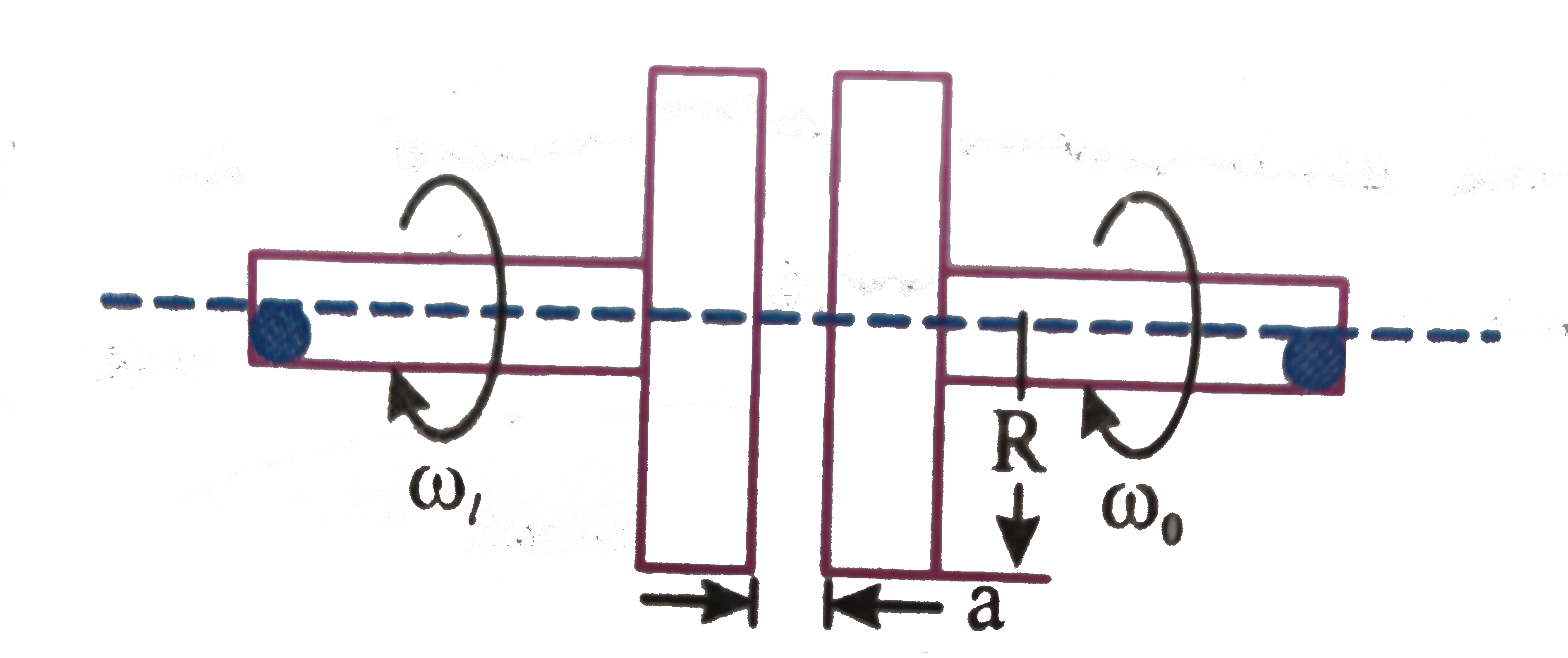
A viscous clutch as shown in figure tranmits torque. Radius of each clutch plate is R and separation between the plates is a and is completely filled with liquid of coefficient of viscous `mu`. If `omega_(i)` and `omega_(0)` are angular velocities of plates connected to input and output respectively.
The torque transmitted is

A

`(pimu(omega_(i)^(2)-omega_(0)^(2))R^(4))/(omega_(i)a)`

B

`(pimu(omega_(i)^(2)-omega_(0)^(2))R^(4))/(omega_(0)a)`

C

`(pimu(omega_(i)^(2)-omega_(0)^(2))R^(4))/(2omega_(0)a)`

D

`(pimu(omega_(i)-omega_(0))R^(4))/(2a)`

Text Solution

Verified by Experts

The correct Answer is:
D


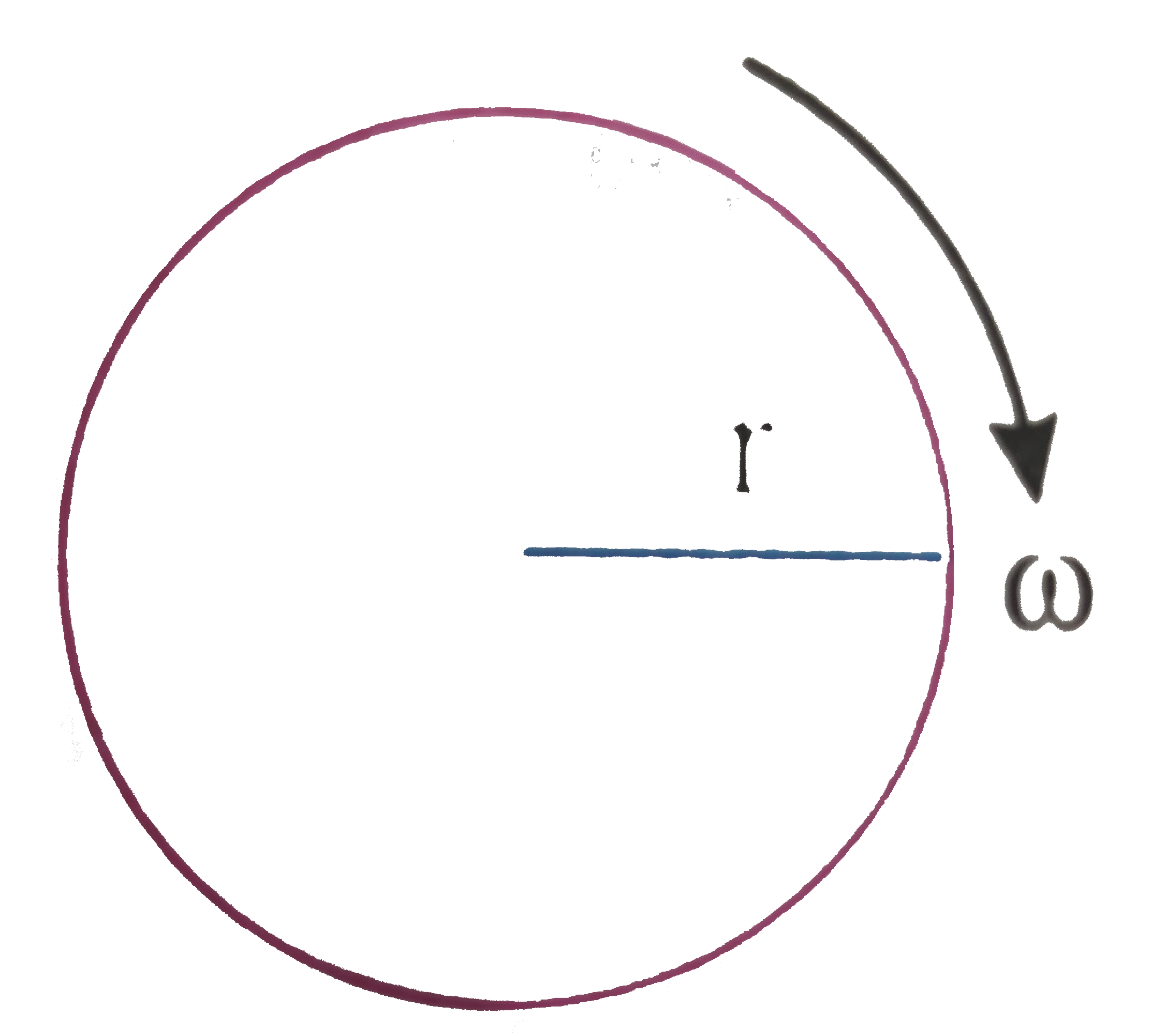
Let's consider a circular element of radius r and width dr, co-axial with the system.
Velocity difference across the element
`dv=r(omega_(i)-omega_(0))`
Hence `dF_(v)=muxx2pirdrxx(r(omega_(i)-omega_(0)))/(a)`
These force are tangential and hence
`dtau_(v)=dF_(v)xxr=(2pimu(omega_(i)-omega_(0)))/(a)r^(3)dr`
Hence `tau=int_(0)^(R)dtau_(v)=(pimu(omega_(i)-omega_(0))R^(4))/(2a)`
Power (P) `=tauomega`
Hence efficiency `=(tauomega_(0))/(tauomega_(i))=(omega_(o))/(omega_(i))`
Promotional Banner

Topper's Solved these Questions

  • MECHANICAL PROPERTIES OF FLUIDS

    NARAYNA|Exercise Single Answer Questions|108 Videos
  • MECHANICAL PROPERTIES OF FLUIDS

    NARAYNA|Exercise integer Type Questions|25 Videos
  • MECHANICAL PROPERTIES OF FLUIDS

    NARAYNA|Exercise Comprehension Type Questions|40 Videos
  • MATHEMATICAL REVIEW & PHYSICAL WORLD

    NARAYNA|Exercise C.U.Q|13 Videos
  • MECHANICAL PROPERTIES OF SOLIDS

    NARAYNA|Exercise LEVEL-II (H.W)|24 Videos

Similar Questions

Explore conceptually related problems

A viscous clutch as shown in figure tranmits torque. Radius of each clutch plate is R and separation between the plates is a and is completely filled with liquid of coefficient of viscous mu . If omega_(i) and omega_(0) are angular velocities of plates connected to input and output respectively. If efficiency of transmission is ratio of output power to input power, then efficiency is given by

Three metal plates P, Q and R of area A are connected across a battery of 2V as shown in the adjoining figure (p). Calculate the net capacitance if separation between plates P and Q is 0.2 cm and is completely filled with dielectric of dielectric constant 4, while separation between plates Q and R is 0.5 cm and is completely filled with a dielectric material of dielectric constant 6.

When the space between the plates of a parallel plate condenser is completely filled with two slabs of dielectric constants K_(1) and K_(2) and each slab having area A and thickness equal to (d)/(2) as shown in the figure Fig. The equivalent circuit is as shown. .

Three parallel plate air capacitors are connected in parallel. Each capacitor has plate area A/3 and the separation between the plates is d, 2d and 3d respectively. The equivalent capacity of combination is (epsilon_0 = absolute permittivity of free space)

Three parallel plate air capacitors are connected in parallel each capacitor has plate area ('A')/(3) and the separation between the plates is 'd', '2d' and '3d' respectively. The equivalaent capacity of combination is ( epsi_(0) =absolute permittivity of free space).

When the space between the plates of a parallel plate condenser is completely filled with two slabs of dielectric constants K_(1) and K_(2) and each slab having area (A)/(2) and thickness equal to distance of seperation d as shown in the figure. Fig. the equivalent circuit is as shown. .

A parallel-plate capacitor of plate area 40 cm^2 and separation between the plates 0.10 mm is connected to a battery of emf 2.0 V through a 16 Omega resistor. Find the electric field in the capacitor 10 ns after the connections are made.

A thin horizontal movable plate P is separated from two fixed horizontal plates P_1 and P_2 by two highly viscous liquids of coefficient of viscosity eta_(1) and eta_(2) as shown, where eta_2 = 4eta_(1) . Area of contact of movable plate with each fluid is same. If the distance between two fixed plates is h, then the distance h1 of movable plate from upper fixed plate such that the movable plate can be moved with a constant velocity by applying a minimum constant horizontal force F on movable plate is (assume velocity gradient to be uniform in each liquid).

