

Home
Class 12
PHYSICS
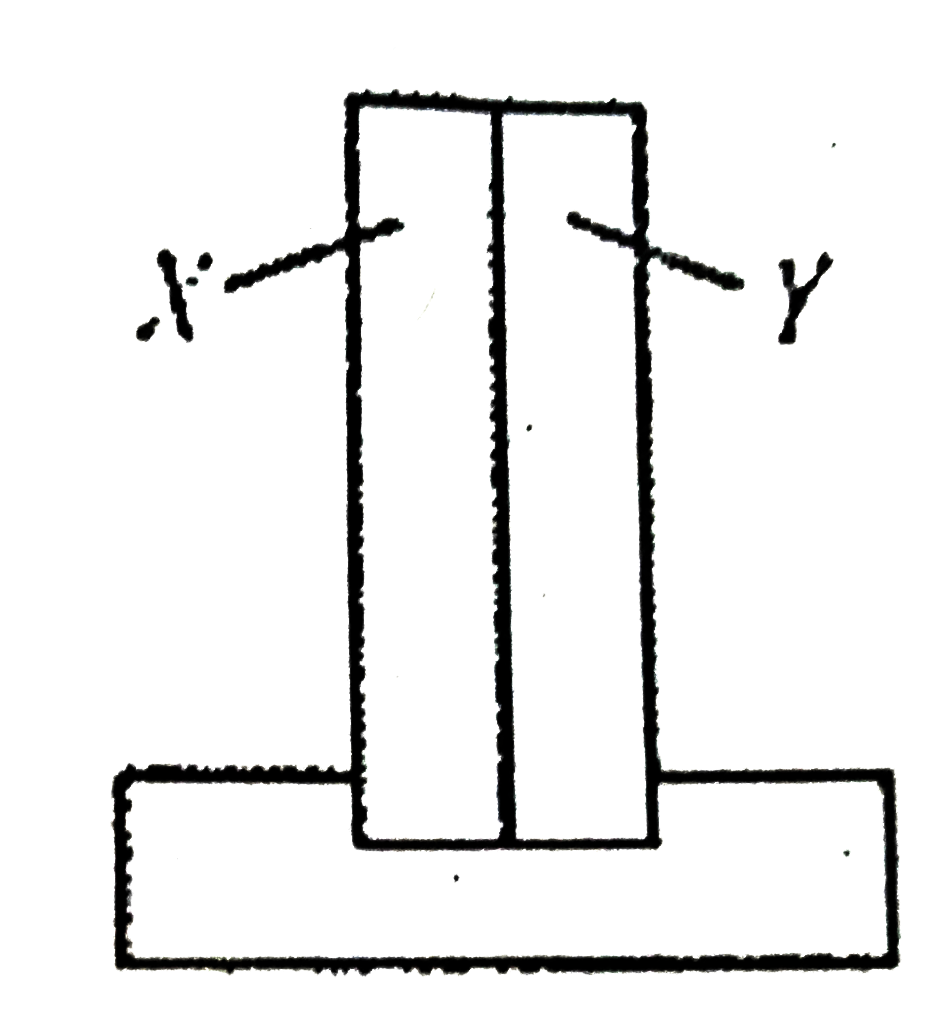
A bimetallic strip consists of metals X ...

A bimetallic strip consists of metals X and Y. It mounted rigidly at the base as shown. The metal X has a higher coefficient of expansion compared to that for metal Y. When the bimetallic strip is placed in a cold bath

Promotional Banner

Similar Questions

Explore conceptually related problems

A bimetaltic stop constants of metals A and V it is montedrigully at the base as shown The motel A has a bigher coefficient of expernsions component to that for metal V when himetalic stop is that for placed in a cold bath.

A bimetallic strip is made up of two metals with different alpha

A bimetallic strip consists of two strips of different metals joined together that expand at same rates as they are heated.

A bimetallic strip is formed out of two identical strips one of copper and the other of brass. The co-efficients of linear expansion of the two metals are alpha_(C) and alpha_(B) . On heating, the the strip bends to form an are of radius of curvature R . Then R is

A bimetallic strip is formed out of two identical strips one of copper and the other of brass. The co-efficients of linear expansion of the two metals are alpha_(C) and alpha_(B) . On heating, the the strip bends to form an are of radius of curvature R . Then R is

Two straight metallic strips each of thickness t and length l are rivetted together. Their coefficients of linear expansions are alpha_(1) "and" alpha_(2) . If they are heated through temperature DeltaT , the bimetallic strip will bend to form an arc of radius

Two straight metallic strips each of thickness t and length l are rivetted together. Their coefficients of linear expansions are alpha_(1) "and" alpha_(2) . If they are heated through temperature DeltaT , the bimetallic strip will bend to form an arc of radius

A bimetallic strip is formed out of two identical strips one of copper and the other of brass. The co-efficients of linear expansion of the two metals are alpha_(C) and alpha_(B) . On heating, the temperature of the strip goes up by △T the strip bends to form an are of radius of curvature R . Then R is