Home
Class 12
PHYSICS
(a) When a cell sends current through a ...

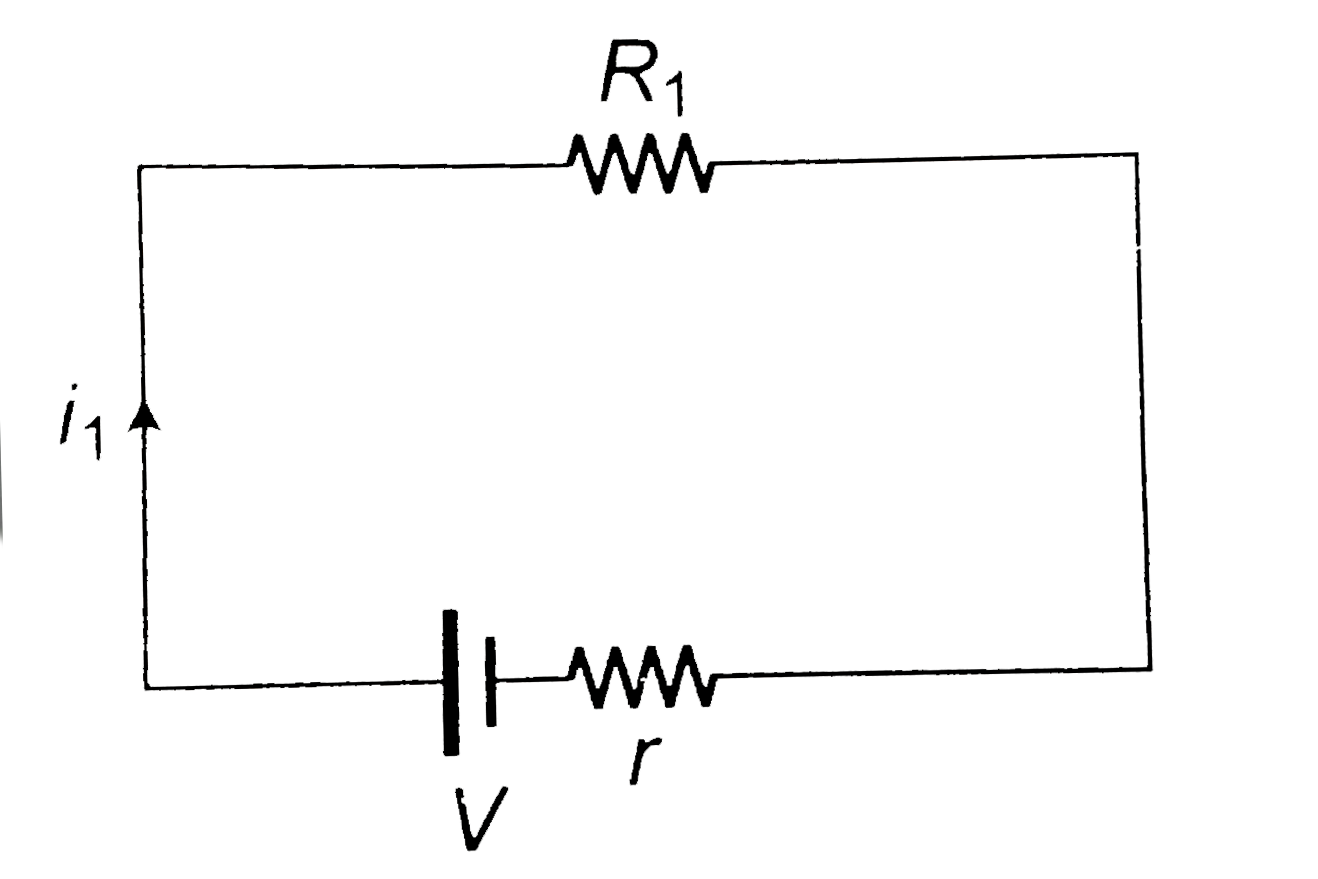
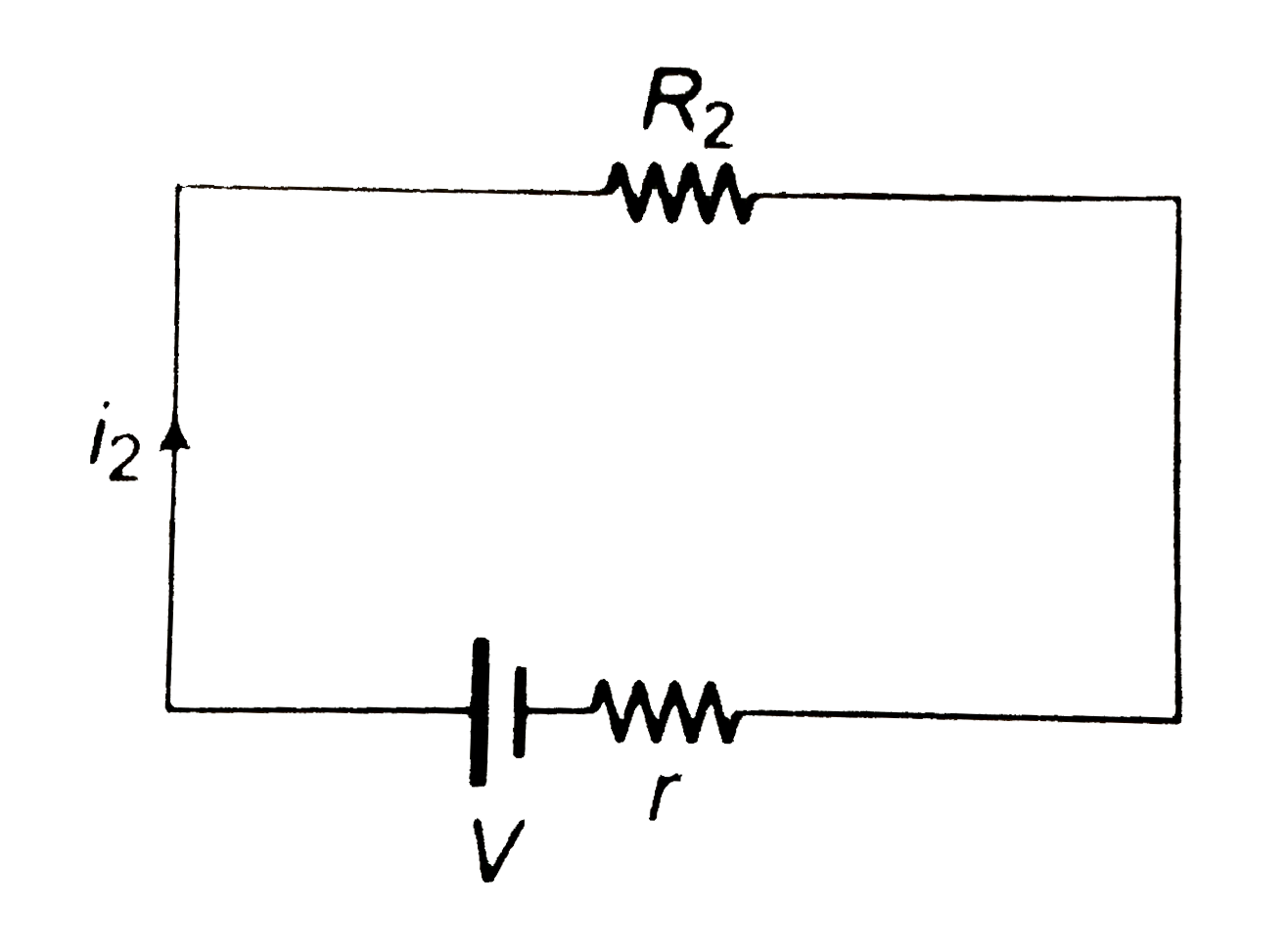
(a) When a cell sends current through a resistance `R_(1)` for time `t`, the heat produced in the resistor is `Q`. When the same cell sends current through another resistance `R_(2)` for time `t` the heat porduced is again `Q` . Find internal resistance of the cell.
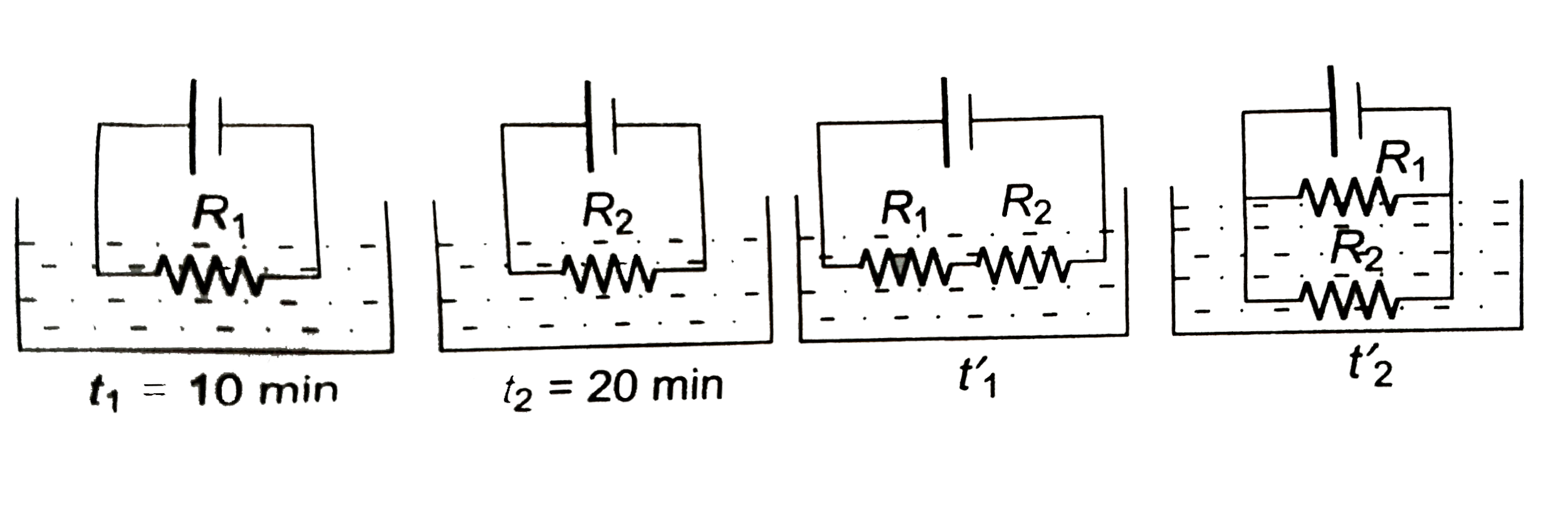
(b) An electric kettle has coil `A` is swithched on, the water boils in 10min. and when coil b is switched on the water boils in `20min`. Calculate the time taken by the water to boil if the coils connected in (i) series and (ii) parallel are swithched on.
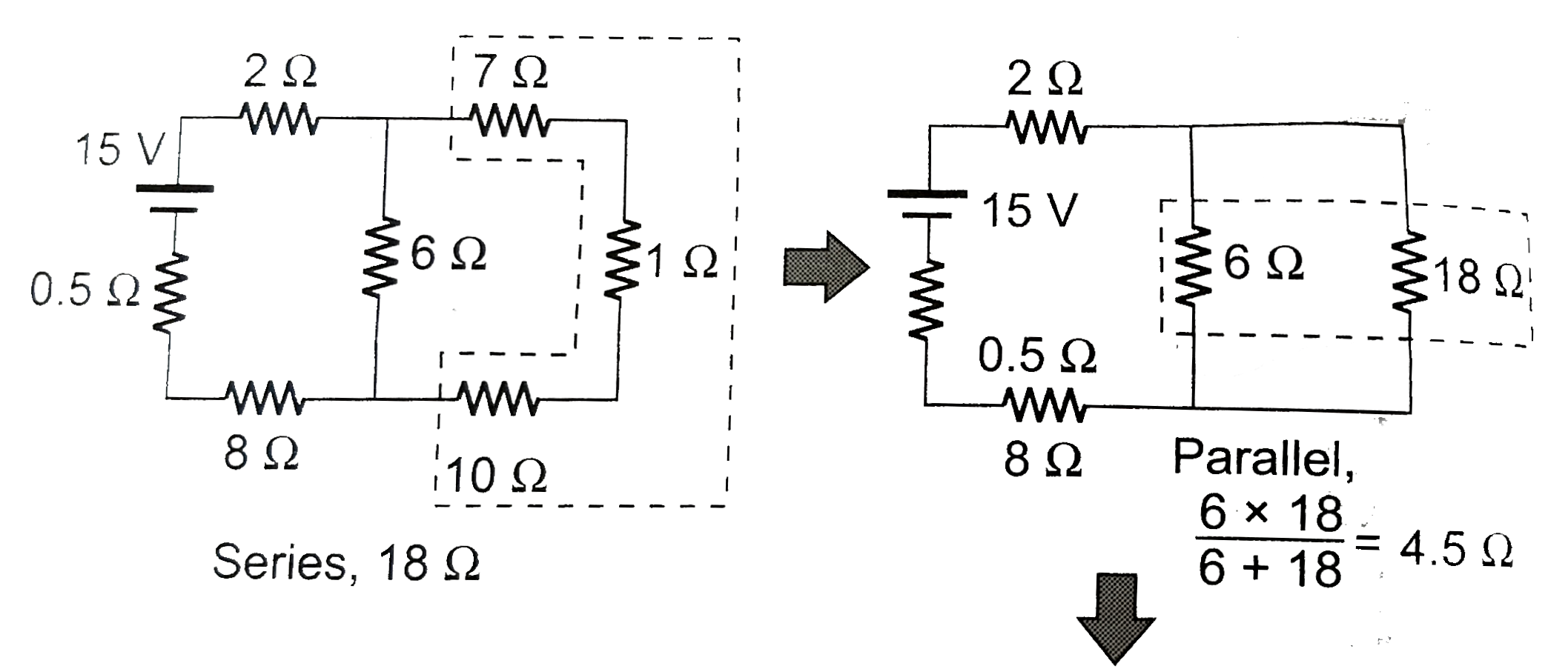
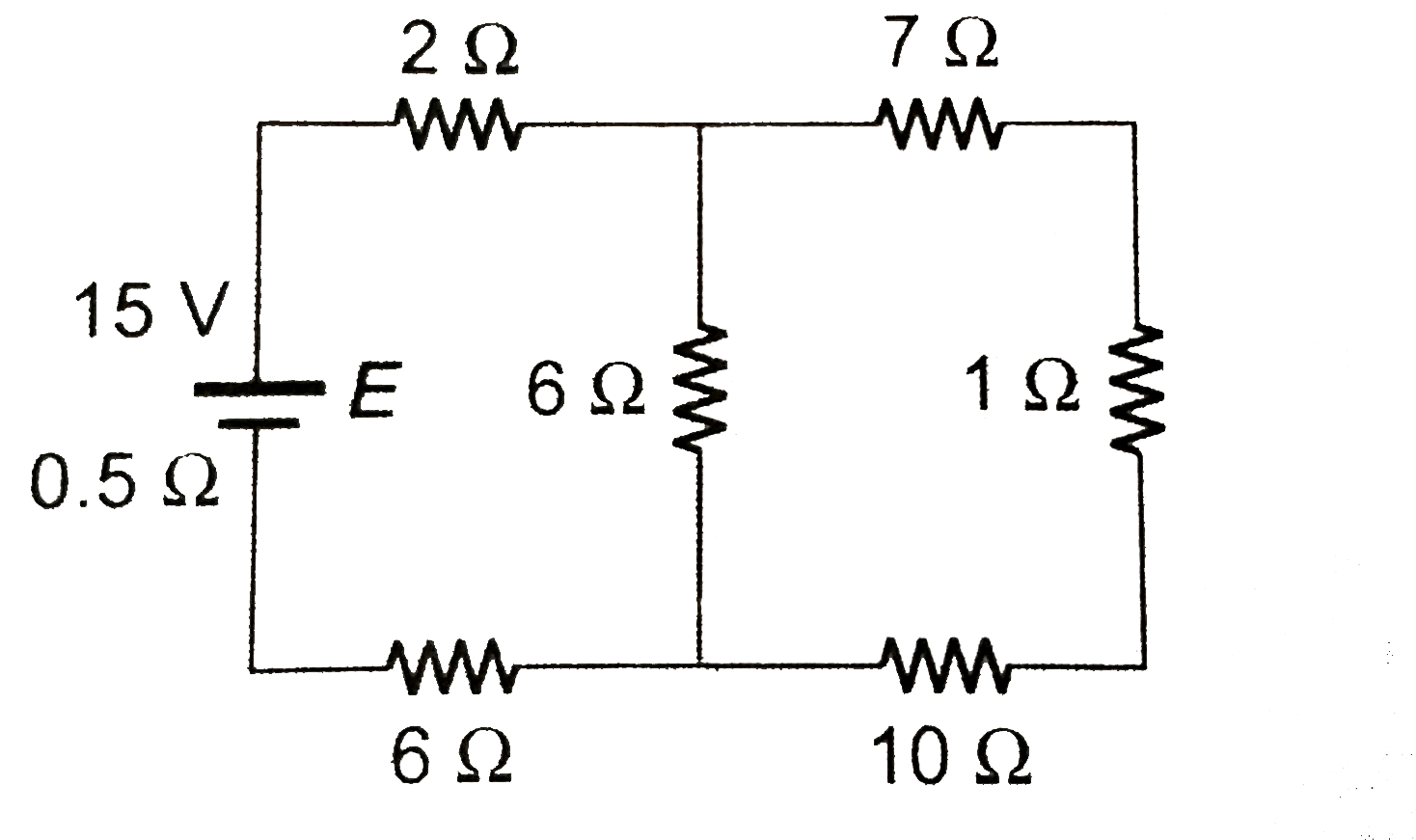
(c) The emf of battery `E` in the circuit shown in the figure is 15V and internal resistance `0.5ohm` (i) What is the current drown from the battery? (ii) How much power is consumed in `6 ohm` resistance?

(d) A `500W` heating unit is designed to opreate from a `115V` line.
(i) By what percentage will its heat output drop if the line voltage drops to `110V`. Assuming no change in resistance?
(ii) Taking variation of resistance with temperature into account. would the actual heat output drop be larger or smaller than case(i)
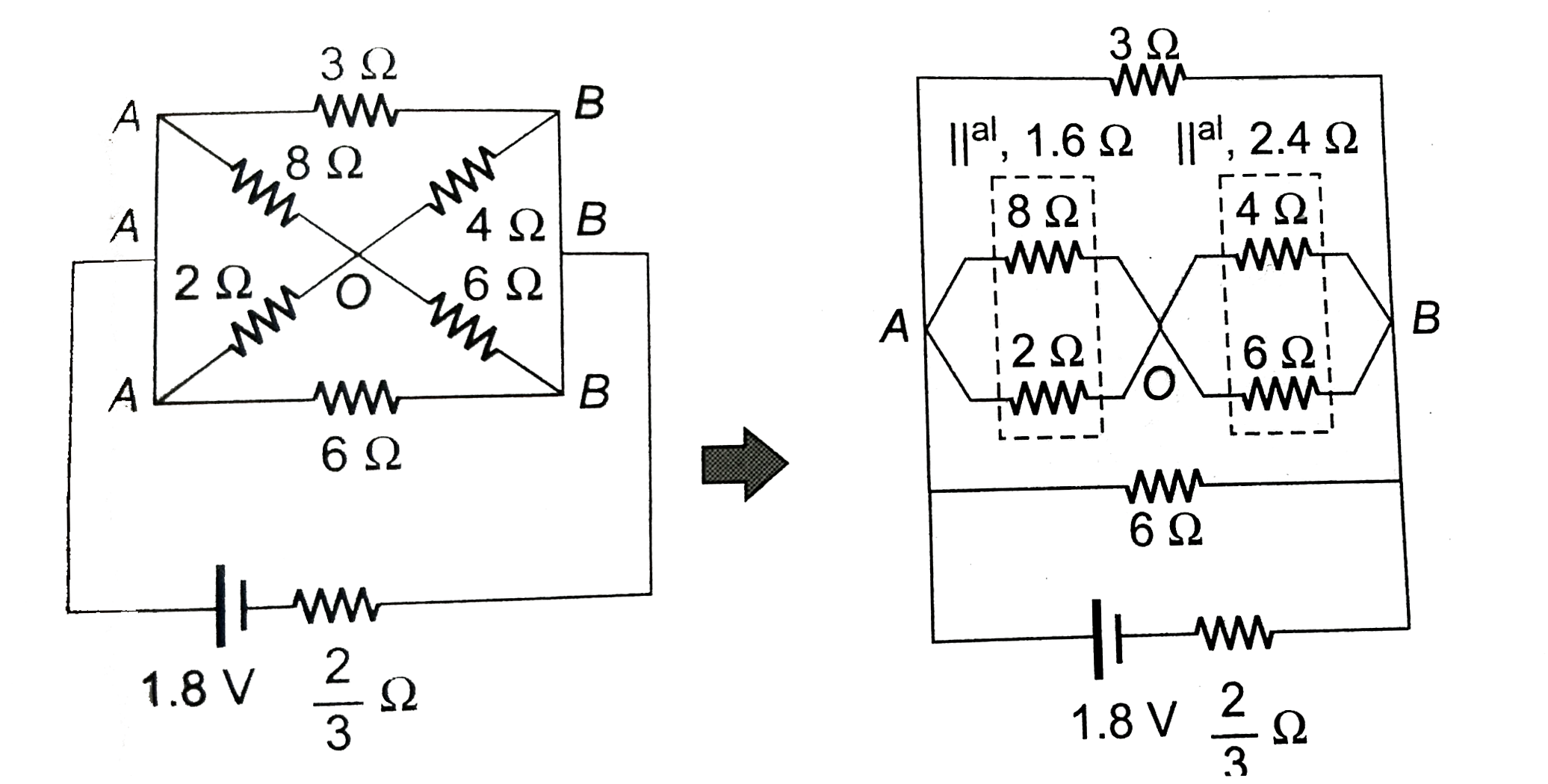
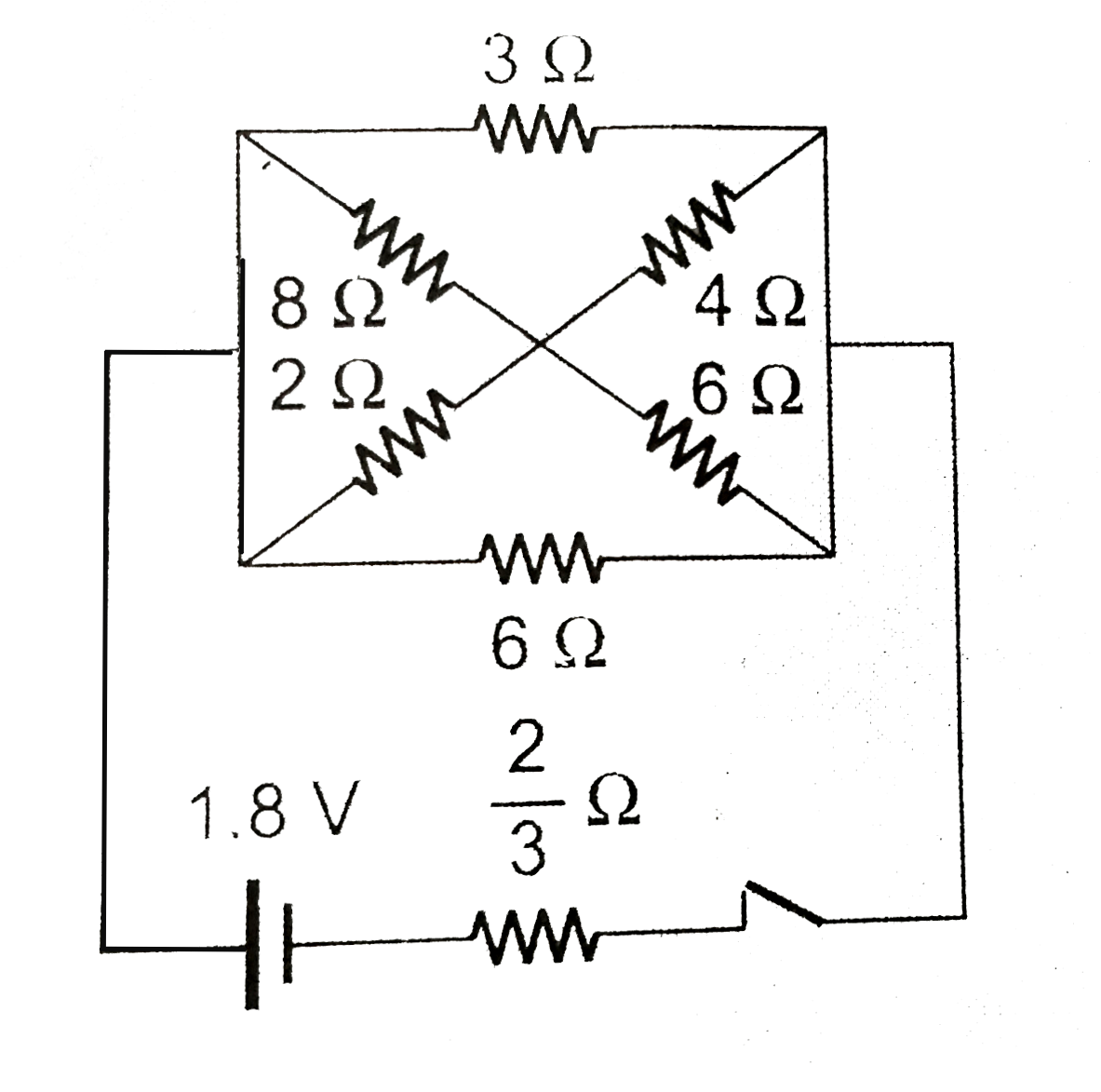
(e) If emf of the cell is `1.8V` and its internal resistance `2//3 Omega` for the circuit shown in the figure what is the (i) current in `3 ohm` resistance? (ii) Power consumed by the circuit from the battery?

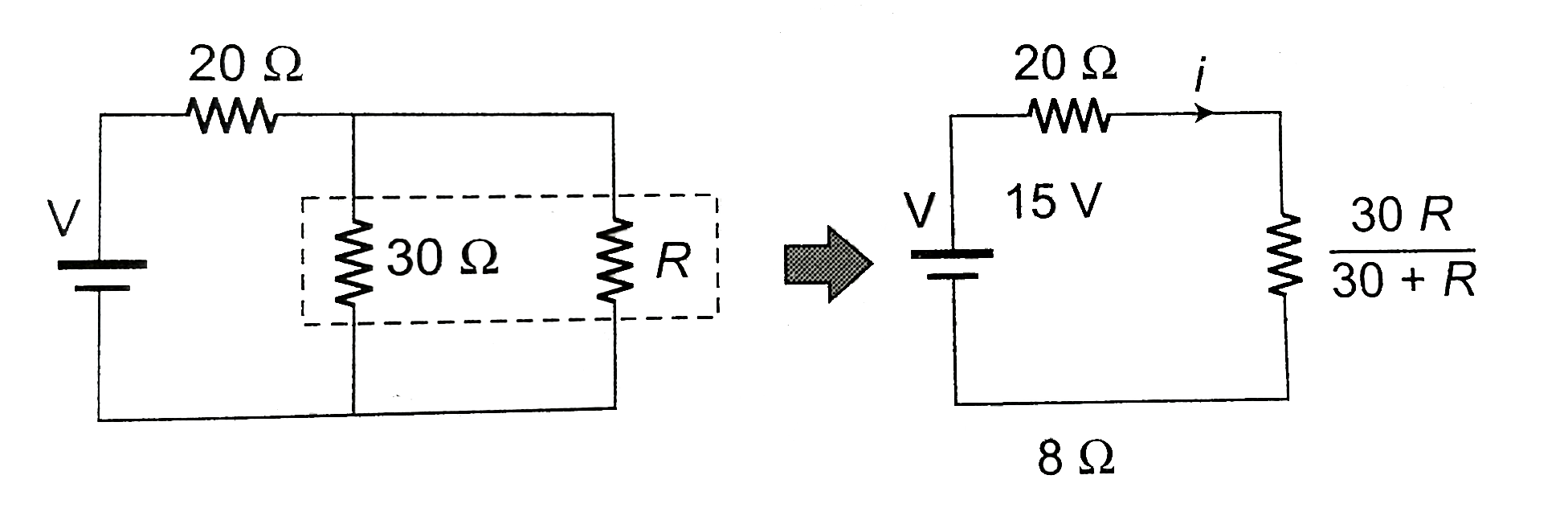
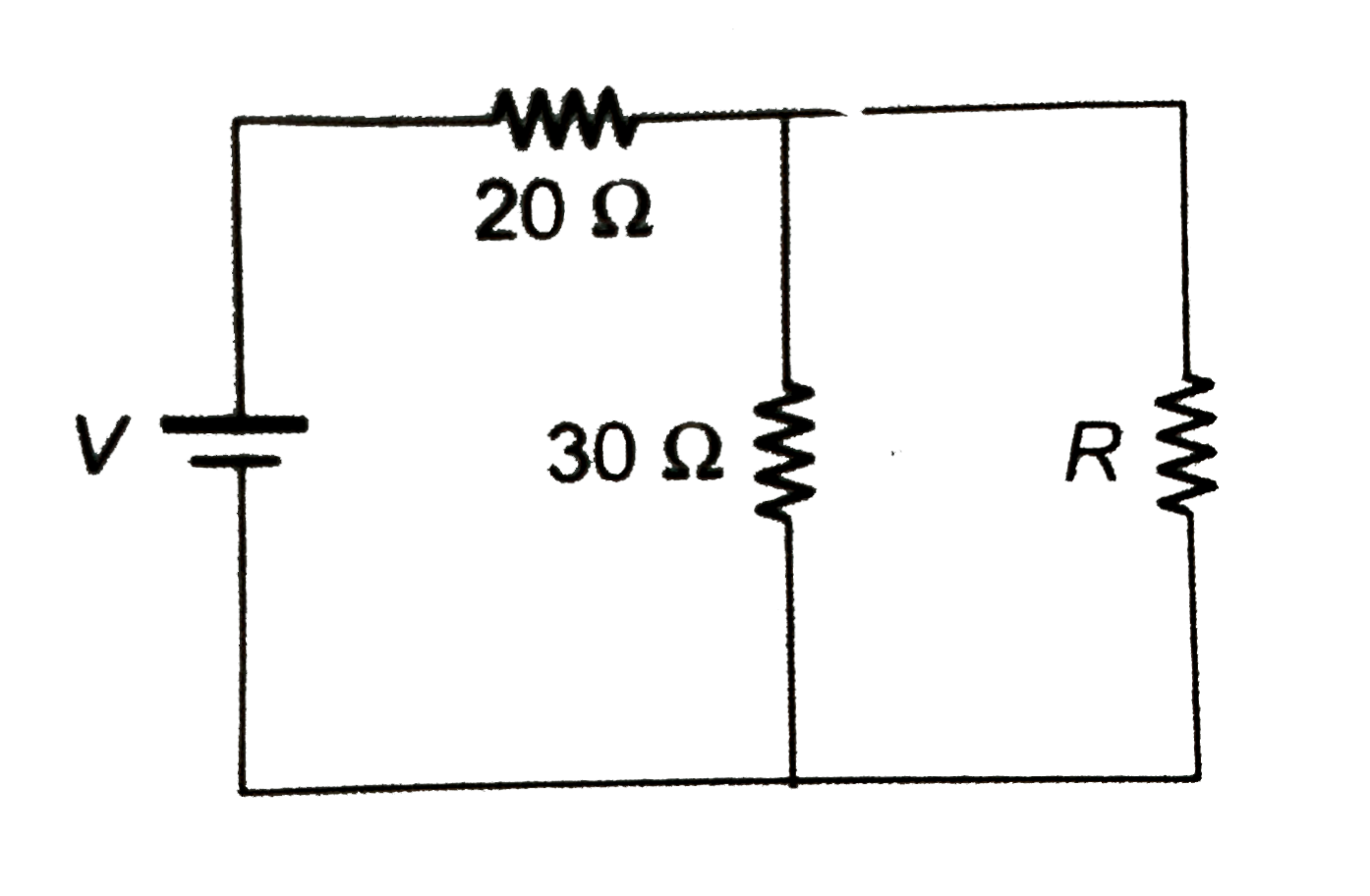
(i) for what value of `R` , power in `R` is maximum?
.

Text Solution

Verified by Experts

(a)
`i_(1) - (V)/(R_(1)+r)`
`H_(1) = i_(1)^(2)R_(1)t = ((V)/(R_(1)+r))^(2) R_(1)t` ..(i)

`i_(2) - (V)/(R_(2)+r)`
`H_(2) = i_(2)^(2)R_(2)t = ((V)/(R_(2)+r))^(2) R_(2)t` ..(ii )
(i)=(ii)
` ((V)/(R_(1)+r))^(2) R_(1)t=((V)/(R_(2)+r))^(2) R_(2)t`
`(R_1)/((R_(1)+r)^(2))=(R_3)/((R_(2)+r)^(2))`
`R_(2)^(2)R_(1) +2R_(2)r R_(1)+r^(2)R_(1)=R_1^2R_(2)+2R_1rR_2+r^2R_2`
`r^2(R_1-R_2)=R_1R_2(R_1-R_2)`
`r=sqrt(R_1R_2)`

`H = (V^2)/(R_2)t_2=(V^2)/(R_2)t_2= (V^2)/(R_1+R_2)t_(1)^(') = (V^2)/((R_1R_(2))/(R_1+R_2)t_2^'`
`(V^2)/(R_1)t_1=(V^2)/(R_2)t_2-R_2=(t_2)/(t_1)R_1`
`(V^2)/(R_1)t_1 = (V^2)/(R_1+R_2)t_1^' = (V^2)/(R_1_(t_2)/(t_1)R_(1)) t_1^'`
`t_(1) = (t_1^')/(1+(t_2)/(t_1) implies t_(1)^' = t_1+t_2=10+20=30min`
`(V^2)/(R_1)t_1 = (V^2)/((R_1R_2)/(R_1+R_2))t_2^'implies t_1 = (R_1+R_2)/(R_2) t_(2)^(')`
`((R_1)/((t_2//t_1)R_1)+1)t_2^'`
`t_(1)=((t_1)/(t_t2)+1)t_2^' implies 1/(t_2^') = 1/(t_1)+1/(t_2)+1/10+1/20`
`t_(2)^(') = 20/3 min`
(c)
(i) `R_(eq) = 15 Omega`
Current supplied by battery
`i = (15)/(15) = 1A`
p.d. across `4.5 Omega`
`=1xx4.5=4.5 V`
(ii) Power consumed in `6 Omega`
`=((4.5)^(2))/(6) = 3.375W`
(d) (i) `P=(V^2)/R`
`(P_2)/(P_1)=((V_2)/(V_1))^(2) = (110/115)^(2) = (22/23)^(2) = ((23-1)/(23))^(2)`
`=(1-1/23)^(2) = 1-2/23`
`((P_2)/(P_1)-1) xx 100 = - 200/23 = -8.7%`
ie., `8.7%` decrease.
(ii) As temperature increases, resistance increases
`P = (V^2)/(R)`
Power output will be smaller.

`i=1.8/(4/3+2/3)=0.9A`
p.d. across `4/3Omega`
`V' = ixx4/3=0.9xx4/3=1.2V`
Current in `3Omega i_(0)=(V')/(3)=1.2/3 = 0.4A`
Power consumed in circuit - `i^(2)R_(eq)`
`=(0.9)^(2)(4/3+2/3) = 1.62W`
(f)
`i_(1) = (V)/((30R)/(30+R)+20)=(V(30+R))/((600+50R))`
Power in `R`
`P = i_(1)^(2)R = [(3V)/(60+5R)]^(2) R`
`=9V^(2) = R/((60+5R)^(2))`
For `P` to be maximum
`(dP)/(dR) = 9V^(2)((60+5R)^(2)*1-R*2(60+5R)*5)/((60+5R)^(4))`
`(60+5R) - 10R = 0R = 12 Omega`.


Promotional Banner

Topper's Solved these Questions

  • THERMAL AND ELECTRIC EFFECT oF CURRENT

    CP SINGH|Exercise Exercises|101 Videos
  • SEMICONDUCTORS

    CP SINGH|Exercise Exercises|140 Videos
  • WAVE NATURE OF LIGHT

    CP SINGH|Exercise EXERCISES|140 Videos

Similar Questions

Explore conceptually related problems

An electric heater has heating coils A and B , when coil A is switched on, the water boils in 10 minuts, and when coil B is switched on the water boils in 20 minuts. Calculate the time taken by water, to boil if the coils conneted in (a) Series and (b) Parallel all switched on.

A cell sends a current through a resistance R_(1) for time t , next the same cell sends current through another resistance R_(2) for the time t If the same amount of heat is developed in both the resistance then find the internal resistance of the cell

An electric kettle has two heating coils. When one of them is switched on water in it boils in 6 minutes and when other is switched on water boils in 4 minutes. In what time will the water boil if both coil are switched on simultaneously

An electric kettle has two coils. When one of these is switched on, the water in the kettle boils in 6 minutes. When the other coil is switched on, the water boils in 3 minutes. If the two coils are connected in series, find the time taken to boil the water in the kettle.

When a celll is connected to an external resistance R_(1) , current through it is i_(1) . When the same cell is connected to an external resistance R_(2) , current through it is i_(2) . Calculate the emf and internal resisance of the cell.

An electric kettle has tow heating coils. When one of the coils connected to an AC source, the water in the kettle boils in 10 min. when the other coil is used the water boils in 40 min. if both the coils are connected in parallel, the time taken by the same quantity of water of boil will be

An electric kettle has two coils of same power . When one coil is switched on , it takes 15 min to boil water , and when the second coil is switched on , it takes 30 min . How long will it take to boil water when both the coils are used in i . Series and ii . parallel?

CP SINGH-THERMAL AND ELECTRIC EFFECT oF CURRENT-Exercises
  1. (a) When a cell sends current through a resistance R(1) for time t, th...

    Text Solution

    |

  2. According to Joule's law, if the potential difference across a conduct...

    Text Solution

    |

  3. If the current in an electric bulb drops by 1% the power decreases by

    Text Solution

    |

  4. (a) When a cell sends current through a resistance R(1) for time t, th...

    Text Solution

    |

  5. Two resistances , connected in parallel across a source of negligible ...

    Text Solution

    |

  6. A heating coil transforms 100J of electrical energy into heat energy p...

    Text Solution

    |

  7. A constant voltage is applied between the two ends of a uniform metall...

    Text Solution

    |

  8. You are given a resistance coil and a battery. In which of the followi...

    Text Solution

    |

  9. Two indential heated produce heat H(1) in time t when connected in par...

    Text Solution

    |

  10. A 500W heating unit is designed to operate from a 115 "volt" line. If...

    Text Solution

    |

  11. Three equal resistor connected in series across a source of enf toget...

    Text Solution

    |

  12. A current of 3 A flows through the 2 Omega resistor as shown in the ci...

    Text Solution

    |

  13. A heater coil is cut into two parts of equal length and one of them is...

    Text Solution

    |

  14. The three resistance of equal value are arranged in the different comb...

    Text Solution

    |

  15. For ensuring dissipation of same energy in all three resistors (R(1), ...

    Text Solution

    |

  16. A wire of length L and 3 identical cells of negligible internal resist...

    Text Solution

    |

  17. An electric kettle has two coils. When one coil is switched an it tak...

    Text Solution

    |

  18. An electric kettle has two heating coils. when one coil is used, water...

    Text Solution

    |

  19. An electric kettle of 1200Whas 1 kg water at 20^@C. The water equivale...

    Text Solution

    |

  20. Water of volume 2 litre in a container is heated with a coil of 1kW at...

    Text Solution

    |

  21. The power dissipated 6 Omega resistor is

    Text Solution

    |