Home
Class 12
CHEMISTRY
Which one of the following compounds wil...

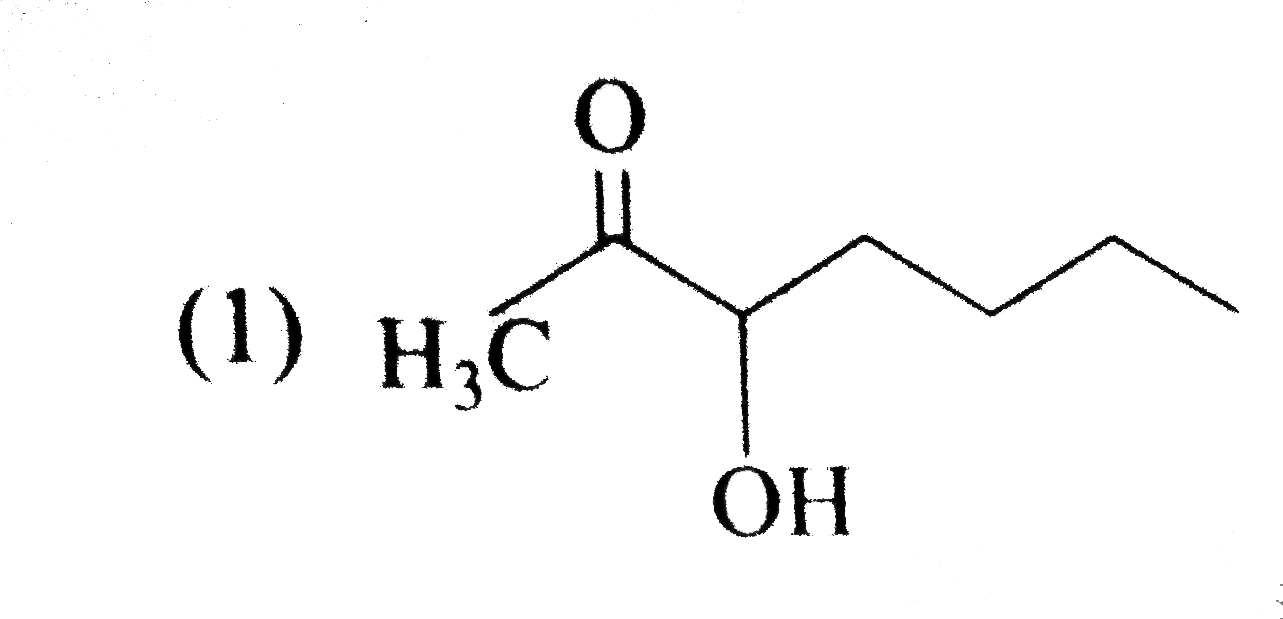
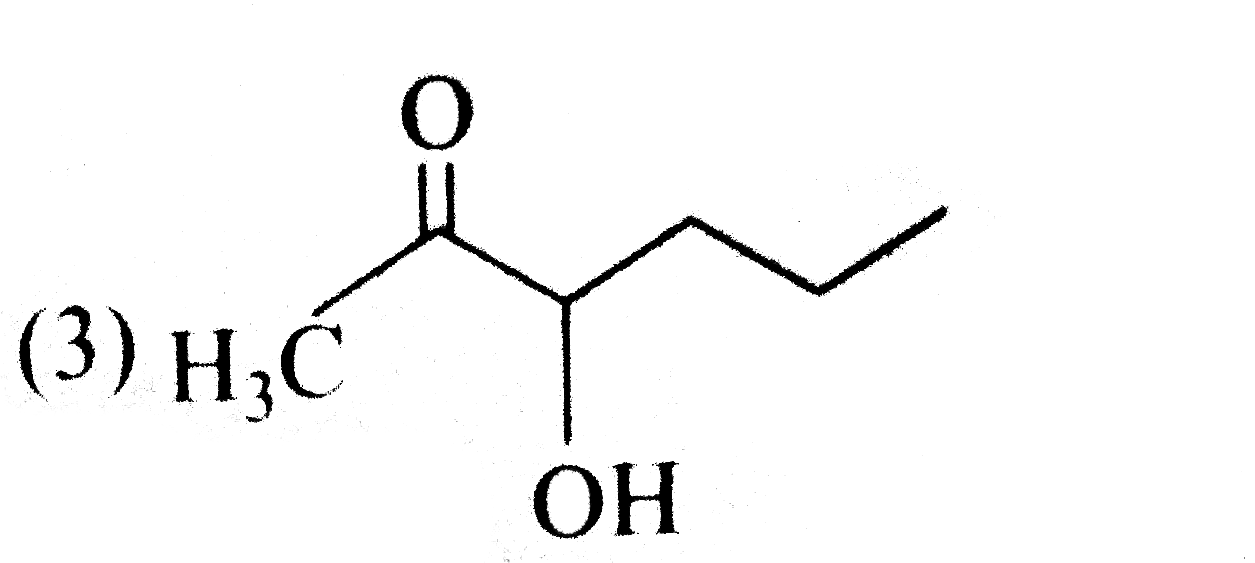
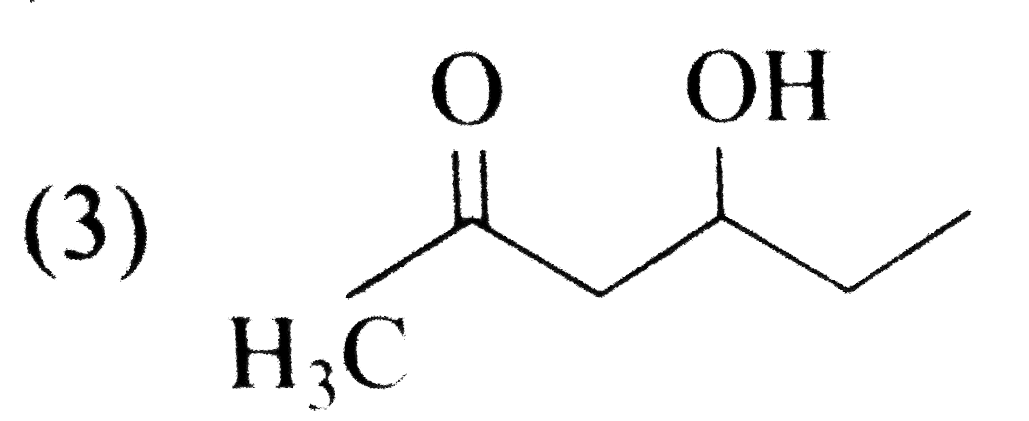
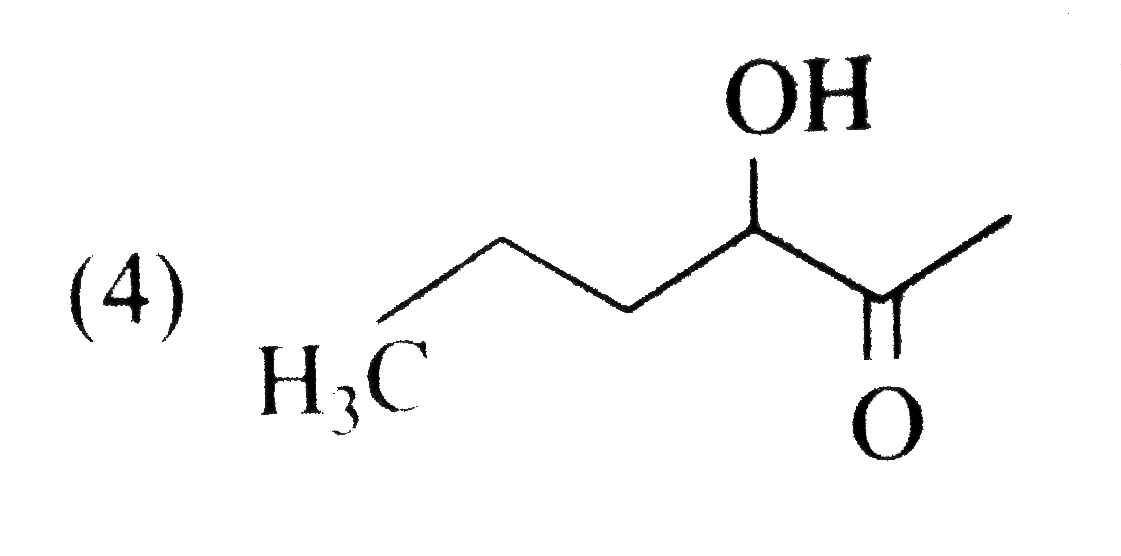
Which one of the following compounds will be most readily dehydrated?

A

B

C

D

Text Solution

AI Generated Solution

The correct Answer is:

To determine which compound will be most readily dehydrated, we need to analyze the stability of the carbocation that will form during the dehydration process. The stability of carbocations is influenced by the inductive effect (I effect) and resonance effect (if applicable). Let's break down the steps: ### Step 1: Identify the Compounds We have four compounds to consider. Let's denote them as: 1. Compound A: \( \text{CS}_3\text{C(OH)}\text{CH}_2\text{CH}_2\text{CH}_3 \) 2. Compound B: \( \text{CS}_3\text{C(OH)}\text{CH}_2\text{CH}_3 \) 3. Compound C: \( \text{CS}_3\text{C(OH)}\text{CH}_3 \) 4. Compound D: \( \text{CS}_3\text{C(OH)} \) ### Step 2: Analyze Each Compound for Carbocation Stability - **Compound A**: When dehydrated, it forms a carbocation where the hydroxyl group (OH) is replaced by a hydrogen atom. The adjacent carbon has a -I effect due to the presence of the -OH group, which destabilizes the carbocation. - **Compound B**: Similar to Compound A, the -OH group will also destabilize the carbocation due to its -I effect, making dehydration less favorable. - **Compound C**: The carbocation formed here has the -OH group further away, which means the -I effect is less pronounced. This makes the carbocation more stable compared to Compounds A and B. - **Compound D**: The carbocation formed here is very unstable due to the direct -I effect of the -OH group, making dehydration very unfavorable. ### Step 3: Compare Carbocation Stability From the analysis: - Compound A and B have significant destabilization due to the -I effect of the -OH group. - Compound C has a more stable carbocation due to the -OH group being further away, leading to less destabilization. - Compound D has the least stability due to the direct influence of the -OH group. ### Step 4: Conclusion Based on the stability of the carbocations formed, **Compound C** will be the most readily dehydrated because it leads to the formation of the most stable carbocation. ### Final Answer The compound that will be most readily dehydrated is **Compound C**. ---

To determine which compound will be most readily dehydrated, we need to analyze the stability of the carbocation that will form during the dehydration process. The stability of carbocations is influenced by the inductive effect (I effect) and resonance effect (if applicable). Let's break down the steps: ### Step 1: Identify the Compounds We have four compounds to consider. Let's denote them as: 1. Compound A: \( \text{CS}_3\text{C(OH)}\text{CH}_2\text{CH}_2\text{CH}_3 \) 2. Compound B: \( \text{CS}_3\text{C(OH)}\text{CH}_2\text{CH}_3 \) ...
Promotional Banner

Topper's Solved these Questions

  • ALCOHOL, PHENOL AND ETHERS

    R SHARMA|Exercise Follow -Up Test -1|10 Videos
  • ALCOHOL, PHENOL AND ETHERS

    R SHARMA|Exercise Follow -Up Test -2|9 Videos
  • ALCOHOL, PHENOL AND ETHERS

    R SHARMA|Exercise ETHERS level IV|7 Videos
  • AMINES

    R SHARMA|Exercise Archives|36 Videos

Similar Questions

Explore conceptually related problems

Which one of the following compounds will be most readily hydrolysed in aqueous alkali?

Which of the following compound will be most readdily dehydrated ?

Which of the following compounds that can be most readily nitrated ?

R SHARMA-ALCOHOL, PHENOL AND ETHERS-Archives
  1. Given are cyclohexanol (I), acetic acid (II),2,4,6-trinitrophenol (III...

    Text Solution

    |

  2. Among the following four compounds

    Text Solution

    |

  3. Which one of the following compounds will be most readily dehydrated?

    Text Solution

    |

  4. Which of the following conformers for ethylene glycol is most stable?

    Text Solution

    |

  5. Following compounds are given (a) CH(3)CH(2)OH , (b) CH(3)COCH(3) ...

    Text Solution

    |

  6. Glycerol on being heated with an excess of HI produces

    Text Solution

    |

  7. Consider the following reaction ethanol overset(PBr(3))(rarr)Xoverse...

    Text Solution

    |

  8. Consider the following reaction Phenol overset(Zn)underset("dust")ra...

    Text Solution

    |

  9. CH(2)OHCH(2)OH on heating with periodic acid gives

    Text Solution

    |

  10. In the reaction CH(3)overset(CH(3))overset(|)(C )H-CH(2)-O-CH(2)CH(3...

    Text Solution

    |

  11. The major organic product in the reaction CH(3)-O-CH(CH(3))(2)+Hirar...

    Text Solution

    |

  12. The general molecular formula, which represents the homologous series ...

    Text Solution

    |

  13. Ethylene oxide when treated with Grignard reagent yields

    Text Solution

    |

  14. Which one of the following compounds is most acidic

    Text Solution

    |

  15. The enzyme which hydrolyses triglycerides to fatty acid and glycerol i...

    Text Solution

    |

  16. Which of the following will not form a yellow precipitate on heating w...

    Text Solution

    |

  17. The -OH group of an alcohol or of the -COOH group of a carbocylic acid...

    Text Solution

    |

  18. Which of the following orders of acid strength is correct?

    Text Solution

    |

  19. When phenol is treated with CHCl(3) and NaOH, the product fromed is

    Text Solution

    |

  20. n-propyl alcohol can be chemical distinguished by which reagent

    Text Solution

    |
