

Home
Class 12
CHEMISTRY
Which of the following is a the most pre...

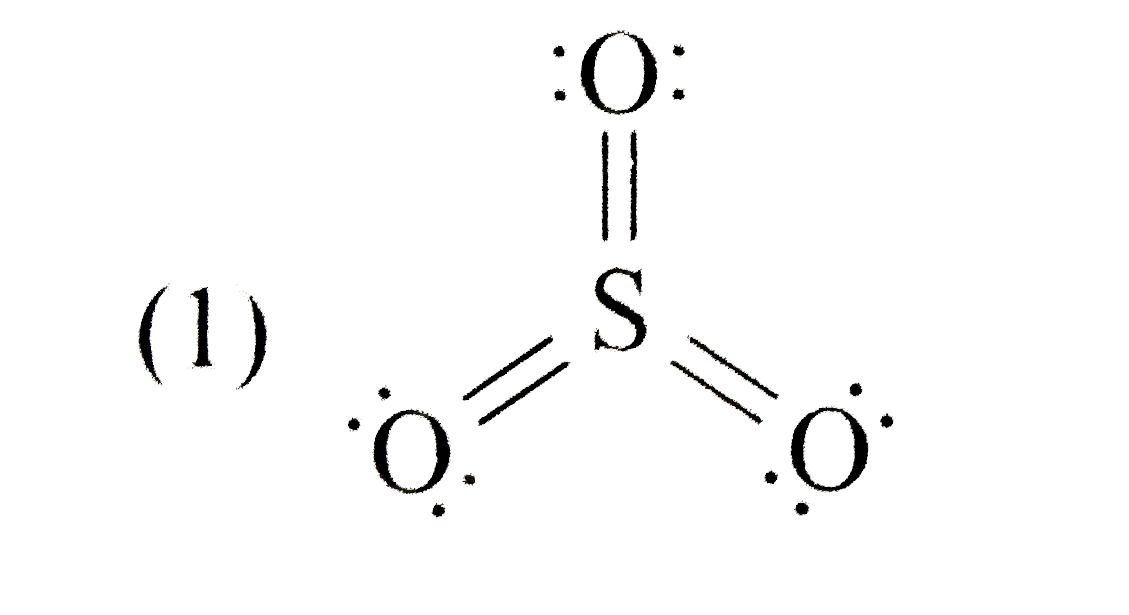
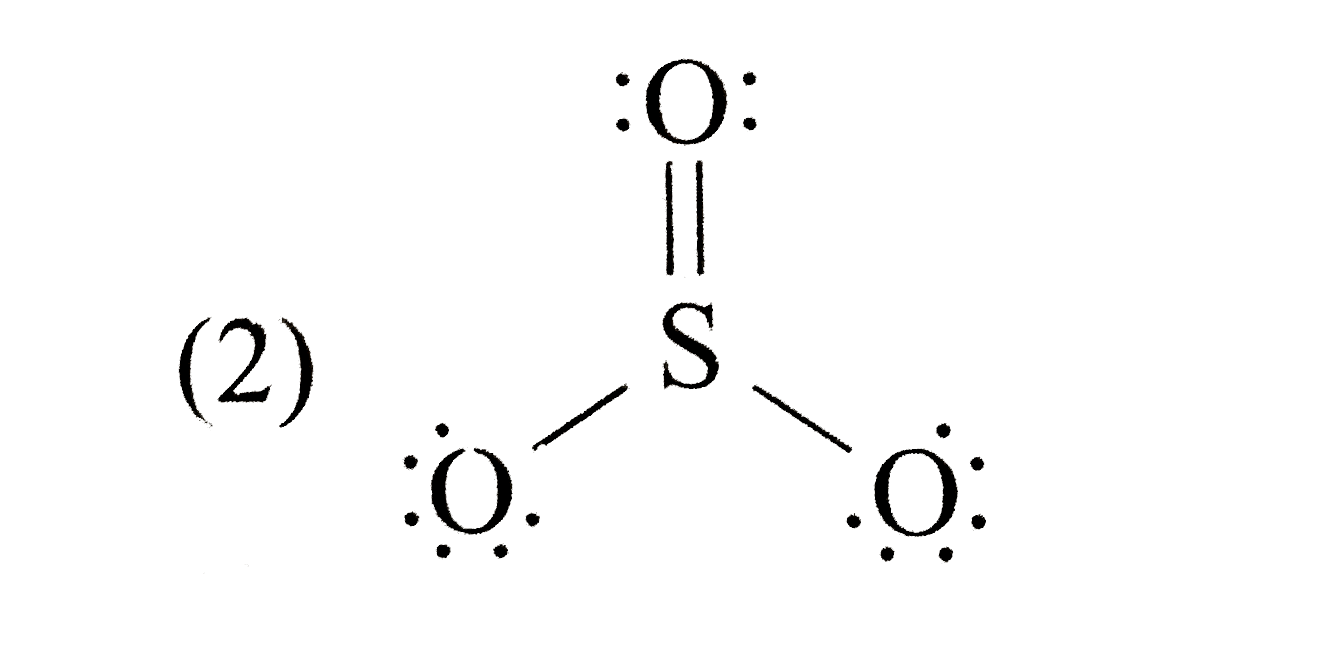
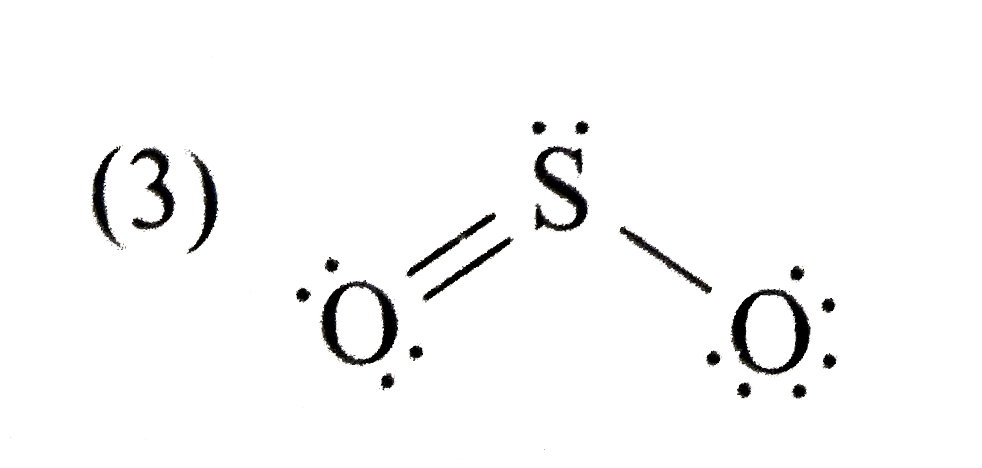
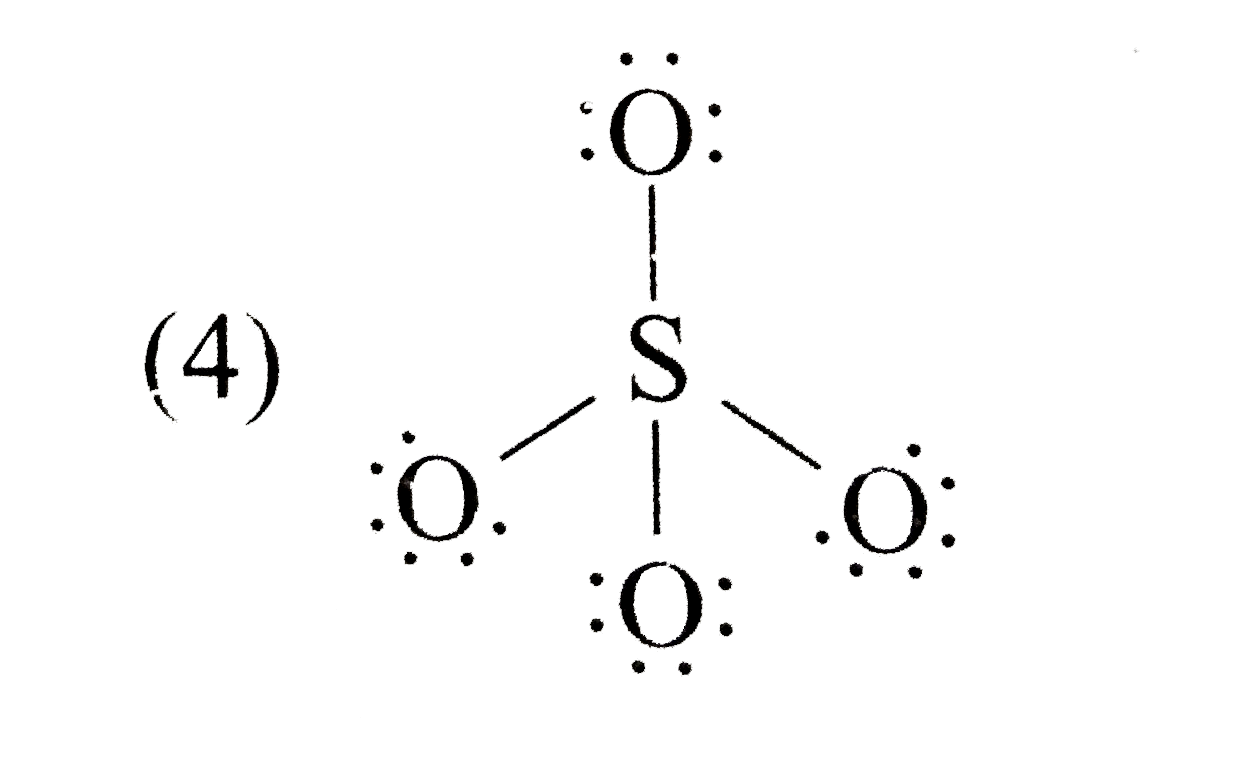
Which of the following is a the most preferred and hence of the lower energy for `SO_(3)`?

A

B

C

D

Text Solution

AI Generated Solution

The correct Answer is:
To determine the most preferred and hence the lowest energy structure for \( SO_3 \), we will calculate the formal charges for each of the proposed structures. The structure with the lowest formal charges on individual atoms and an overall formal charge of zero will be the most stable and preferred structure. ### Step-by-Step Solution: 1. **Understanding Formal Charge Calculation**: The formula for calculating the formal charge (FC) of an atom is: \[ \text{FC} = \text{Valence Electrons} - \text{Non-bonding Electrons} - \frac{1}{2} \times \text{Bonding Electrons} \] 2. **Analyzing the First Structure**: - **Oxygen**: - Valence Electrons = 6 - Non-bonding Electrons = 4 - Bonding Electrons = 4 (2 bonds with sulfur) - Formal Charge = \( 6 - 4 - \frac{1}{2} \times 4 = 0 \) - **Sulfur**: - Valence Electrons = 6 - Non-bonding Electrons = 0 - Bonding Electrons = 12 (6 bonds with oxygen) - Formal Charge = \( 6 - 0 - \frac{1}{2} \times 12 = 0 \) This structure has a total formal charge of 0, and each atom has a formal charge of 0. 3. **Analyzing the Second Structure**: - **Oxygen** (two oxygens with -1 charge): - Valence Electrons = 6 - Non-bonding Electrons = 6 - Bonding Electrons = 2 - Formal Charge = \( 6 - 6 - \frac{1}{2} \times 2 = -1 \) - **Sulfur**: - Valence Electrons = 6 - Non-bonding Electrons = 0 - Bonding Electrons = 8 - Formal Charge = \( 6 - 0 - \frac{1}{2} \times 8 = +2 \) This structure has an overall charge of 0, but the individual charges are not favorable. 4. **Analyzing the Third Structure**: - **Oxygen** (one with -1 charge, one with 0): - Valence Electrons = 6 - Non-bonding Electrons = 2 - Bonding Electrons = 2 - Formal Charge = \( 6 - 2 - \frac{1}{2} \times 2 = -1 \) - **Sulfur**: - Valence Electrons = 6 - Non-bonding Electrons = 0 - Bonding Electrons = 6 - Formal Charge = \( 6 - 0 - \frac{1}{2} \times 6 = +1 \) This structure also has unfavorable charges. 5. **Analyzing the Fourth Structure**: - **Oxygen** (all with -1 charge): - Valence Electrons = 6 - Non-bonding Electrons = 6 - Bonding Electrons = 0 - Formal Charge = \( 6 - 6 - 0 = -1 \) - **Sulfur**: - Valence Electrons = 6 - Non-bonding Electrons = 0 - Bonding Electrons = 12 - Formal Charge = \( 6 - 0 - \frac{1}{2} \times 12 = +2 \) This structure also has unfavorable charges. 6. **Conclusion**: After analyzing all four structures, the first structure (where both sulfur and oxygen have a formal charge of 0) is the most preferred and has the lowest energy. Therefore, the answer is: \[ \text{The most preferred and lowest energy structure for } SO_3 \text{ is option A.} \]

To determine the most preferred and hence the lowest energy structure for \( SO_3 \), we will calculate the formal charges for each of the proposed structures. The structure with the lowest formal charges on individual atoms and an overall formal charge of zero will be the most stable and preferred structure. ### Step-by-Step Solution: 1. **Understanding Formal Charge Calculation**: The formula for calculating the formal charge (FC) of an atom is: \[ \text{FC} = \text{Valence Electrons} - \text{Non-bonding Electrons} - \frac{1}{2} \times \text{Bonding Electrons} ...
Promotional Banner

Topper's Solved these Questions

  • THE P BLOCK ELEMENTS

    R SHARMA|Exercise QUESTION BANK|108 Videos
  • THE D AND F BLOCK ELEMENTS

    R SHARMA|Exercise Archives|54 Videos

Similar Questions

Explore conceptually related problems

Which of the following is the most preferred conformation of ethane molecule

Which of the following has lower viscosity?

Which of the following reaction is preferred at anodes during the electrolysis of H_(2)SO_(4) at higher concentration ?

Which of the following system of irrigation is preferred for the uneven land ?

Which of the following is not a preferred resonating structure for azide ion N_3^- ?

Which of the following compound is the most Harmful component of photochemical smog? (a) NO_(2) (b) PAN (c) SO_(2) (d) CH_(3)NO_(2)

R SHARMA-THE P BLOCK ELEMENTS-Archieves
  1. Which of the two lons from the list given have the geometry that is ex...

    Text Solution

    |

  2. Which one is the active constituent of bleaching powder?

    Text Solution

    |

  3. Which of the following is a the most preferred and hence of the lower ...

    Text Solution

    |

  4. The correct order of increasing bond angle in the following species is

    Text Solution

    |

  5. Oxidation state of P in H(4)P(2)O(5), H(4)P(2)O(6), H(4)P(2)O(7) are r...

    Text Solution

    |

  6. Which one of the following arrangements represents the correct order o...

    Text Solution

    |

  7. In which one of the following species , the central atom has the tuype...

    Text Solution

    |

  8. How many bridging oxygen atoms are presents in P(4)O(10) ?

    Text Solution

    |

  9. Some of the properties of the two species, NO(3)^(-) and H(3)O^(+) are...

    Text Solution

    |

  10. In the case of alkali metals, the covalent character decreases in the ...

    Text Solution

    |

  11. Which of the following molecules acts as a Lewis acid?

    Text Solution

    |

  12. Which of the following is the strongest oxidising agent?

    Text Solution

    |

  13. In which of the following molecular/ions BF(2),NO(2)^(-),NH(2) and H(...

    Text Solution

    |

  14. Which one of the following arrangements does not give the correct pict...

    Text Solution

    |

  15. The angular shape of none molecule (O(3)) consists of

    Text Solution

    |

  16. The correct order for bond angles is :

    Text Solution

    |

  17. In which of the following pairs, the two spices are iso-structural?

    Text Solution

    |

  18. Which one of the following ionic species has the greatest proton affin...

    Text Solution

    |

  19. Which of the following species has a linear shape?

    Text Solution

    |

  20. Which of the following is not isostructural with SiCI(4) ?

    Text Solution

    |