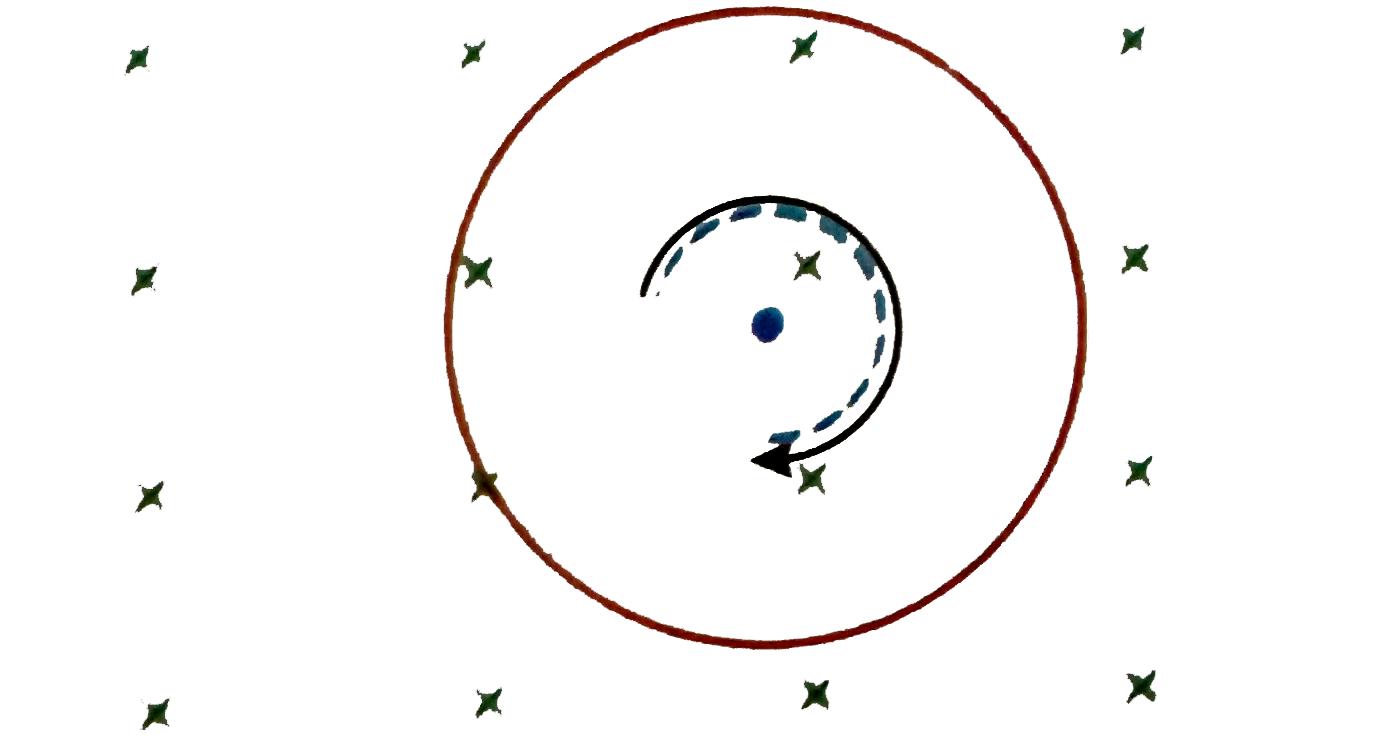
A
B
C
D
Text Solution
Verified by Experts
The correct Answer is:



Topper's Solved these Questions
ELECTRO MAGNETIC INDUCTION
NARAYNA|Exercise Comprehension Type Questions|22 VideosELECTRO MAGNETIC INDUCTION
NARAYNA|Exercise Single Answer Questions Level -VI|13 VideosELECTRO MAGNETIC INDUCTION
NARAYNA|Exercise NCERT Based Questions|10 VideosELECTRIC CHARGES AND FIELDS
NARAYNA|Exercise EXERCISE -4|43 VideosELECTRO MAGNETIC WAVES
NARAYNA|Exercise LEVEL-II(H.W)|14 Videos
Similar Questions
Explore conceptually related problems
NARAYNA-ELECTRO MAGNETIC INDUCTION-Single Answer Questions Level -V
- A helicopter has metallic blades with a length pf 3 m extending outwar...
Text Solution
|
- In the figure shown AB is a plastic rod moving with a constant velocit...
Text Solution
|
- A non-conducting disk of radius R is rotating about its own axis with ...
Text Solution
|
- A conducting bar mass m and length l moves on two frictionless paralle...
Text Solution
|
- In a cylinder region of radius R, a uniform magnetic field is there wh...
Text Solution
|
- A uniform field B increasing with time exists in a cylindrical region ...
Text Solution
|
- Two parallel resistanceless rails are connected by an inductor of indu...
Text Solution
|
- In the figure shown , the wires P(1)Q(1) and P(2)Q(2) are made to slid...
Text Solution
|
- In the figure shown there exists a uniform time varying magnetic field...
Text Solution
|
- In figure, there is conducting ring having resistance R placed in the...
Text Solution
|
- The magnetic flux phi linked with a conducting coil depends on time as...
Text Solution
|