

Home
Class 11
CHEMISTRY
For a reversible reaction at constant te...

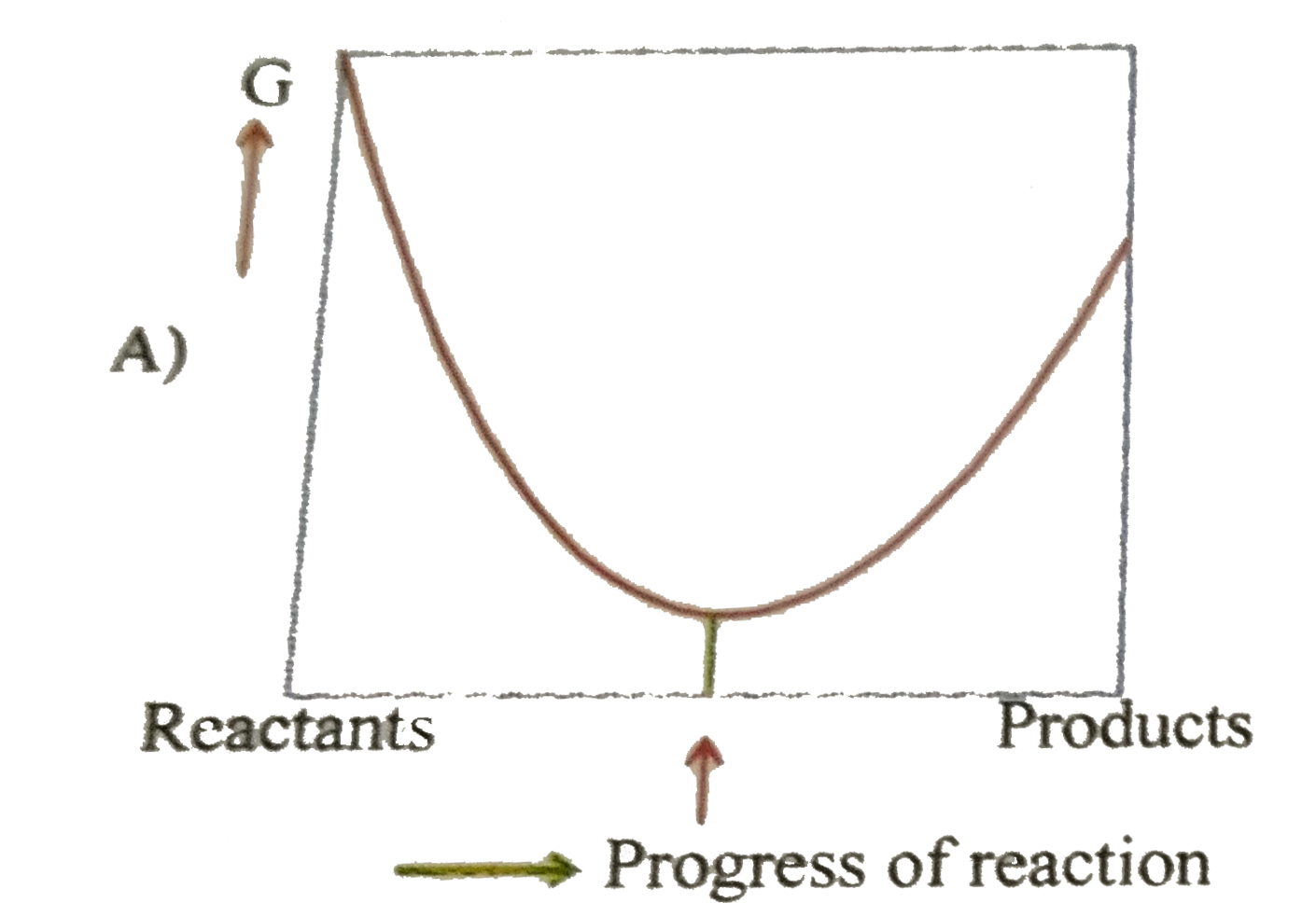
For a reversible reaction at constant temperature and at constant pressure the equilibrium composition of reaction mixture corresponds to the lowest point on Gibbls energy Vs progress of reaction diagrams as shown. At equilibrium Gibbs energy of reaction is equal to zero.

The value of `"log"_(10) K_(eq)` is equal to [`k_(eq)` is the equilibrium coustant]

Promotional Banner

Similar Questions

Explore conceptually related problems

For a reversible reaction at constant temperature and at constant pressure the equilibrium composition of reaction mixture corresponds to the lowest point on Gibbls energy Vs progress of reaction diagrams as shown. At equilibrium Gibbs energy of reaction is equal to zero. Which diagram represents the large value of equilibrium constant for the reversible reaction

For a reversible reaction at constant temperature and at constant pressure the equilibrium composition of reaction mixture corresponds to the lowest point on Gibbls energy Vs progress of reaction diagrams as shown. At equilibrium Gibbs energy of reaction is equal to zero. For a reaction M_(2)O_((s))^(3//4) rarr 2 M_((S)) + (1)/(2) O_(2 (g)) Delta H = 30 KJ//mol and Delta S = 0.07 KJ//mol //K at 1 atm. The reaction would not be spontaneous at temperature

Assertion : At constant temperature and pressure chemical reactions are spontaneous in the direction of decreasing Gibb's energy Reason : For every chemical reaction at equilibrium standard Gibb's energy of the reaction is zero

If the equilibrium constant of a reaction is 2×10^3 at 25°C then the standard Gibbs free energy change for the reaction will be

If the equilibrium constant of a reaction is 2×10^3 at 25°C then the standard Gibbs free energy change for the reaction will be

The equilibrium constant of a reaction and the standard Gibbs energy change of the reaction are related by the equation

How is standard Gibbs energy of a reaction related to its equilibrium constant?

At constant temperature, if the pressure is changed at equilibrium of a gaseous reaction, then will the values of K_(p),K_(c) and K_(x) change?