

Home
Class 11
PHYSICS
Two horizontal discs A and B of radii r ...

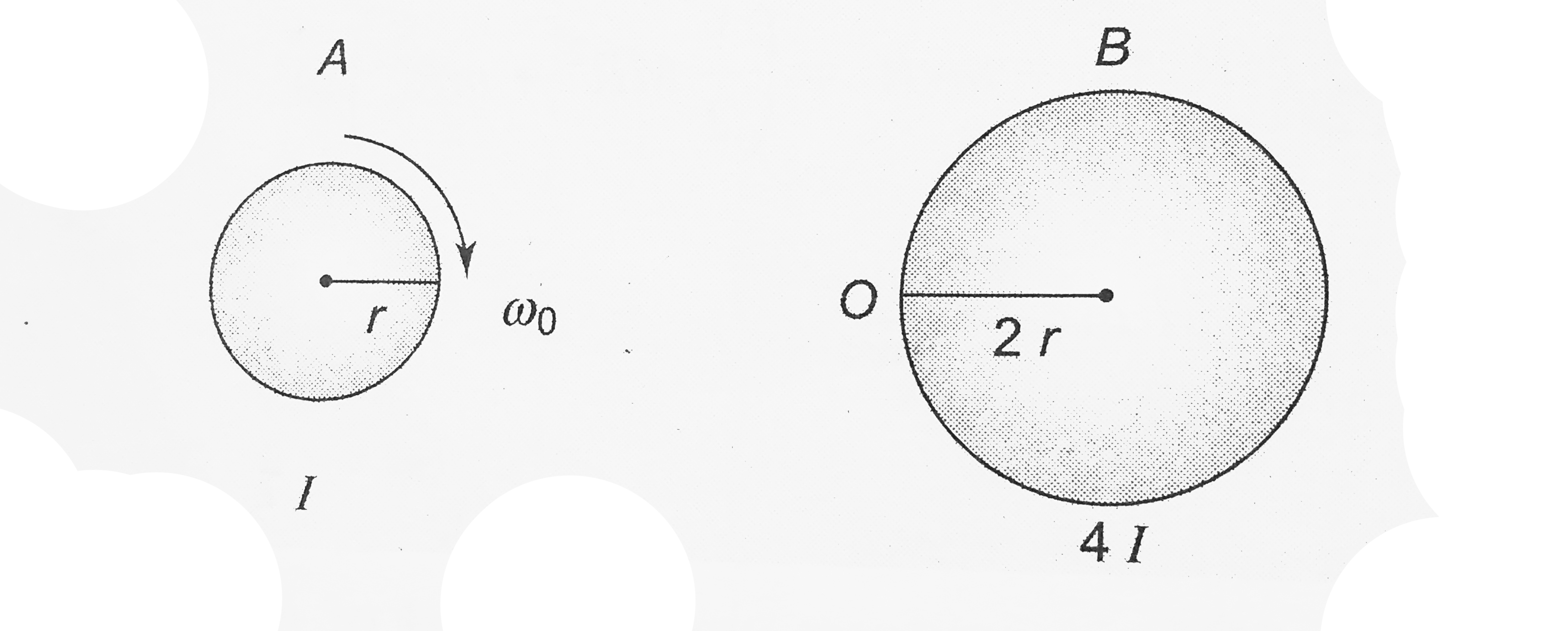
Two horizontal discs `A` and `B` of radii `r` and `2r` having moments of inertia `I` and `4I` about their axes. Initially, disc `A` is rotating with `omega_(0)` and disc `B` is at rest. Their rims are now brought in contact. The discs first slip over each other at the contact but slipping finally ceases due to the fricition between them. Find the angular speeds of the discs after the slipping ceases. Also, find the loss in kinetic energy.

Promotional Banner

Similar Questions

Explore conceptually related problems

Figure shows two cylinders of radii r_1 and r_2 having moments of inertia I_1 and I_2 about their respective axes. Initially the cylinders rotate about their axes with angular speed omega_1 and omega_2 as shown in the figure. The cylinders are moved closer to touch each other keeping the axes parallel. The cylinders first slip over each other at the contact but the slipping finally ceases due to the friction between them. Find the angular speeds of the cylinders after the slipping ceases.

Figure shows two cylinders of radii r_1 and r_2 having moments of inertia I_1 and I_2 about their respective axes. Initially the cylinders rotate about their axes with angular speed omega_1 and omega_2 as shown in the figure. The cylinders are moved closer to touch each other keeping the axes parallel. The cylinders first slip over each other at the contact but the slipping finally ceases due to the friction between them. Find the angular speeds of the cylinders after the slipping ceases.

Figure shows two cylinders of raddi r_1 and r_2 having moments of inertia I_1 and I_2 about their respective axes. Initially the cylinders rotate about their axes with angular speed omega_1 and omega_2 as shown in the figure. The cylinders are moved closer to touch each other keeping the axes parallel. The cylinders first slipover each other at the contact but the slipping finally ceases due to the friction between them. Find the angular speeds of the sylinders after the slipping ceases.

Two horizontal discs of different radii are free to rotate about their central vertical axes: One is given some angular velocity, the other is stationary. Their rims arc now brought in contact. There is friction between the rims. Then

Two horizontal discs of different radii are free to rotate about their central vertical axes: One is given some angular velocity, the other is stationary. Their rims arc now brought in contact. There is friction between the rims. Then

the disc of the radius r is confined to roll without slipping at A and B if the plates have the velocities shown, determine the angular velocity of the disc.

the disc of the radius r is confined to roll without slipping at A and B if the plates have the velocities shown, determine the angular velocity of the disc.

Two discs of moments of inertia I_1 and I_2 about their respective axes , rotating with angular frequencies omega_1 and omega_2 respectively, are brought into contact face to face with their axes of rotation coincident. The angular frequency of the composite disc will be