A
B
C
D
Text Solution
Verified by Experts
The correct Answer is:



Topper's Solved these Questions
ALDEHYDES, KETONES AND CARBOXYLIC ACIDS
PRADEEP|Exercise COMPETITION FOCUS JEE (MAIN AND ADVANCED)/MEDICAL ENTRANCE SPECIEAL (MULTIPLE CHOICE QUESTIONS-II WITH ONE OR MORE THAN ONE CORRECT ANSWER)|1 VideosALDEHYDES, KETONES AND CARBOXYLIC ACIDS
PRADEEP|Exercise COMPETITION FOCUS JEE (MAIN AND ADVANCED)/MEDICAL ENTRANCE SPECIEAL (MULTIPLE CHOICE QUESTIONS-II WITH ONE CORRECT ANSWER)|12 VideosALDEHYDES, KETONES AND CARBOXYLIC ACIDS
PRADEEP|Exercise VALUE BASED QUESTIONS WITH ANSWERS|3 VideosALCOHOLS, PHENOLS AND ETHERS
PRADEEP|Exercise IMPORTANT QUESTIONS FOR BOARD EXAMINATIONS.|29 VideosAPPENDIX
PRADEEP|Exercise MODEL TEST PAPER <br> (Section C )|15 Videos
Similar Questions
Explore conceptually related problems
PRADEEP-ALDEHYDES, KETONES AND CARBOXYLIC ACIDS -COMPETITION FOCUS JEE (MAIN AND ADVANCED)/MEDICAL ENTRANCE SPECIEAL (MULTIPLE CHOICE QUESTIONS-I WITH ONE CORRECT ANSWER)
- The major product of the following reaction is
Text Solution
|
- The reagent used for the separation of acetaldehyde from acetophenone ...
Text Solution
|
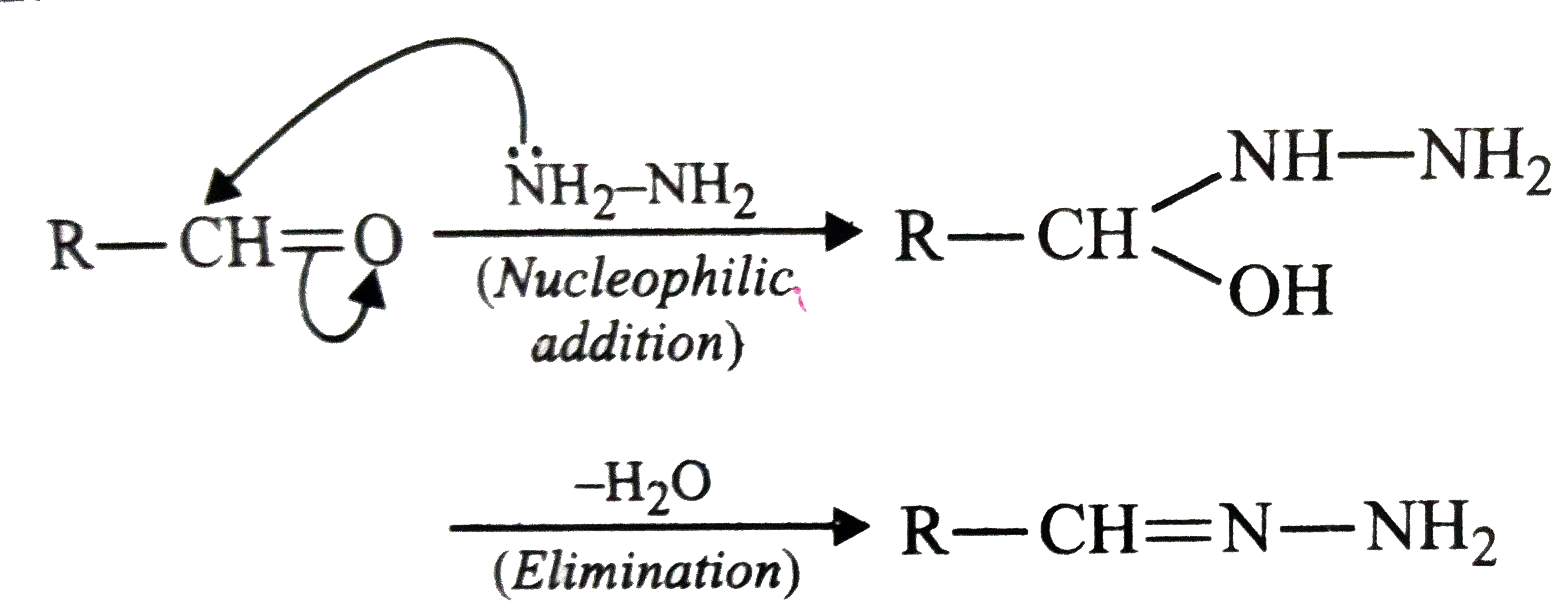
- Consider the reaction RCHO + NH(2)NH(2) rarr R - CH = N NH(2) What...
Text Solution
|
- Reaction of carbonyl compound with one of the following reagents invol...
Text Solution
|
- The smallest ketone and its next homologue are reacted with NH(2)OH to...
Text Solution
|
- The correct structure of the product 'A' formed in the reaction.
Text Solution
|
- Which one of the following is reduced with zinc and hydrochloric acid ...
Text Solution
|
- During reduction of aldehydes with hydrazine and potassium hydroxide, ...
Text Solution
|
- In the given transformation, which of the following is the most approp...
Text Solution
|
- Benzaldehyde and acetone can be best distinguished using ……..
Text Solution
|
- The product of acid hydrolysis of P and Q can be distinguished by
Text Solution
|
- C3H6O did not give a silver mirror with Tollen's reagent, but gave an ...
Text Solution
|
- Compound A (molecular formula C(3)H(8)O ) is treated with acidified p...
Text Solution
|
- Oxidation of acetaldehyde with selenium dioxide produces:
Text Solution
|
- Iodoform test is not given by
Text Solution
|
- Iodoform can be prepared from all except
Text Solution
|
- CH(3)CHO and C(6)H(5)CH(2)CHO can be distiguished chemically by
Text Solution
|
- Amongst the following compounds, the one which would not respond to io...
Text Solution
|
- An organic compound 'X' having molecular formula C(5)H(10)O yield phen...
Text Solution
|
- A carbonyl compound with molecular mass 86, does not reduce Fehling's ...
Text Solution
|