Home
Class 11
BIOLOGY
Animal cells are suspended in a culture ...

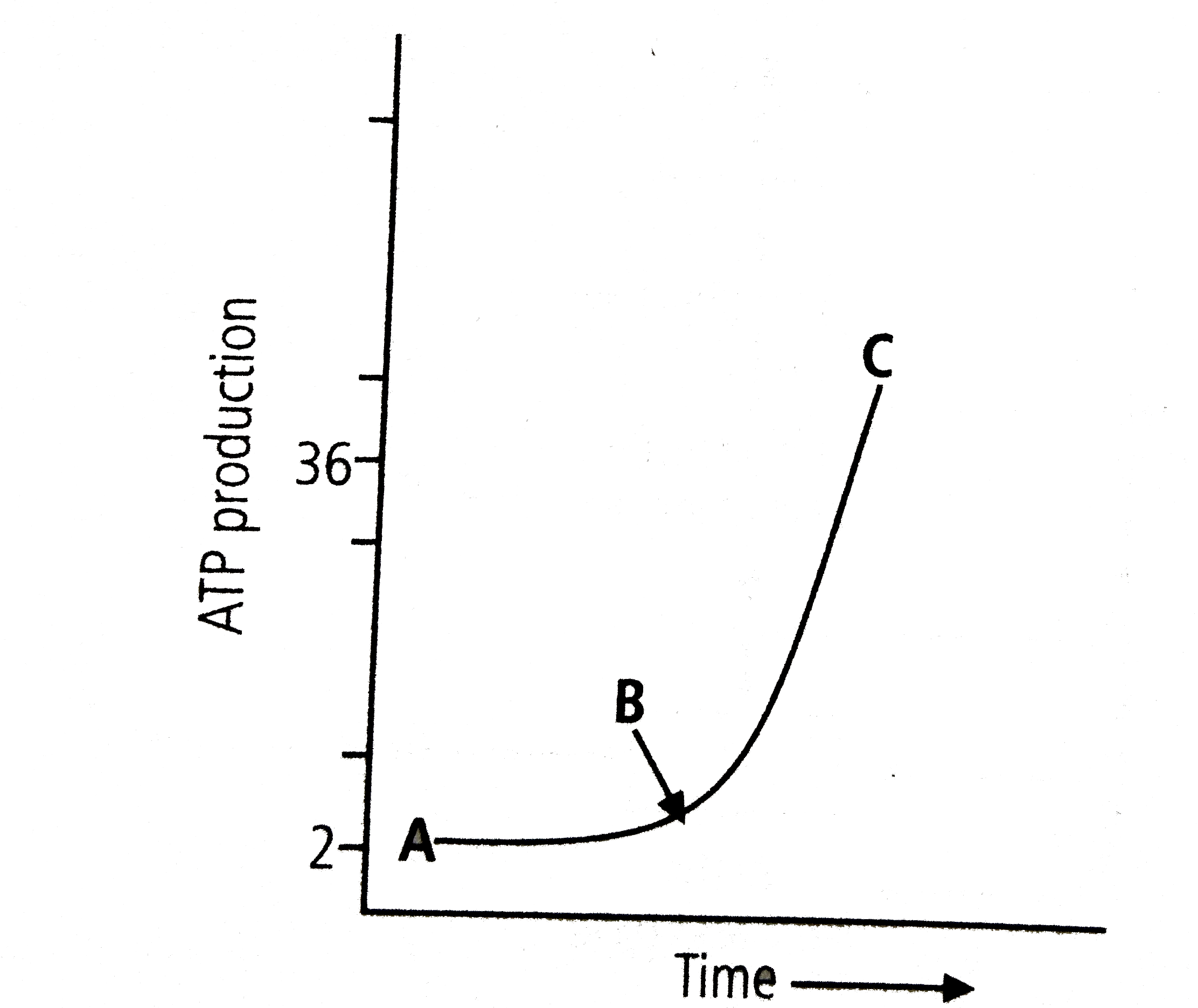
Animal cells are suspended in a culture medium that contains excess glucose. The graph below shows glucose utilisation under different growth conditions (A),(B), and (C) in the graph indicate

A

A-Anaerobic respiration
B-Introduction of `O_(2)` to culture medium
C- Aerobic respiration

B

A-Aerobic respiration
B-Introduction of `O_(2)` to culture medium
`C`- Anaerobic respiration

C

A-Aerobic respiration
B-Supply of organic triphosphate
C-Aerobic respiration

D

A-Aerobic respiration
B-Introduction of CO to culture medium
C-Anaerobic respiration.

Text Solution

Verified by Experts

The correct Answer is:

a

Anaerobic respiration takes place in the absence of oxygen. It leads to incomplete degradation of substrate into alcohol and `CO_(2)` releasing some energy `(2ATP)`. Aerobic respiration occurs in the presence of oxygen. It results in complet oxidation of substrate into `CO_(2)`, water and energy `(38ATP)`.
Promotional Banner

Topper's Solved these Questions

  • PLANT KINGDOM

    NCERT FINGERTIPS|Exercise Plant Kingdom|160 Videos
  • STRUCTURAL ORGANISATION IN ANIMALS

    NCERT FINGERTIPS|Exercise Structural Organisation In Animals|129 Videos

Similar Questions

Explore conceptually related problems

A mass of living cells are kept in a culture medium under anaerobic conditions. The cells were supplied with labelled c^14 glucose. Pick up the true statement

An animal cell was grown in a culture medium containing P^(32) nucleotides, the parts from which DNA is built. Later examination of the cell showed the radioactivity to be concentrated in the

Read the passage given below and answer the question: Polysaccharides may be very large molecules. Starch, glycogen, cellulose, and chitin are examples of polysaccharides. Starch is the stored form of sugars in plants and is made up of amylose and amylopectin (both polymers of glucose). Amylose is soluble in water and can be hydrolyzed into glucose units breaking glycocidic bonds, by the enzymes a- amylase and B-amylase. It is straight chain polymer. Amylopectin is a branched chain polymer of several D-glucose molecules. 80% of amylopectin is present in starch. Plants are able to synthesize glucose, and the excess glucose is stored as starch in different plant parts, including roots and seeds. The starch that is consumed by animals is broken down into smaller molecules, such as glucose. The cells can then absorb the glucose. Glycogen is the storage form of glucose in humans and other vertebrates, and is made up of monomers of glucose. It is structurally quite similar to amylopectin. Glycogen is the animal equivalent of starch. It is stored in liver and skeletal muscles. Cellulose is one of the most abundant natural biopolymers. The cell walls of plants are mostly made of cellulose, which provides structural support to the cell. Wood and paper are mostly cellulosic in nature. Like amylose, cellulose is a linear polymer of glucose. Cellulose is made up of glucose monomers that are linked by bonds between particular carbon atoms in the glucose molecule.Every other glucose monomer in cellulose is flipped over and packed tightly as extended long chains. This gives cellulose its rigidity and high tensile strength-which is so important to plant cells. Cellulose passing through our digestive system is called dietary fiber. (Source: "https://chem.libretexts.org" ) Which biopolymer breaks down to release glucose , whenever glucose levels drop in Our body:

Read the passage given below and answer the question: Polysaccharides may be very large molecules. Starch, glycogen, cellulose, and chitin are examples of polysaccharides. Starch is the stored form of sugars in plants and is made up of amylose and amylopectin (both polymers of glucose). Amylose is soluble in water and can be hydrolyzed into glucose units breaking glycocidic bonds, by the enzymes a- amylase and B-amylase. It is straight chain polymer. Amylopectin is a branched chain polymer of several D-glucose molecules. 80% of amylopectin is present in starch. Plants are able to synthesize glucose, and the excess glucose is stored as starch in different plant parts, including roots and seeds. The starch that is consumed by animals is broken down into smaller molecules, such as glucose. The cells can then absorb the glucose. Glycogen is the storage form of glucose in humans and other vertebrates, and is made up of monomers of glucose. It is structurally quite similar to amylopectin. Glycogen is the animal equivalent of starch. It is stored in liver and skeletal muscles. Cellulose is one of the most abundant natural biopolymers. The cell walls of plants are mostly made of cellulose, which provides structural support to the cell. Wood and paper are mostly cellulosic in nature. Like amylose, cellulose is a linear polymer of glucose. Cellulose is made up of glucose monomers that are linked by bonds between particular carbon atoms in the glucose molecule.Every other glucose monomer in cellulose is flipped over and packed tightly as extended long chains. This gives cellulose its rigidity and high tensile strength-which is so important to plant cells. Cellulose passing through our digestive system is called dietary fiber. (Source: "https://chem.libretexts.org" ) In animals, Glycogen is stored in :

Read the passage given below and answer the question: Polysaccharides may be very large molecules. Starch, glycogen, cellulose, and chitin are examples of polysaccharides. Starch is the stored form of sugars in plants and is made up of amylose and amylopectin (both polymers of glucose). Amylose is soluble in water and can be hydrolyzed into glucose units breaking glycocidic bonds, by the enzymes a- amylase and B-amylase. It is straight chain polymer. Amylopectin is a branched chain polymer of several D-glucose molecules. 80% of amylopectin is present in starch. Plants are able to synthesize glucose, and the excess glucose is stored as starch in different plant parts, including roots and seeds. The starch that is consumed by animals is broken down into smaller molecules, such as glucose. The cells can then absorb the glucose. Glycogen is the storage form of glucose in humans and other vertebrates, and is made up of monomers of glucose. It is structurally quite similar to amylopectin. Glycogen is the animal equivalent of starch. It is stored in liver and skeletal muscles. Cellulose is one of the most abundant natural biopolymers. The cell walls of plants are mostly made of cellulose, which provides structural support to the cell. Wood and paper are mostly cellulosic in nature. Like amylose, cellulose is a linear polymer of glucose. Cellulose is made up of glucose monomers that are linked by bonds between particular carbon atoms in the glucose molecule.Every other glucose monomer in cellulose is flipped over and packed tightly as extended long chains. This gives cellulose its rigidity and high tensile strength-which is so important to plant cells. Cellulose passing through our digestive system is called dietary fiber. (Source: "https://chem.libretexts.org" ) The linkages which join monosaccharides to form long chain polysaccharides :

Read the passage given below and answer the question: Polysaccharides may be very large molecules. Starch, glycogen, cellulose, and chitin are examples of polysaccharides. Starch is the stored form of sugars in plants and is made up of amylose and amylopectin (both polymers of glucose). Amylose is soluble in water and can be hydrolyzed into glucose units breaking glycocidic bonds, by the enzymes a- amylase and B-amylase. It is straight chain polymer. Amylopectin is a branched chain polymer of several D-glucose molecules. 80% of amylopectin is present in starch. Plants are able to synthesize glucose, and the excess glucose is stored as starch in different plant parts, including roots and seeds. The starch that is consumed by animals is broken down into smaller molecules, such as glucose. The cells can then absorb the glucose. Glycogen is the storage form of glucose in humans and other vertebrates, and is made up of monomers of glucose. It is structurally quite similar to amylopectin. Glycogen is the animal equivalent of starch. It is stored in liver and skeletal muscles. Cellulose is one of the most abundant natural biopolymers. The cell walls of plants are mostly made of cellulose, which provides structural support to the cell. Wood and paper are mostly cellulosic in nature. Like amylose, cellulose is a linear polymer of glucose. Cellulose is made up of glucose monomers that are linked by bonds between particular carbon atoms in the glucose molecule.Every other glucose monomer in cellulose is flipped over and packed tightly as extended long chains. This gives cellulose its rigidity and high tensile strength-which is so important to plant cells. Cellulose passing through our digestive system is called dietary fiber. (Source: "https://chem.libretexts.org" ) Amylose is :

Read the passage given below and answer the question: Polysaccharides may be very large molecules. Starch, glycogen, cellulose, and chitin are examples of polysaccharides. Starch is the stored form of sugars in plants and is made up of amylose and amylopectin (both polymers of glucose). Amylose is soluble in water and can be hydrolyzed into glucose units breaking glycocidic bonds, by the enzymes a- amylase and B-amylase. It is straight chain polymer. Amylopectin is a branched chain polymer of several D-glucose molecules. 80% of amylopectin is present in starch. Plants are able to synthesize glucose, and the excess glucose is stored as starch in different plant parts, including roots and seeds. The starch that is consumed by animals is broken down into smaller molecules, such as glucose. The cells can then absorb the glucose. Glycogen is the storage form of glucose in humans and other vertebrates, and is made up of monomers of glucose. It is structurally quite similar to amylopectin. Glycogen is the animal equivalent of starch. It is stored in liver and skeletal muscles. Cellulose is one of the most abundant natural biopolymers. The cell walls of plants are mostly made of cellulose, which provides structural support to the cell. Wood and paper are mostly cellulosic in nature. Like amylose, cellulose is a linear polymer of glucose. Cellulose is made up of glucose monomers that are linked by bonds between particular carbon atoms in the glucose molecule.Every other glucose monomer in cellulose is flipped over and packed tightly as extended long chains. This gives cellulose its rigidity and high tensile strength-which is so important to plant cells. Cellulose passing through our digestive system is called dietary fiber. (Source: "https://chem.libretexts.org" ) Cellulose on complete hydrolysis yields:

NCERT FINGERTIPS-RESPIRATION IN PLANTS-Respiration In Plants
  1. Refer to the following flow chart representing the cellular respiratio...

    Text Solution

    |

  2. Study the given and select the incorrect option regarding this.

    Text Solution

    |

  3. Animal cells are suspended in a culture medium that contains excess gl...

    Text Solution

    |

  4. In addition to the normal process of oxidation of carbohydrates throug...

    Text Solution

    |

  5. Mechanism of phosphorylation is depiected in the diagram below. Study ...

    Text Solution

    |

  6. The ultimate electron acceptor of respiration in an aerobic organism i...

    Text Solution

    |

  7. Phosphorylation of glucose during glycolysis is catalysed by

    Text Solution

    |

  8. Pyruvic acid, the key product of glycolysis can heve many matabolic fa...

    Text Solution

    |

  9. Electron Transport system (ETS) is located in mitochondrial

    Text Solution

    |

  10. Which of the following exhibits the highest rate of respiration?

    Text Solution

    |

  11. Mitochondria are called power houes of the cell. Which of the followin...

    Text Solution

    |

  12. The end product of oxidative phosphorylation is

    Text Solution

    |

  13. Match the following and choose the correct option from those given bel...

    Text Solution

    |

  14. Assertio : Respiration is the breaking of the C-C bonds of complex com...

    Text Solution

    |

  15. Assertion : ATP acts as the energy currency of the cell. Reason : AT...

    Text Solution

    |

  16. Assertion : Plants have no specialised respiratory organs. Reason : ...

    Text Solution

    |

  17. Assertion : Glycolysis is also called EMP pathway. Reason : It is th...

    Text Solution

    |

  18. Assertion : This conversion of 1,3-bishosphoglycerate (BPGA) to 3-phos...

    Text Solution

    |

  19. Assertion : Fermentation is the incomplete oxidation of glucose into l...

    Text Solution

    |

  20. Assertion : Anaerobic respiration sometimes occurs in our skeletal mus...

    Text Solution

    |
