Home
Class 12
BIOLOGY
Identify the different parts of a typica...

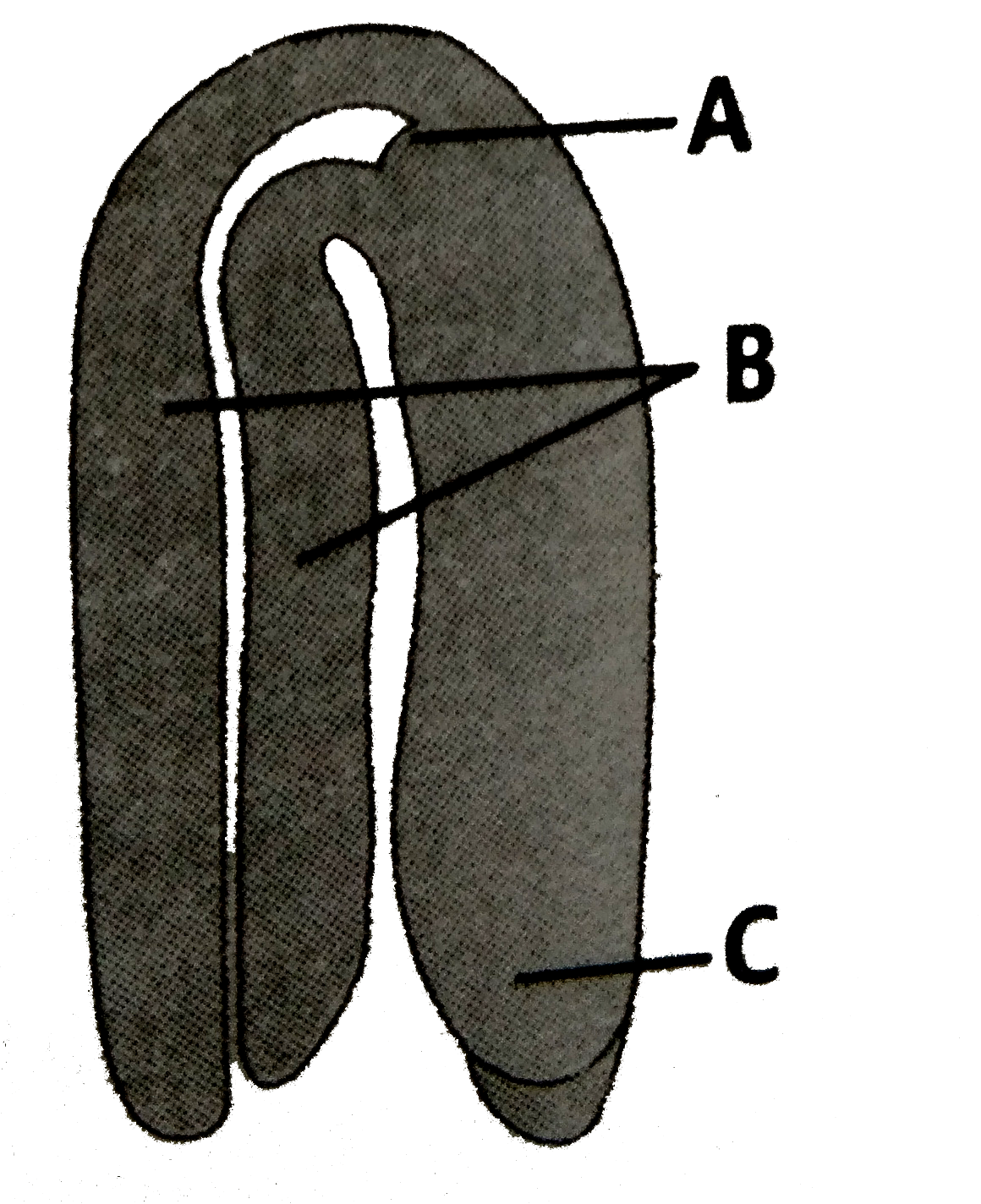
Identify the different parts of a typical dicot embryo labelled as A,B and C and select the correct option.

A

`{:(A,B,C),("Plumule","Cotyledons","Radicle"):}`

B

`{:(A,B,C),("Radicle","Cotyledons","Plumule"):}`

C

`{:(A,B,C),("Cotyledons","Plumule","Radicle"):}`

D

`{:(A,B,C),("Cotyledons","Radicle","Plumule"):}`

Text Solution

Verified by Experts

The correct Answer is:

A
Promotional Banner

Topper's Solved these Questions

  • REPRODUCTIVE HEALTH

    NCERT FINGERTIPS|Exercise Reproductive Health|133 Videos
  • STRATEGIES FOR ENHANCEMENT IN FOOD PRODUCTION

    NCERT FINGERTIPS|Exercise Strategies For Enhancement In Food Production|151 Videos

Similar Questions

Explore conceptually related problems

Identify the parts labelled a, b, c and d and select the correct option .

Identify the given figures A, B and C and select the correct option.

Identify the figures A,B, C and D and select the correct option.

The figure given here is of rib cage. Identify the parts labelled as A, B and C and select the correct option .

Given figure represents the different zones of a lake or a pond. Identify the labelled parts X,Y and Z and select the correct statement.

Identify the missing words (A,B,C and D) and select the correct option.

Identify the functions of the parts labelled as A, B,C and E in the given figure . Select the correct option after referring to the given table.

Identify parts labelled A, B, and C in the given diagram and select the correct option.

Identify the parts labelled A,B and C in the given figure and select the correct option.

Given is the diagrammatic sketch of a certain type of connective tissue Identify the parts labelled as A,B,C and D and select the correct option.

NCERT FINGERTIPS-SEXUAL REPRODUCTION IN FLOWERING PLANTS-Sexual Reproduction In Flowering Plants
  1. The true embryo develops as a result of fusion of

    Text Solution

    |

  2. Father of India embryology is

    Text Solution

    |

  3. Identify the different parts of a typical dicot embryo labelled as A,B...

    Text Solution

    |

  4. The portion of embryonal axis between plumule (future shoot) and cotyl...

    Text Solution

    |

  5. Identify the parts labelled A,B and C in the given figure and select t...

    Text Solution

    |

  6. Which of the given statements are true? (i) During the development o...

    Text Solution

    |

  7. Coleoptile and coleorhiza are the protective sheats covering labelled ...

    Text Solution

    |

  8. is not an endospermic seed.

    Text Solution

    |

  9. Endosperm is completely consumed by the developing embryo in

    Text Solution

    |

  10. Endospermic seeds, are found in

    Text Solution

    |

  11. In albuminous seeds, food is stored in and in exalbuminous seeds, food...

    Text Solution

    |

  12. Persistent nucellus is called asand is found in .

    Text Solution

    |

  13. Identify the parts labelled as A,B,C and D in the given figure and sel...

    Text Solution

    |

  14. Refer to the given figure and identify the parts labelled P,Q,R and S.

    Text Solution

    |

  15. Identify the wrong statement regarding post-fertilisation development.

    Text Solution

    |

  16. Match column I with column II and select the correct option from the g...

    Text Solution

    |

  17. Select the correct statements regarding parthenocarpy.

    Text Solution

    |

  18. This is an example of a very old viable seed excavated from Arctic Tun...

    Text Solution

    |

  19. Polyembryony commonly occurs in

    Text Solution

    |

  20. In a case of polyembryony if an embryo develops from the synergid and ...

    Text Solution

    |
