A
B
C
D
Text Solution
Verified by Experts
The correct Answer is:
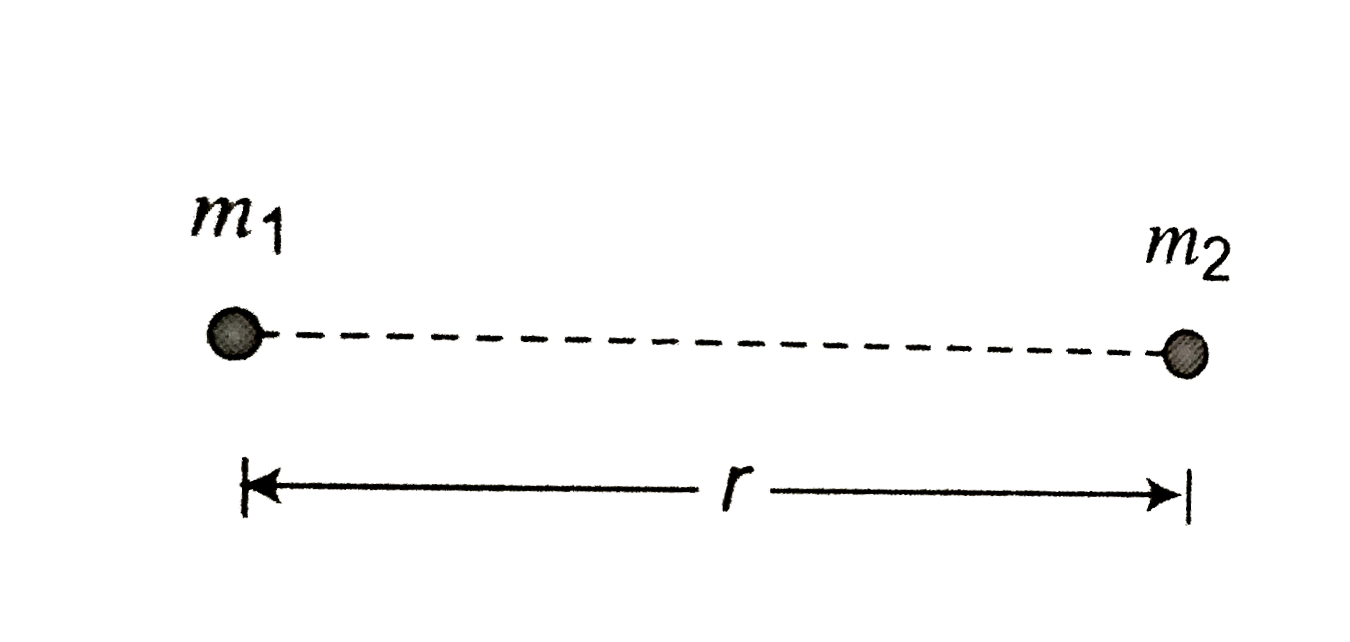 Moment of inertia `I=(m_(1)+m_(2))/(m_(1)+m_(2)) r^(2)`


Topper's Solved these Questions
Similar Questions
Explore conceptually related problems
CP SINGH-BOHR THEORY-Exercises
- Suppose an electron is attracted toward the origin by a force(k)/(r ) ...
Text Solution
|
- The electric potential between a proton and as electron is given by V=...
Text Solution
|
- A diatomic molecule is made of two masses m(1) and m(2) which are sepa...
Text Solution
|
- With the increase in peinciple quantum number, the energy difference b...
Text Solution
|
- A hydrogen-like atom has one electron revolving around a stationary nu...
Text Solution
|
- if the electron in hydrogen orbit jumps form third orbit to second or...
Text Solution
|
- The ionisation potential of hydrogen atom is 13.6 volt. The energy req...
Text Solution
|
- The wavelength of the radiation emitted by a hydrogen atom in the elec...
Text Solution
|
- A hydrogen atom in its ground state absorbs 10.2 eV of energy. The orb...
Text Solution
|
- The energy of the ground state of hydrogen atom is -13.6 eV. The ener...
Text Solution
|
- The electron in a hydrogen atom makes a transition from an excited sta...
Text Solution
|
- In an e^(-) transition inside a hydrogen atom, orbital angular momentu...
Text Solution
|
- In which of the following transition will the wavelength be minimum ?
Text Solution
|
- In which of the following system will the wavelength corresponding to ...
Text Solution
|
- Of the following transitions in a hydrogen atom, the one which gives a...
Text Solution
|
- The electron in a hydrogen atom makes a transition n(1) rarr n(2), whe...
Text Solution
|
- In a hypotherical Bohr hydrogen, the mass of the electron is doubled. ...
Text Solution
|
- In hydrogen atom, electron makes transition from n = 4 to n = 1 level....
Text Solution
|
- Four lowest energy levels of H-atom are shown in the figure. The numbe...
Text Solution
|
- The wavelength of radiation emitted is lambda(0) when an electron jump...
Text Solution
|