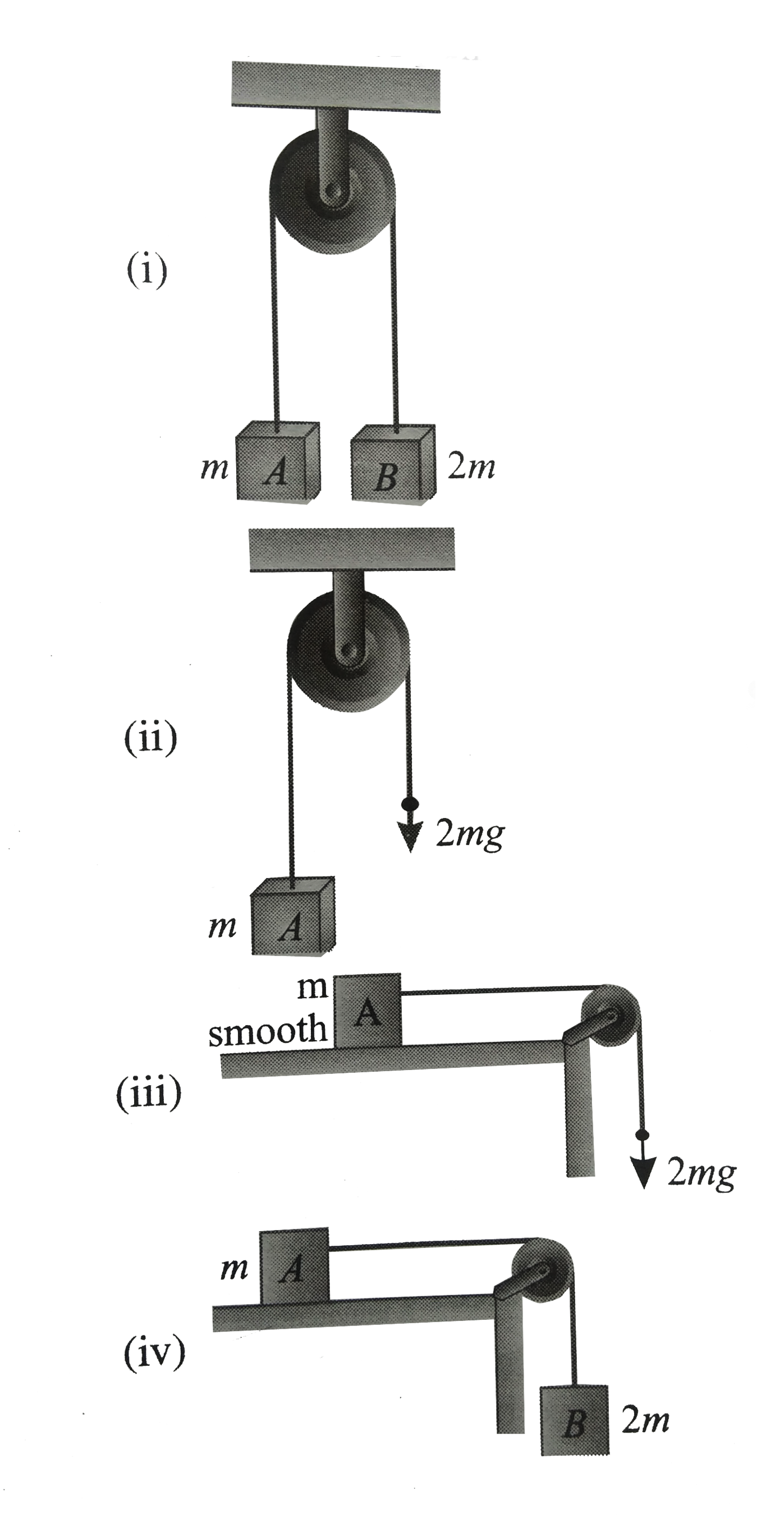
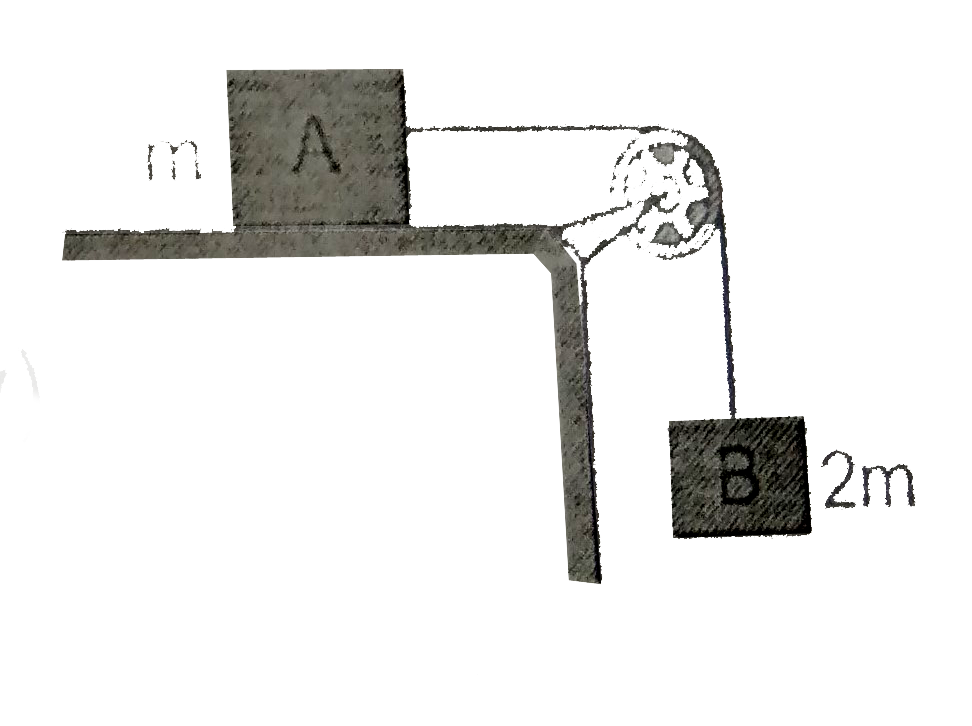
 In which of the following cases the magnitude of acceleration of the block A will be maximum (neglecting friction, mass of pulley and string)
A
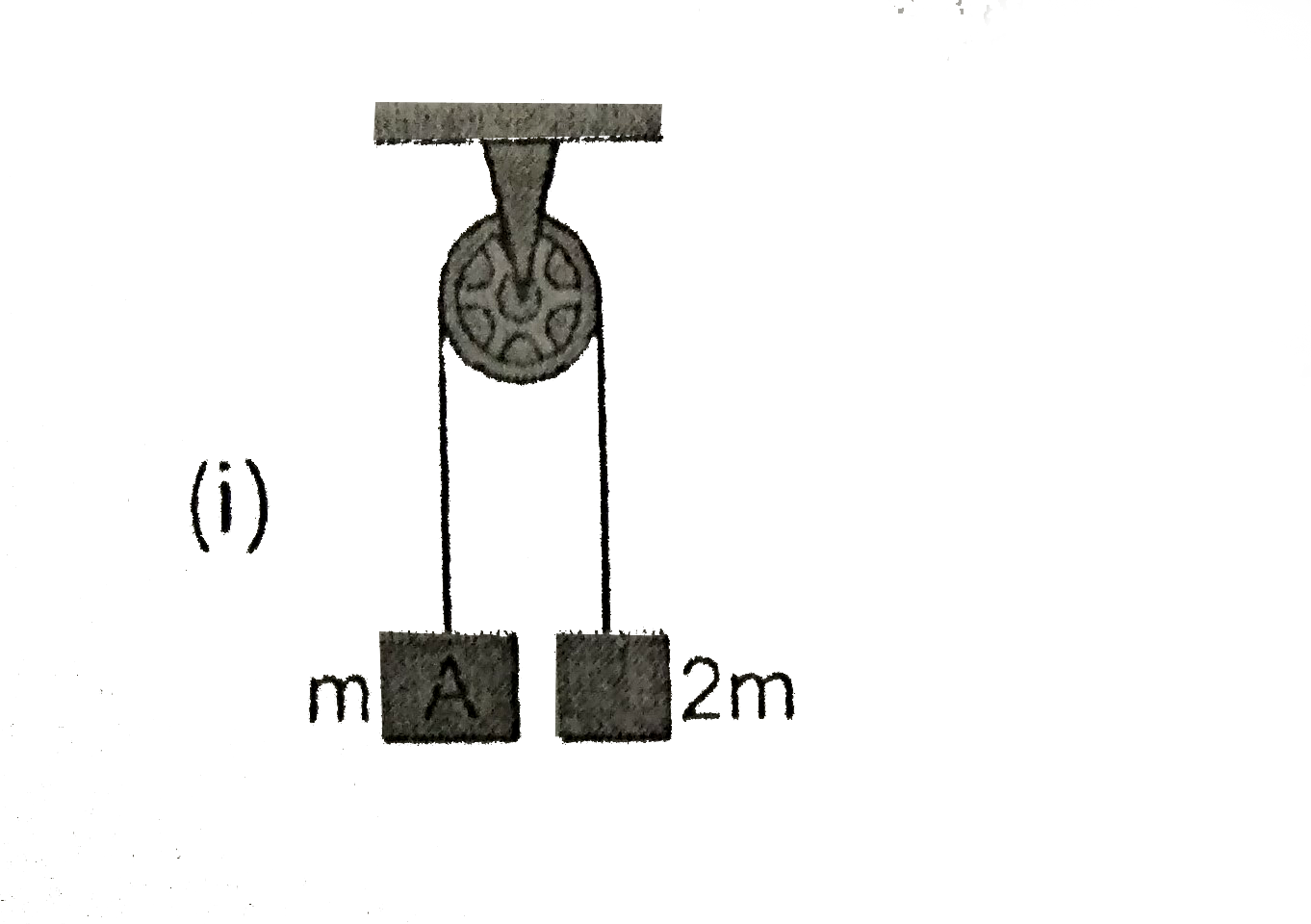
B
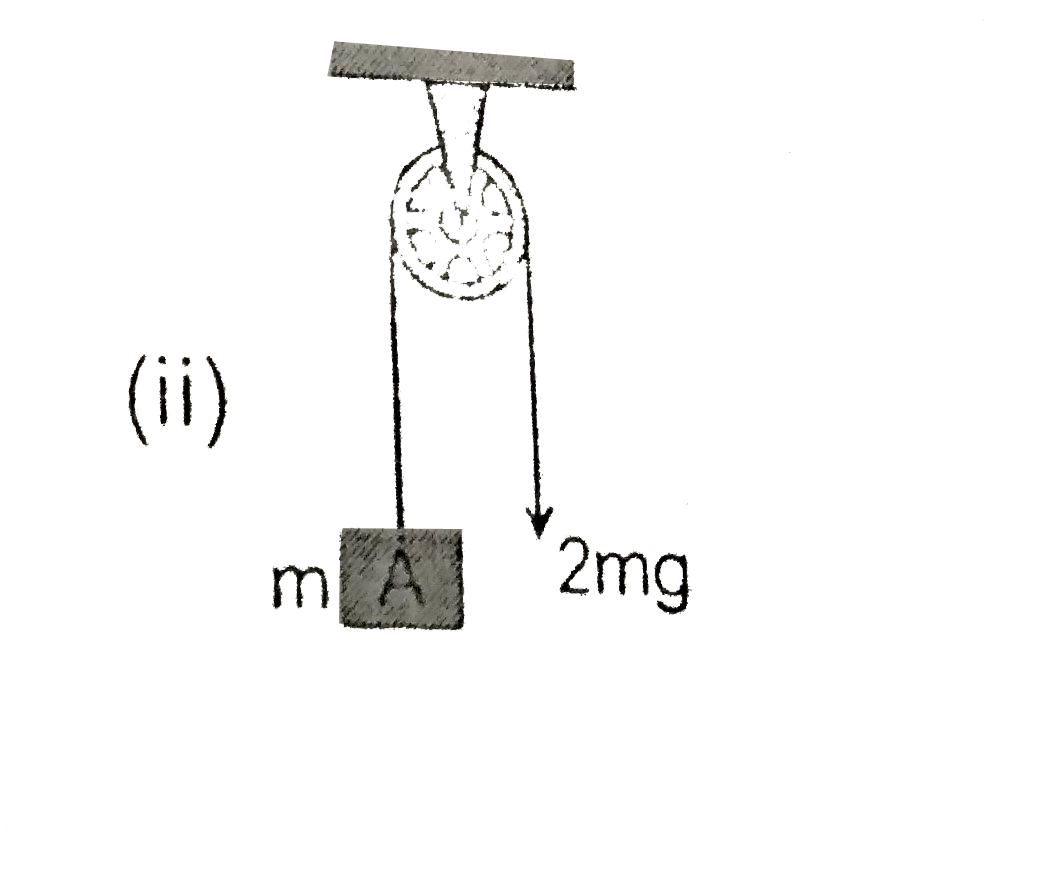
C
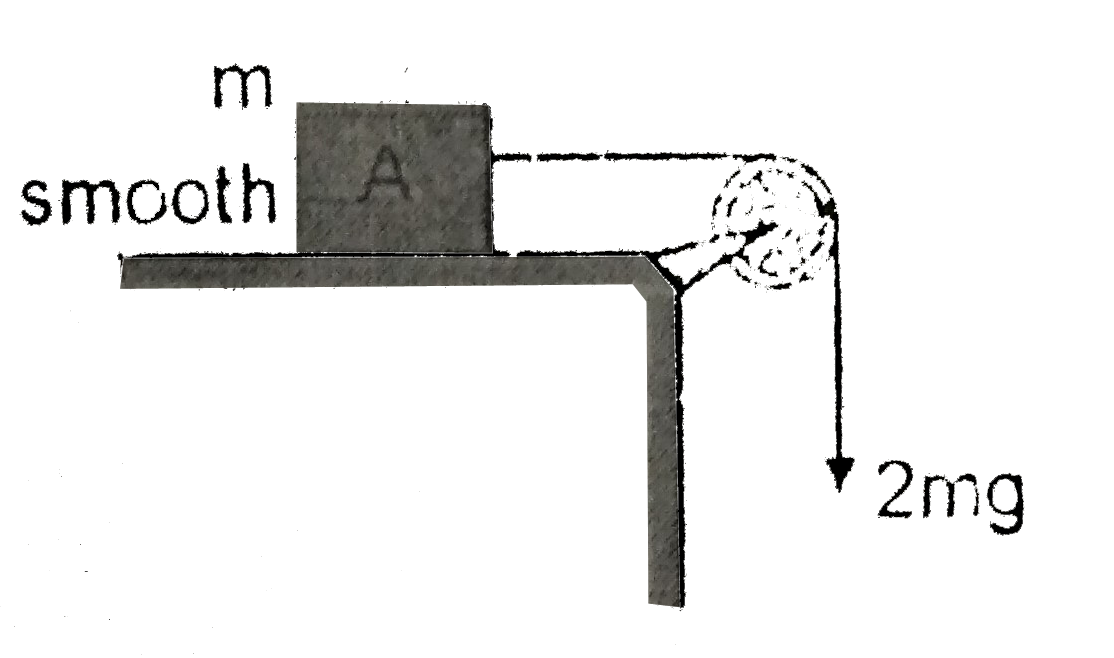
D
Text Solution
Verified by Experts
The correct Answer is:



Topper's Solved these Questions
DAILY PRACTICE PROBLEMS
RESONANCE|Exercise dpp 24|6 VideosDAILY PRACTICE PROBLEMS
RESONANCE|Exercise TRUE/FALSE|2 VideosDAILY PRACTICE PROBLEMS
RESONANCE|Exercise dpp 22.|8 VideosCURRENT ELECTRICITY
RESONANCE|Exercise Exercise|54 VideosELASTICITY AND VISCOCITY
RESONANCE|Exercise Advanced Level Problems|9 Videos
Similar Questions
Explore conceptually related problems
RESONANCE-DAILY PRACTICE PROBLEMS-dpp23
- A man of mass m stands on a platform of equal mass m and pulls himself...
Text Solution
|
- Two block of masses m(1) and m(2) are connected as shown in the figure...
Text Solution
|
- A system is shown in fig. Assume that the cylinder remains in contact ...
Text Solution
|
- A system is as shown in the figure. All speeds shown are with respect ...
Text Solution
|
- A wedge of height 'h' is released from rest with a light particle P pl...
Text Solution
|
- A block of weight 9.8N is placed on a table. The table surface exerts...
Text Solution
|
- A block of mass M(1)=3kg on a smooth fixed inclined plane of angle 30^...
Text Solution
|
- In which of the following cases the magnitude of acceleration of the b...
Text Solution
|