Home
Class 11
PHYSICS
In the figure shown neglecting friction ...

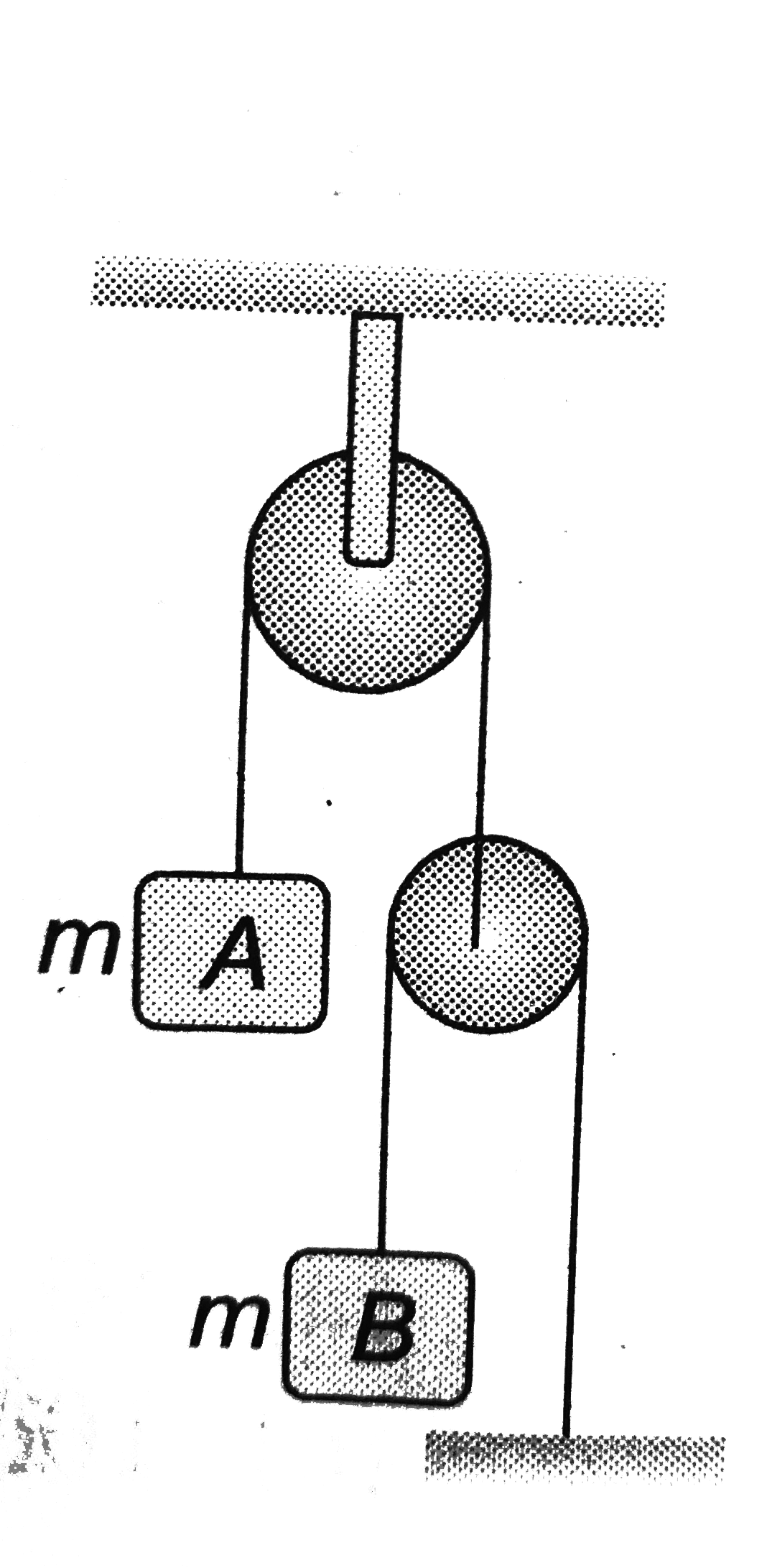
In the figure shown neglecting friction and mass of pulley, what is the acceleration of mass `B` ?

A

`(g)/(3)`

B

`(5g)/(2)`

C

`g`

D

`(2g)/(5)`

Text Solution

Verified by Experts

The correct Answer is:
D

From constraint relation , if acceleration of mass `B` is a then acceleration of mass `A` will be `a//s:`
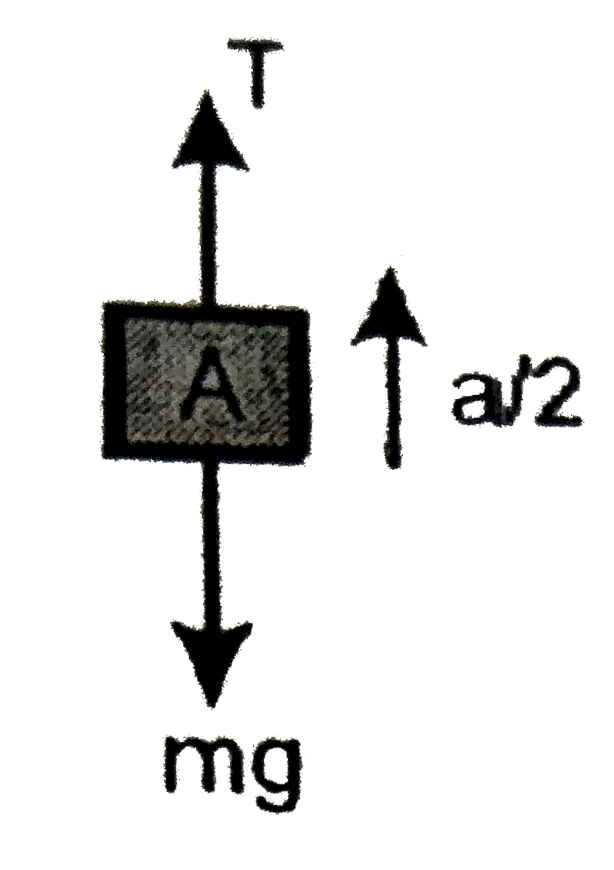
`FBD` of `A:`
`T-mg=(ma)/(2)` …….`(i)`

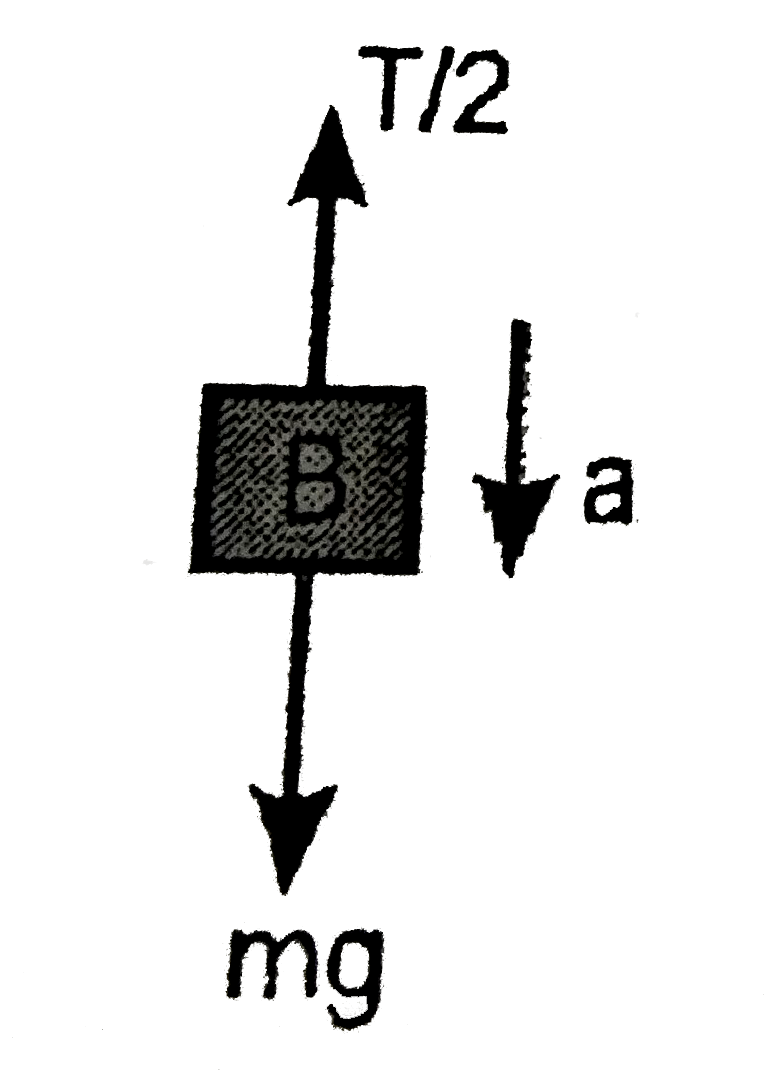
`FBD` of `B:`
`mg-(T)/(2)=ma` …..`(ii)`

From `(i) & (ii)` ,br. `a=(2g)/(5)`
Promotional Banner

Topper's Solved these Questions

  • DAILY PRACTICE PROBLEMS

    RESONANCE|Exercise TRUE/FALSE|2 Videos
  • DAILY PRACTICE PROBLEMS

    RESONANCE|Exercise dpp 25|5 Videos
  • DAILY PRACTICE PROBLEMS

    RESONANCE|Exercise dpp23|8 Videos
  • CURRENT ELECTRICITY

    RESONANCE|Exercise Exercise|54 Videos
  • ELASTICITY AND VISCOCITY

    RESONANCE|Exercise Advanced Level Problems|9 Videos

Similar Questions

Explore conceptually related problems

Study in fig. and answer the following questions accordingly. Neglect all friction and masses of the pulleys. What is the acceleration of block B?

Study in fig. and answer the following questions accordingly. Neglect all friction and masses of the pulleys. What is the acceleration of Block A?

When we ignore friction and mass of pulley what would be the accelerations of the two blocks m_(1) and m_(2) .

The system shown in th fig is released from rest. (Neglecting friction and mass of the pulley, string and spring). The spring can be elongated:

Study in fig. and answer the following questions accordingly. Neglect all friction and masses of the pulleys. What is the tension in the string?

Two bodies A and B each of mass M are fixed together by a massless spring A force F acts on the mass B as shown in fig At the instant shown the mass A has acceleration a. What is the acceleration of mass B?

Figure shows a composite pulley of that consist of two cylinders of ‘R’ '2 R' stacked coaxially. Moment of inertia of composite pulley is (MR^(2))/(4) .A light string is wound over pulley and another pulley 'A' of mass 'M' is hanged through the string as shown in figure If there were no friction between string and pulley ‘A’, then the acceleration of pulley ‘A’ will be -

Two masses as shown are suspended from a massless pulley. Calculate the acceleration of the 10 kg mass when masses are left free