


Similar Questions
Explore conceptually related problems
Recommended Questions
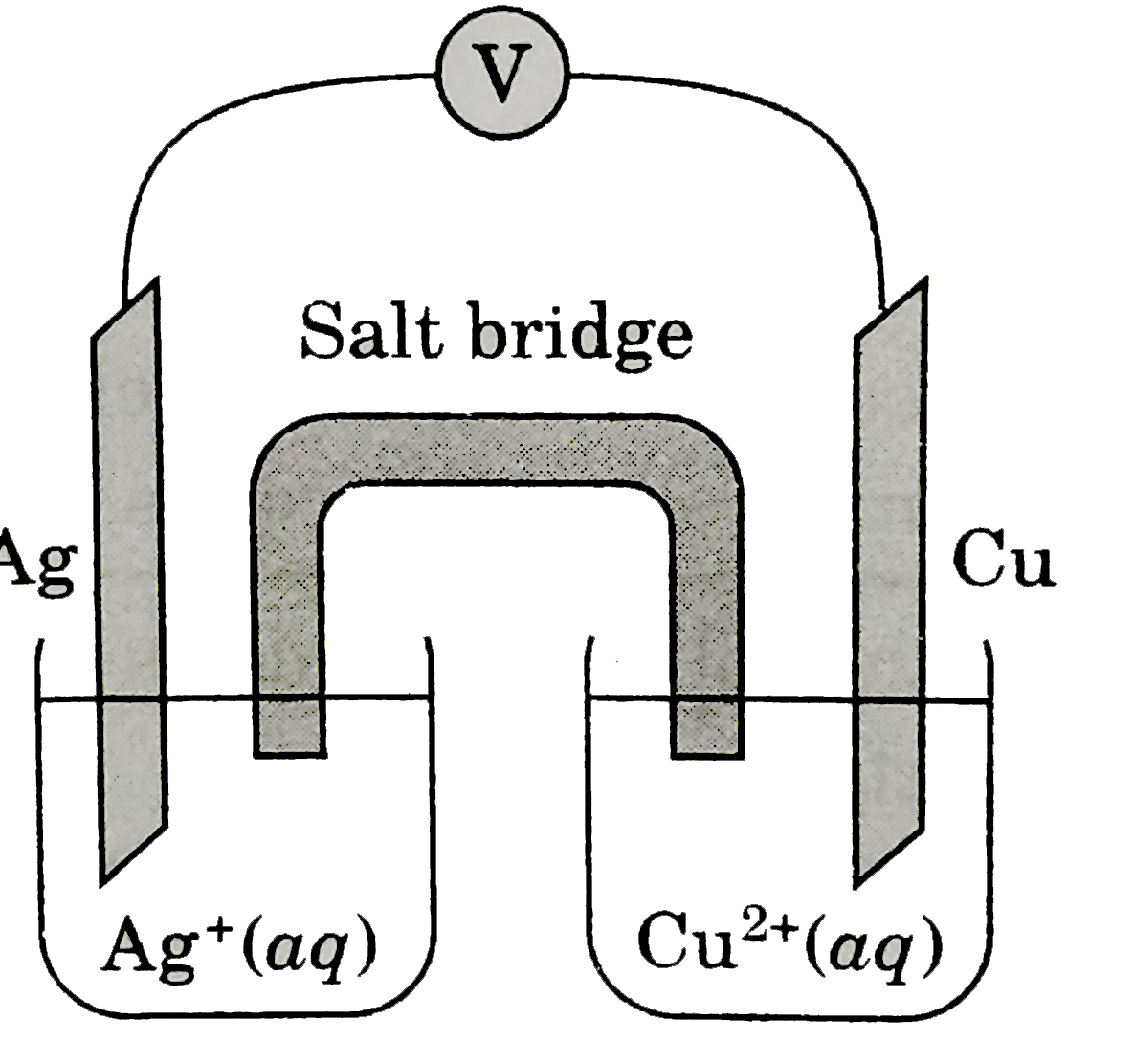
- Ag^(+)(aq)+e^(-)rarrAg(s) E^(@)=0.80V Cu^(2+)(aq)+2e^(-)rarrCu(s) E^...
Text Solution
|
- Ag^(+)(aq)+e^(-)rarrAg(s) E^(@)=0.80V Cu^(2+)(aq)+2e^(-)rarrCu(s) E^(@...
Text Solution
|
- Ag^(+)(aq)+e^(-)rarrAg(s) E^(@)=0.80V Cu^(2+)(aq)+2e^(-)rarrCu(s) E^(@...
Text Solution
|
- Ag^(+)(aq)+e^(-)rarrAg(s) E^(@)=0.80V Cu^(2+)(aq)+2e^(-)rarrCu(s) E^...
Text Solution
|
- Rh^(03+)(aq)+3e^(-)rarrRh(s) E^(@)=0.80V Cu^(+)(aq)+e^(-)rarrCu(s) E^(...
Text Solution
|
- Rh^(03+)(aq)+3e^(-)rarrRh(s) E^(@)=0.80V Cu^(+)(aq)+e^(-)rarrCu(s) E^(...
Text Solution
|
- Given: Fe((s))rarrFe^(2+)+2e^(-), E^(@)=+0.44V Pb((s))rarrPb^(2+)+2e^(...
Text Solution
|
- What is DeltaG^(@) for the following reaction Cu^(+2)(aq)+2Ag(s)rarr...
Text Solution
|
- Cu(s)|Cu^(+2)(aq,10^(-3))||Ag^(+)(10^(-5)M)|Ag(s) if E(Cu^(+2)//Cu=0...
Text Solution
|