Home
Class 10
MATHS
Delta JKL is equilateral, and Delta JKM ...

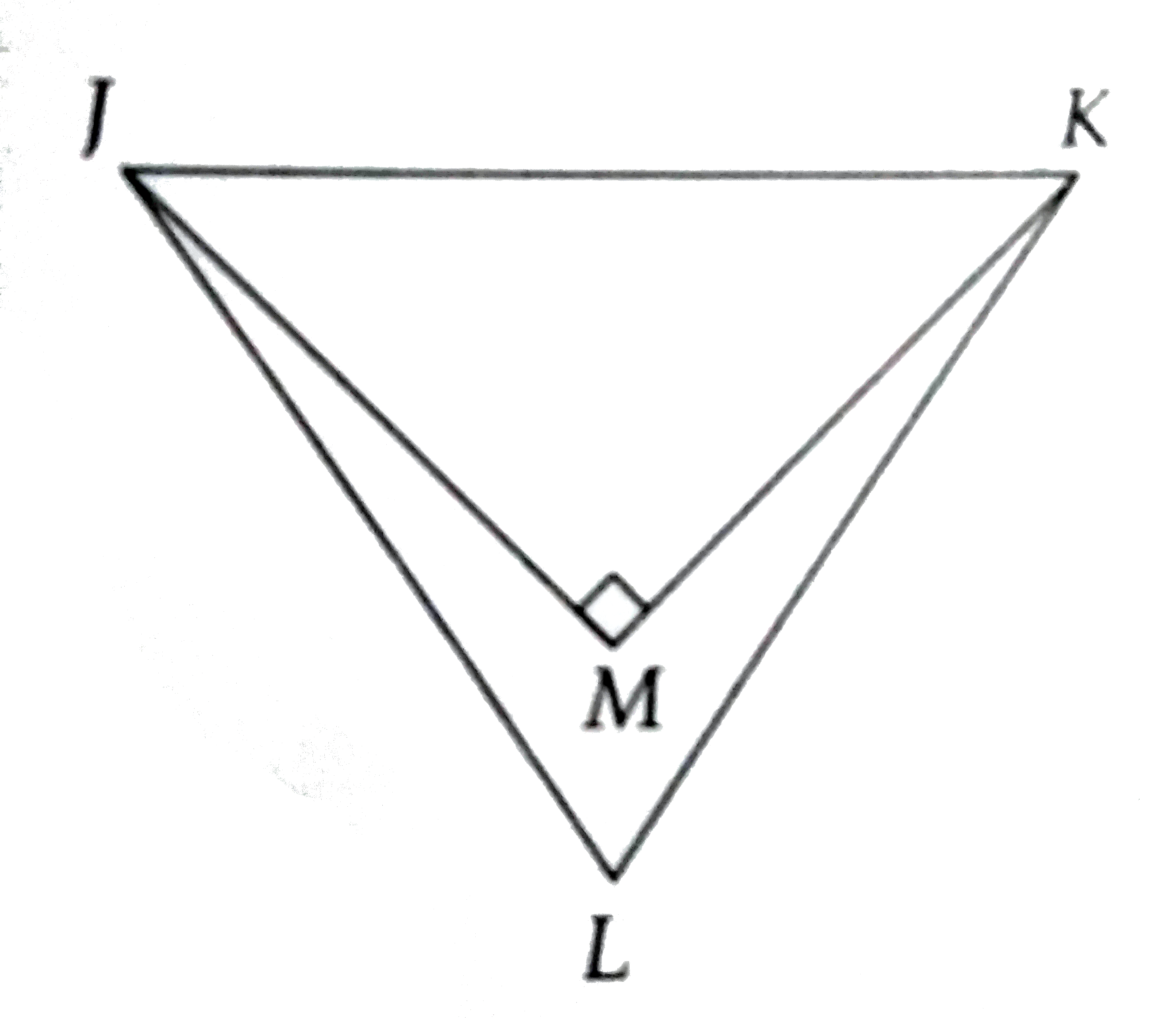
`Delta JKL` is equilateral, and `Delta JKM` is isosceles. If `bar(KL)=2`, what is the distance from L to M ?

A

`0.572`

B

`0.636`

C

`0.667`

D

`0.732`

Text Solution

Verified by Experts

The correct Answer is:
D

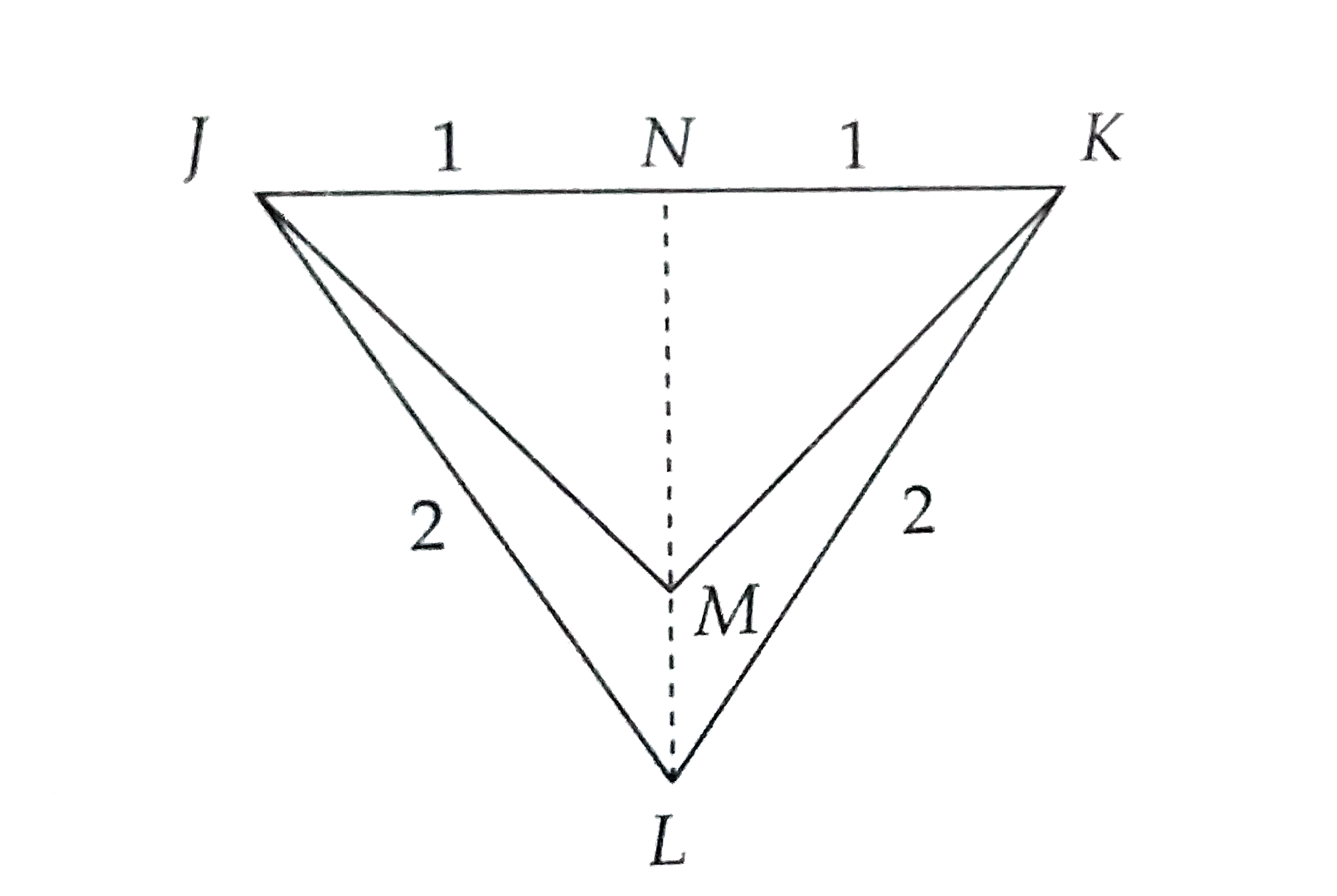
To get the answer to this question, you need to know about equilateral, 45-45-90, and 30-60-90 triangles. If you drop an altitude from a new point, N, through M to L, you you will divide the equilateral triangle into two 30-60-90 triangles and divide the right isosceles (or 45-45-90) triangle into two smaller right into two smaller right isosceles triangles :

Using the side ratios for 30-60-90s and 45-45-90s, you know that `bar(LN)=sqrt(3)` and that `bar(MN)=1`.
Therefore, `bar(LM)=bar(LN)-bar(MN)=sqrt(3)-1 ~~ 1.732 - 1 = 0.732`.
Promotional Banner

Topper's Solved these Questions

  • PLANE GEOMETRY

    KAPLAN|Exercise PLANE GEOMETRY FOLLOW - UP TEST|6 Videos
  • MISCELLANEOUS TOPICS

    KAPLAN|Exercise MISCELLANEOUS TOPICS FOLLOW - UP TEST|12 Videos
  • PRACTICE TEST 1

    KAPLAN|Exercise PRACTICE TEST|50 Videos

Similar Questions

Explore conceptually related problems

If bar(XY) = 3 , what is the area of Delta XYZ ?

In the diagram below , Delta ABC is isosceles and Delta BCD is equilateral . bar(AB) = bar(BC) and the measure of angle ABC is half the measure of angle BAC . what is the measure of angle ABD ?

Let the point P lies in the interior of an equilateral triangle with side lengths 2 units, each. Find the sum of the shortest distances from P to the sides of the triangle.

A point 'P' is an arbitrary interior point of an equilateral triangle of side 4. If x, y, z are the distances of 'P' from sides of the triangle then the value of (x+y+z)^(2) is equal to -

bar(QR)=bar(RS) . If the area of Delta RST is (c )/(2) , what is the area of Delta QSP ?

An equilateral triangle has three lines of symmetry, an isosceles triangle will have :

Each side of the equilateral triangle shown is 2. What is the height h of the triangle?

If the length of two sides of an isosceles triangle are 3 and 7, what is the perimeter of the triangle?

If each side of an equilateral triangle is tripled then what is the percentage increase in the area of the triangle?

Three equal masses of 1 kg each are placed at the vertices of an equilateral Delta PQR and a mass of 2kg is placed at the centroid O of the triangle which is at a distance of sqrt(2) m from each the verticles of the triangle. Find the force (in newton) acting on the mass of 2 kg.

