


BANSAL-TEST PAPERS-PHYSICS PART C
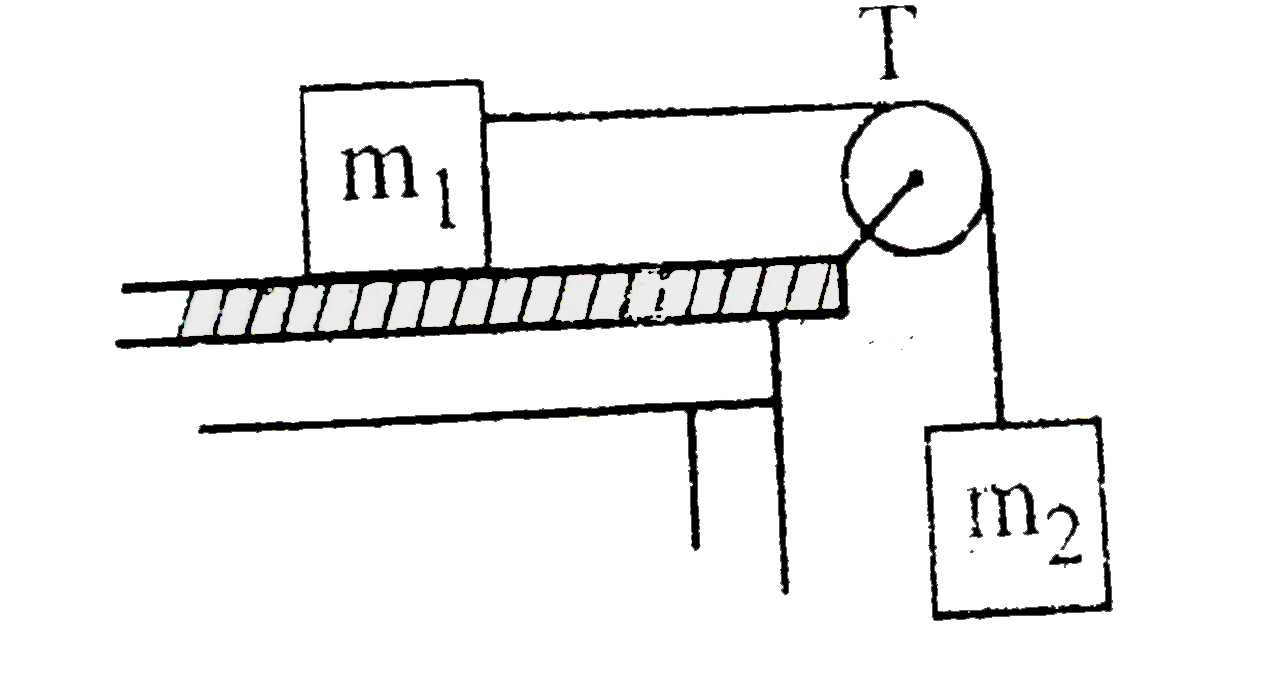
- Two masses m(1) and m(2) are connected by an inextensible cord and arr...
Text Solution
|
- A body of mass 1 kg starts moving from rest t = 0 in a circular path o...
Text Solution
|
- Force acting on particle is given by vec(F) = 2xyz hat(i) + x^(2)x hat...
Text Solution
|
- A cat of mass m = 1 kg climbs to a rope hung over a leight frictionles...
Text Solution
|
- A motorboat covers a given distance in 6 hr moving downstream on a riv...
Text Solution
|
- One end of a uniform rod of length 10m is placed in boiling water whil...
Text Solution
|
- Sixteen beads in a string are placed on a smooth inclined plane to inc...
Text Solution
|
- A stone of mass 1kg is attached to one end of a 1.4 m long aluminimum...
Text Solution
|
- A ball is dropped from a height 20 m above the ground and it rebounds ...
Text Solution
|
- A particle of mass m being to slide down a fixed smooth sphere from th...
Text Solution
|
- One mole of an ideal monotomic gas at temperature T(0) is expanding sl...
Text Solution
|
- The arrangement as shown, temperatures of end P and R are 200^(@) C an...
Text Solution
|
- On a smooth horizontal plane, a rod PQ of length 6m and mass 2 kg is p...
Text Solution
|
- If the reading of spring balance as shown in figure is 2F newton then ...
Text Solution
|
- A platform of infinite mass is moving upward with velocity 5 m//s. At ...
Text Solution
|