Home
Class 12
PHYSICS
The dependence of the acceleration of a ...

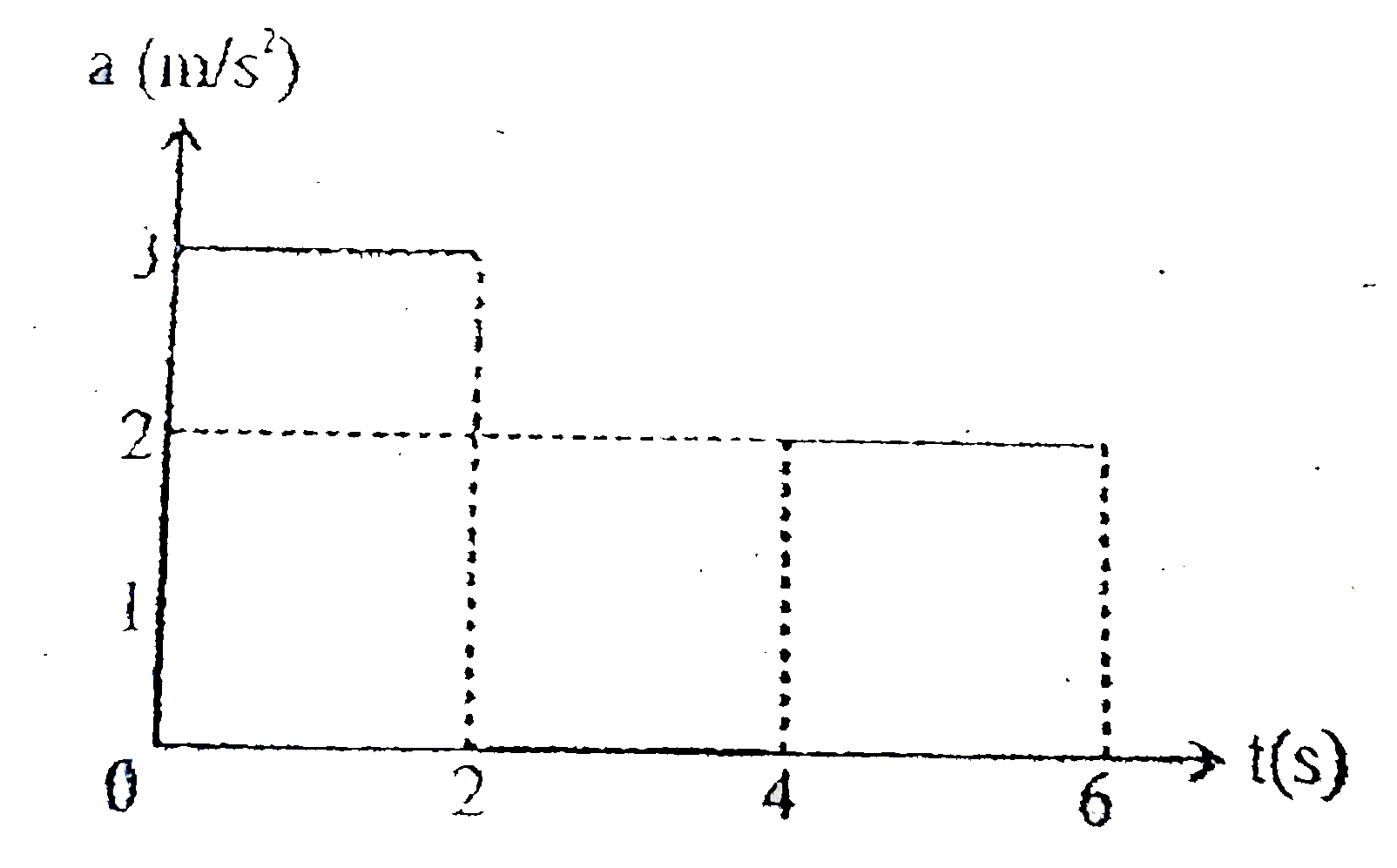
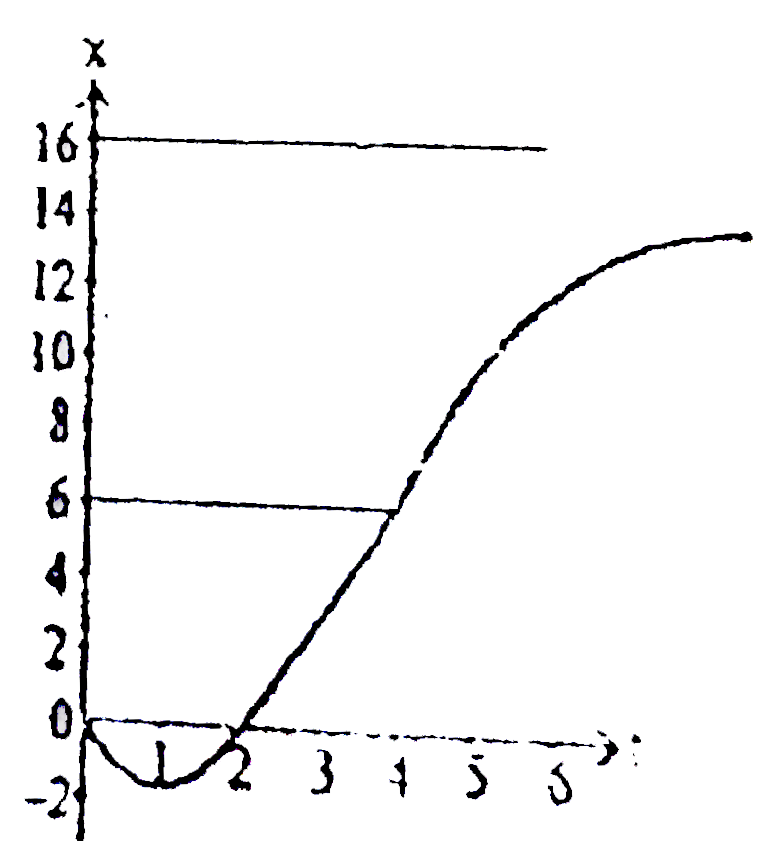
The dependence of the acceleration of a body with time is shown in Figure. At `t=0`, the velocity of the body is `-3m//s` and position is `x=0 m`.

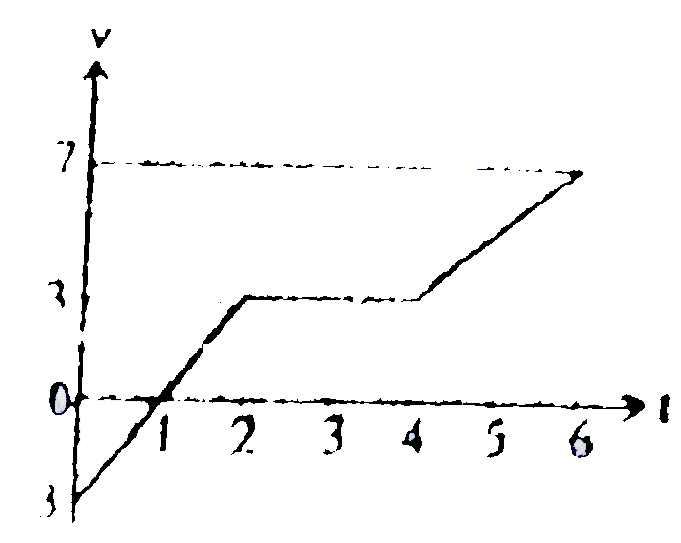
A

The velocity time graph is

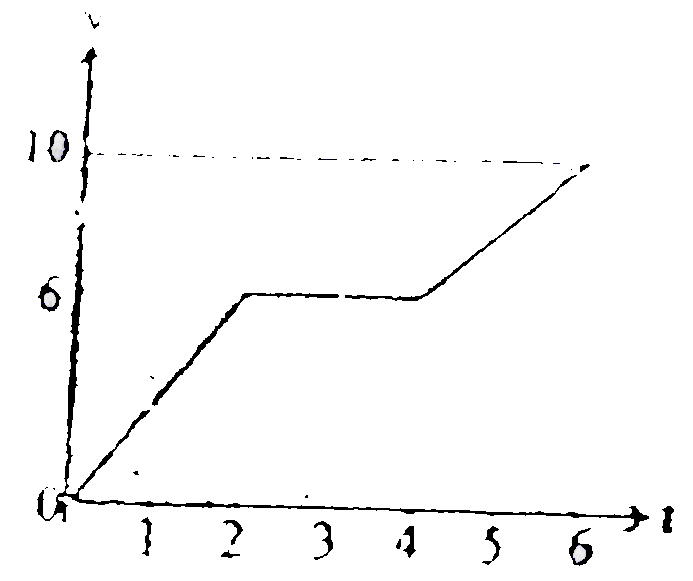
B

The velocity time graph is

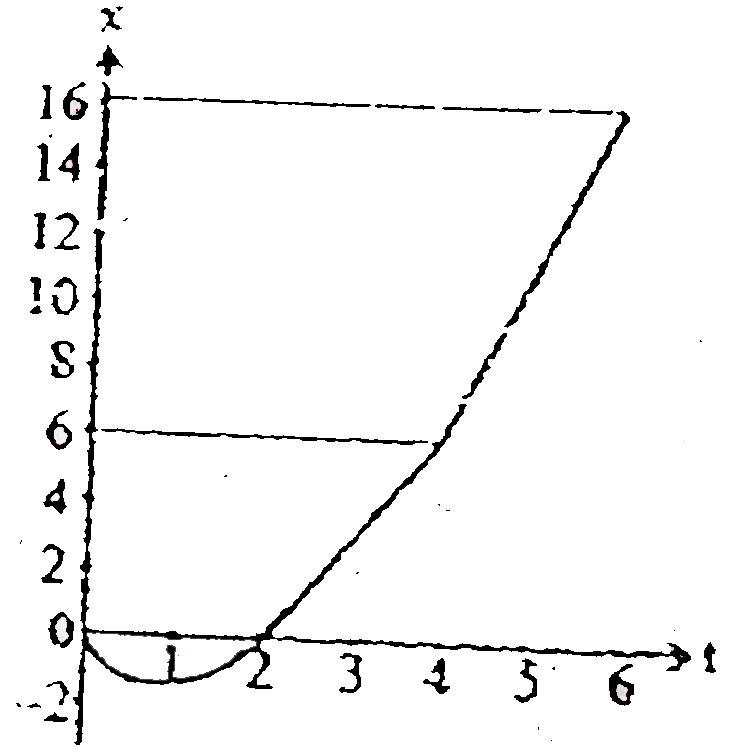
C

The position time graph is

D

The position time graph is

Text Solution

Verified by Experts

The correct Answer is:

A

`N//A`
Promotional Banner

Topper's Solved these Questions

Similar Questions

Explore conceptually related problems

A body is performing simple harmonic motion with amplitude A and time period T variation of its acceleration (f) with time (t) is shown in figure If a line x velocity of the body is x which of the following graph is correct?

The displacement time graph of a body in motion is given as shown in the figure. Velocity of body is? (in m/s)

In figure shown, the graph shows the variation of acceleration of body with time t . The velcocity of the body at t = 0 is zero. The velocity of the body at t = 30 s is.

The acceleration time graph of a body moving in a straight is shown in figure. Assertion :- Velocity of the body is continously increasing over the time interval shown. Reason :- Acceleration is positive for all shown value of t .

Velocity-time graph of a particle moving in a straight line is shown in figure. At time t= 0, displacement of the particle from mean position is 10 m. Find (a) acceleration of particle at t = 1 s, 3 s and 9 s. (b) position of particle from mean position at t = 10 s. (c) write down s-t equation for time interval (i) 0letle2s , (ii) 4sletle8s

For the acceleration - time (a - t) graph shown in figure, the change in velocity of particle from t = 0 to t = 6 s is

The displacement of a body along the x-axis depends on time as sqrt(x)=t+2 , then the velocity of body

The acceleration-time graph of a particle moving in a straight line is as shown in figure. The velocity of the particle at time t = 0 is 2 m//s . The velocity after 2 seconds will be

The only force acting on a 2.0-kg body as it moves along the x-axis varies as shown in figure. The velocity of the body at x=0 is 4.0ms^-1 . a. What is the kinetic energy of the body at x=3.0m ? b. At what value of x will the body have a kinetic energy of 8.0J ? c. What is the maximum kinetic energy attained by the body between x=0 and x=5.0m ?

The displacement of a body along X-axis depends on time as sqrt(x)=t+1 . Then the velocity of body.
