


Similar Questions
Explore conceptually related problems
Recommended Questions
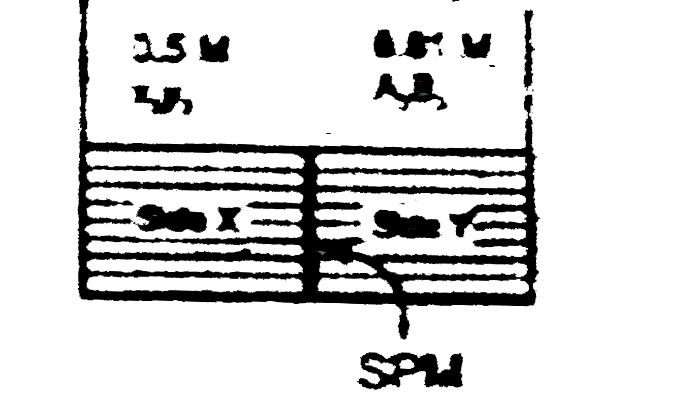
- X(3)Y(2)(i=5) when reacted with A(2)B(3)(i=5 in aqueous solution gives...
Text Solution
|
- FeCI(3) on reaction with K(4)[Fe(CN)(6)] in aqueous solution gives blu...
Text Solution
|
- X(3)Y(2)(i=5) when reacted with A(2)B(3)(i=5 in aqueous solution gives...
Text Solution
|
- If |{:(x(1),y(1),1),(x(2),y(2),1),(x(3),y(3),1):}|=|{:(a(1),b(1),1),(a...
Text Solution
|
- The value of |(a(1) x(1) + b(1) y(1),a(1) x(2) + b(1) y(2),a(1) x(3) +...
Text Solution
|
- STATEMENT-1: If three points (x(1),y(1)),(x(2),y(2)),(x(3),y(3)) are c...
Text Solution
|
- If |(x(1),y(1),1),(x(2),y(2),1),(x(3),y(3),1)|=|(a(1),b(1),1),(a(2),b(...
Text Solution
|
- यदि |{:(x(1),y(1),1),(x(2),y(2),1),(x(3),y(3),1):}|=|{:(a(1),b(1),1),(...
Text Solution
|
- Suppose (a(1),b(1)),(a(2),b(2)) and (a(3),b(3)) are vertices of an equ...
Text Solution
|