Home
Class 12
MATHS
Describe the graph of r=(1)/(sin theta)...

Describe the graph of `r=(1)/(sin theta)`

Text Solution

Verified by Experts

since `r sin theta =y` and `r=(1)/(sin theta),y =1` The domain of `r=(1)/(sin theta)` is all real `theta` that are not multiples of `pi`
Thus `r=(1)/(sin theta)` is the equation of a horizontal line with holes in it at multipls of `pi` one unit above the x axis
Both `r=2` and `r=(1)/(sin theta)` are examples of polar function such function can be graphed on a graphing calculator by using POLAR mode Enter 2 in to `r_(1)` and graph using ZOOM 6 the standard window
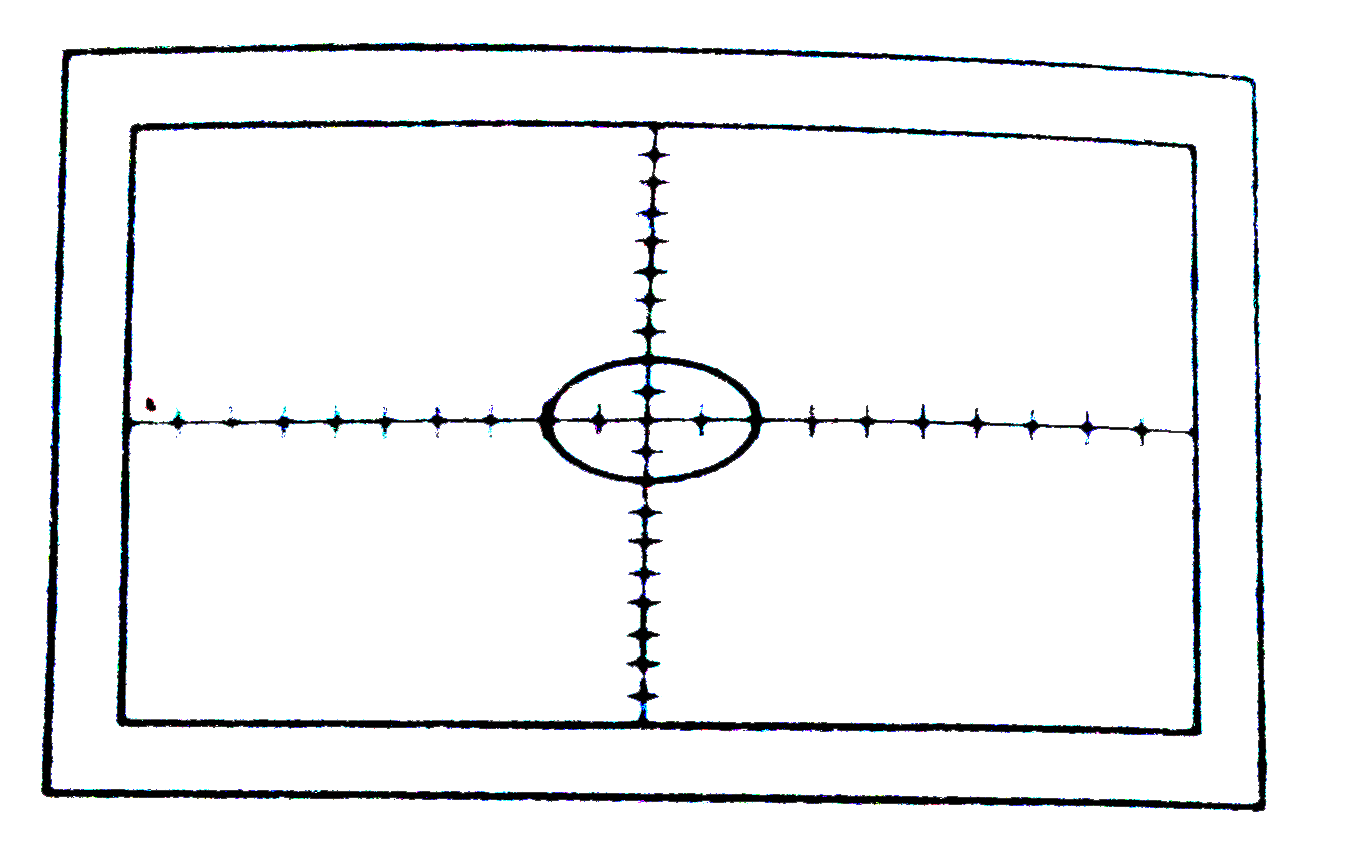
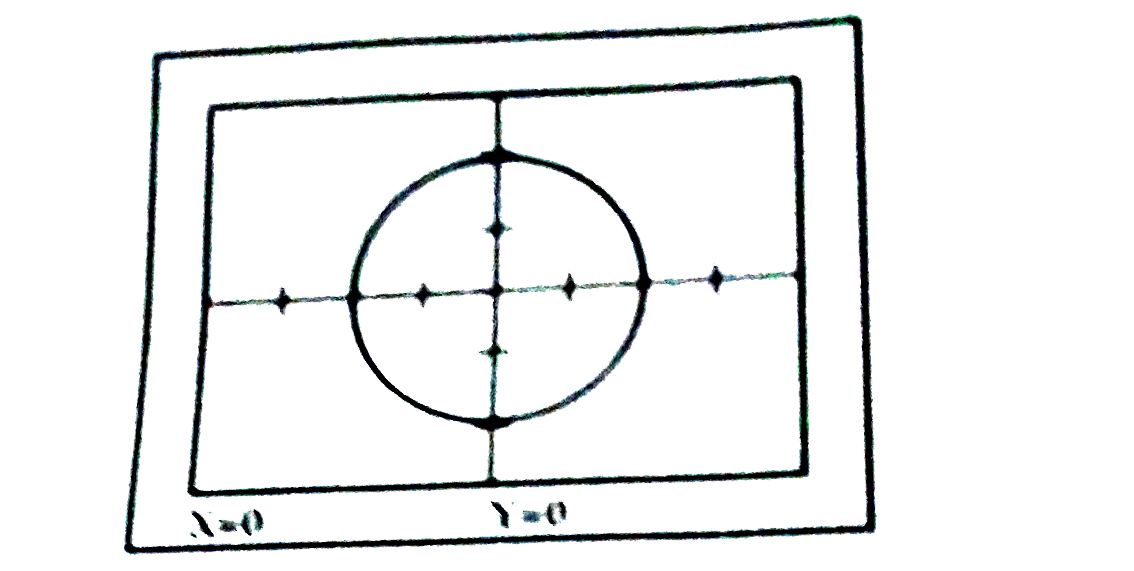
Although the graph is accurate for the scale given the shape looks like that of an ellipse not a circle this is beacuse the standard screen has a scale on the x xis that is larger than that on the y axis resulting in a distroted graph the graph below is obtained by using the ZOON Zsquare command
Promotional Banner

Topper's Solved these Questions

  • POLAR COORDINATES

    ENGLISH SAT|Exercise EXERCISES|3 Videos
  • PLANE GEOMETRY/ TRIGONOMETRY

    ENGLISH SAT|Exercise EXERCISE|12 Videos
  • PRACTICE TEST

    ENGLISH SAT|Exercise MATH TEST (WITH CALCULATOR)|37 Videos

Similar Questions

Explore conceptually related problems

Describe the graph of r=(3)/(cos theta)

Draw the graph of y=sin^(-1)(sin x)

If r gt 0, - pi le theta le pi and r, theta satisfy r sin theta =3 and r=4(1+ sin theta ) , then find the possible solutions of the pair (r , theta )

Prove that sin^2 theta+sin^2 2theta+sin^2 3theta+....+sin^2 n theta=n/2-(sin n theta cos(n+1)theta)/(2sin theta)

Find the values of theta which satisfy r sin theta=3 and r=4 (1 + sin theta), 0 <= theta <= 2 pi

If theta lies in the second quadrant. Then the value of sqrt((1-sin theta)/(1+sin theta))+sqrt((1+sin theta)/(1-sin theta)) is equal to :

Prove that : ( sin theta- cos theta +1)/( sin theta +cos theta -1) = (1)/( sec theta - tan theta)

Prove : (cos theta)/(1+sin theta) + (cos theta)/(1-sin theta)= 2 sec theta

prove that 1/(cosec theta-cot theta) - 1/(sin theta) = 1/sin theta - (1)/(cosec theta + cot theta)

If equation sin^(-1) (4 sin^(2)theta + sin theta) + cos^(-1) (6 sin theta - 1) = (pi)/(2) has 10 solution for theta in [0, n pi] , then find the minimum value of n

