

Home
Class 10
PHYSICS
The circuit diagram given below shows th...

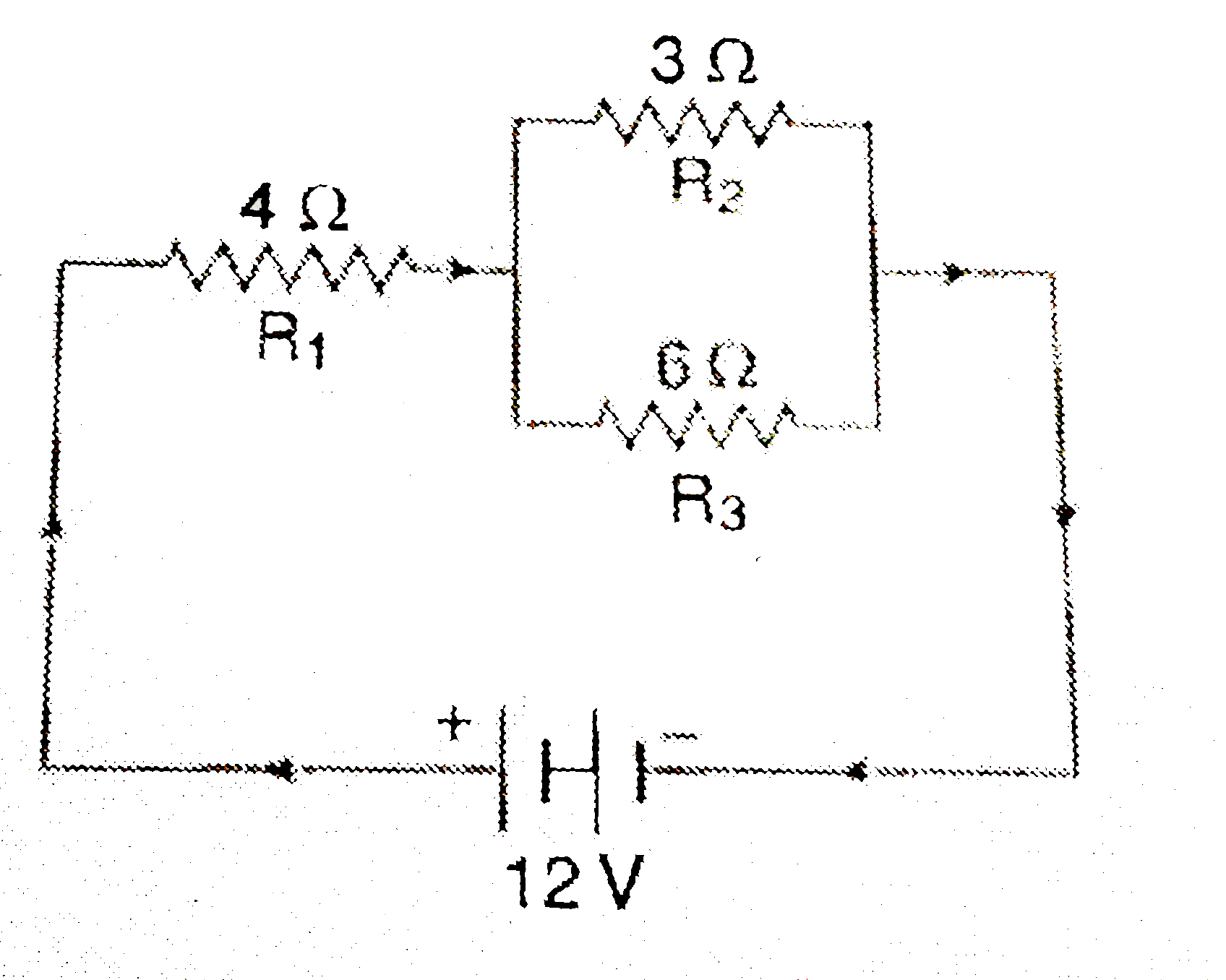
The circuit diagram given below shows the combination of three resistors `R_(1),R_(2)` and `R_(3)`:

Find: (i) total resistance of the circuit.
(ii) total current flowing in the circuit.
(iii) the potential difference across `R_(1)`.

Promotional Banner

Similar Questions

Explore conceptually related problems

In the circuit diagram given alongside, find: (i) total resistance of the circuit, (ii) total current flowing in the circuit, and (iii) the potential difference across R_(1)

ln the given circuit, calculate : (i) the total resistance of the circuit (ii) the current through the circuit, and (iii) the potential difference across R_(1) and R_(2)

(a) what is meant by series and parallel combination of resistances ? (b) in which case, series combination or parallel combination, the combined resistance is less than any of the individual resistances ? (c ) How should two resistance of 2 Omega each be connected so as to produce an equivalent resistance of 1 Omega ? In the circuit diagram given here , find: (i) total resistance of the circuit (ii) total current flowing in the circuit, and (iii) the potential difference across R_(1)

In the given circuit, calculate - (a) the total resistance of the circuit, (b) the current through the circuit, and (c) the potential differences across R_(1) and R_(2)

In the given circuit, calculate - (a) the total resistance of the circuit, (b) the current through the circuit, and (c) the potential differences across R_(1) and R_(2)

Find the potential differnce across R_(2) in the circuit

For the circuit shown in figure given below, calculate (a) the total resistance of the circuit. (b) the total current flowing in the circuit. (c) the voltage developed across the two ends of R_1 .

Find the currents going through the three resistors R_(1),R_(2) and R_(3) in the circuit of figure.

Find the currents going through the three resistors R_(1),R_(2) and R_(3) in the circuit of figure.