

Home
Class 11
PHYSICS
Two smooth balls A and B, each of mass m...

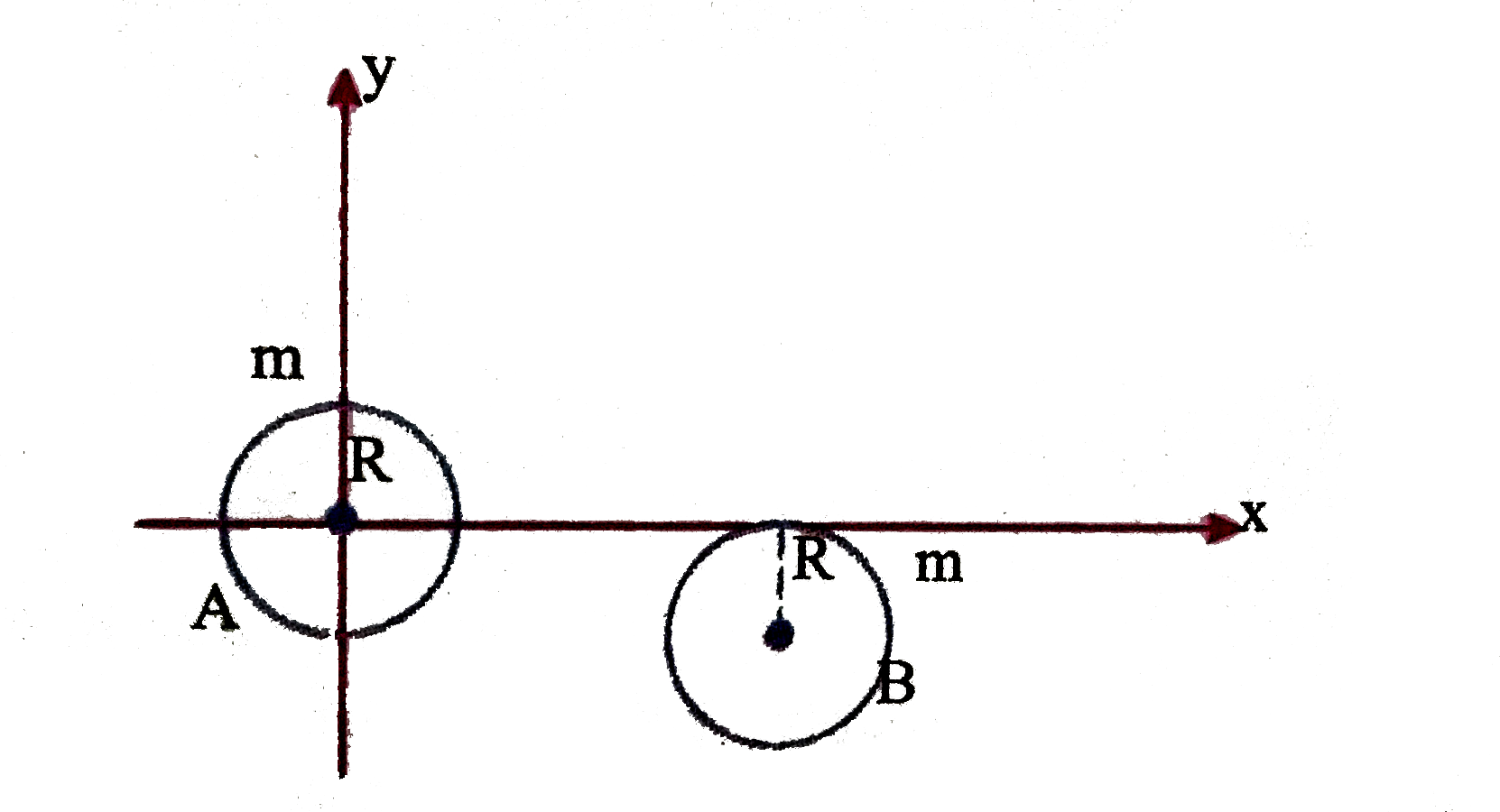
Two smooth balls `A` and `B`, each of mass `m` and radius `R`, have their centres as shown in fig. Ball `A`, moving along positive x-axis, collides with ball `B`. Just before the collision, speed of ball `'A'` is `4m//s` and ball `'B'` is stantionary. The collision

Impluse of the force exerted by `'A'` on `'B'` during the collision is equal to

Promotional Banner

Similar Questions

Explore conceptually related problems

Two smooth balls A and B , each of mass m and radius R , have their centres as shown in fig. Ball A , moving along positive x-axis, collides with ball B . Just before the collision, speed of ball 'A' is 4m//s and ball 'B' is stantionary. The collision Velocity of the ball 'A' just after the collision is

Two smooth balls A and B , each of mass m and radius R , have their centres as shown in fig. Ball A , moving along positive x-axis, collides with ball B . Just before the collision, speed of ball 'A' is 4m//s and ball 'B' is stantionary. The collision What is velocity of ball 'B' after collision is

Two smooth balls A and B , each of mass m and radius R , have their centres as shown in fig. Ball A , moving along positive x-axis, collides with ball B . Just before the collision, speed of ball 'A' is 4m//s and ball 'B' is stantionary. The collision Coefficient of restitution during the collision is changed to (1)/(2) , keeping all other parameters unchanged. What is the velocity of the ball 'B' after the collision.

Two smooth balls A and B, each of mass m and radius R, have their centers at (0, 0, R) and at (5R, -R, R) respectively, in a coordinate system as shown. Ball A, moving along positive x axis, collides with ball B. Just before the collision, speed of ball A is 4m/s and ball B is stationary. The collision between the ball is elastic. Impulse of the force exerted by A and B during the collision, is equal to

Two smooth balls A and B, each of mass m and radius R, have their centers at (0, 0, R) and at (5R, -R, R) respectively, in a coordinate system as shown. Ball A, moving along positive x axis, collides with ball B. Just before the collision, speed of ball A is 4m/s and ball B is stationary. The collision between the ball is elastic. Impulse of the force exerted by A and B during the collision, is equal to

Two smooth balls A and B, each of mass m and radius R, have their centre at (0,0,R) and (5R,-R,R) respectively, in a coordinate system as shown. Ball A, moving along positive x-axis, collides with ball B. Just before the collision, speed of ball A is 4m/s and ball B is stationary. The collision between the balls is elastic. Velocity of the ball A just after the collsion is

Two smooth balls A and B, each of mass m and radius R, have their centre at (0,0,R) and (5R,-R,R) respectively, in a coordinate system as shown. Ball A, moving along positive x-axis, collides with ball B. Just before the collision, speed of ball A is 4m/s and ball B is stationary. The collision between the balls is elastic. Velocity of the ball A just after the collsion is

Two smooth balls A and B, each of mass m and radius R, have their centre at (0,0,R) and (5R,-R,R) respectively, in a coordinate system as shown. Ball A, moving along positive x-axis, collides with ball B. Just before the collision, speed of ball A is 4m/s and ball B is stationary. The collision between the balls is elastic. Velocity of the ball A just after the collsion is A. (hati+sqrt3hatj)m//s B. (hati-sqrt3hatj)m//s C. (2hat(i) + sqrt3hat(j)) m//s D. (2hati+2hatj)m//s

Two balls each of mass 'm' are moving with same velocity v on a smooth surface as shown in figure. If all collisions between the balls and balls with the wall are perfectly elastic, the possible number of collisions between the balls and wall together is