Home
Class 11
PHYSICS
Two smooth balls A and B, each of mass m...

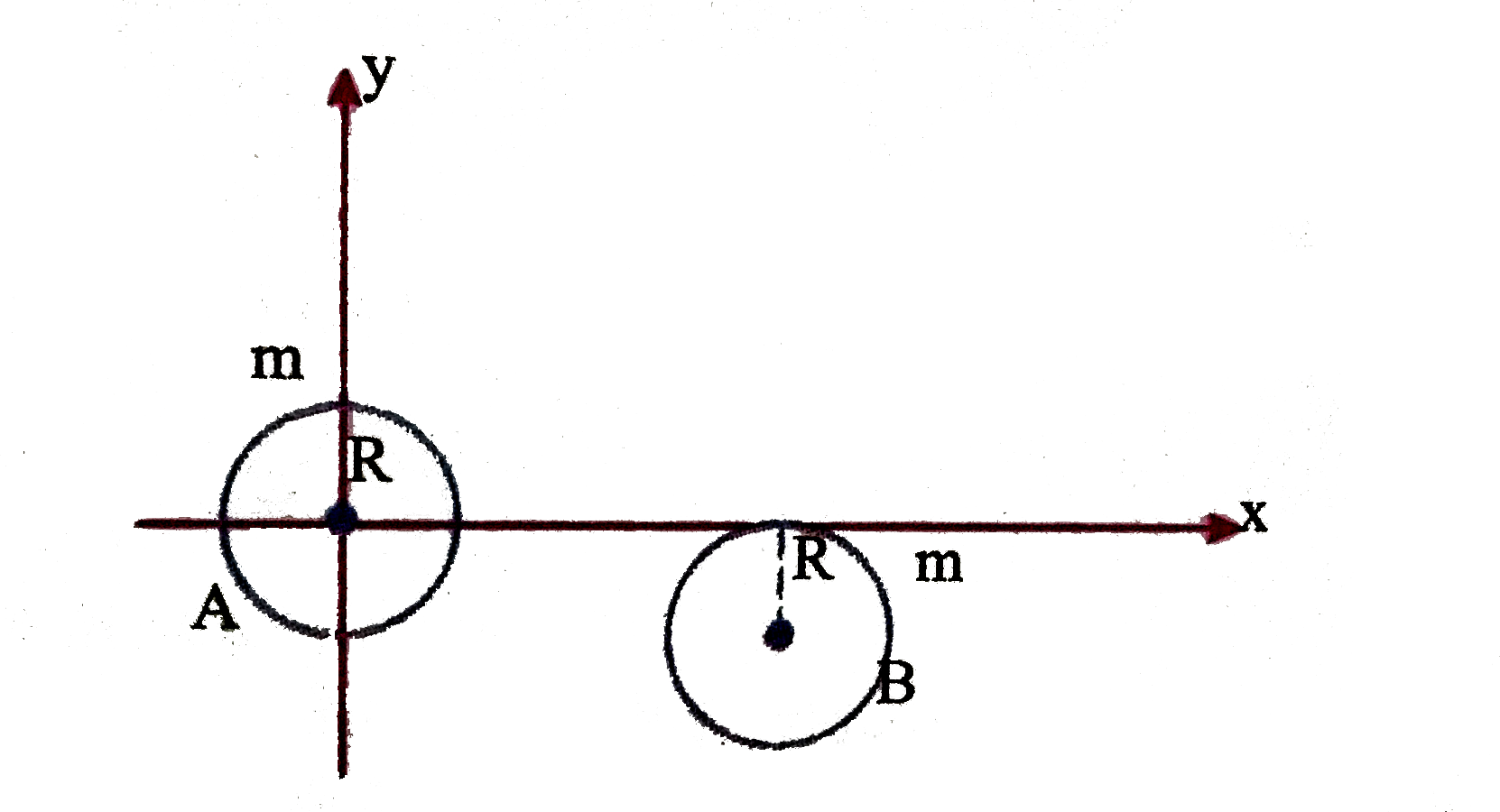
Two smooth balls `A` and `B`, each of mass `m` and radius `R`, have their centres as shown in fig. Ball `A`, moving along positive x-axis, collides with ball `B`. Just before the collision, speed of ball `'A'` is `4m//s` and ball `'B'` is stantionary. The collision

Coefficient of restitution during the collision is changed to `(1)/(2)`, keeping all other parameters unchanged. What is the velocity of the ball `'B'` after the collision.

Text Solution

Verified by Experts
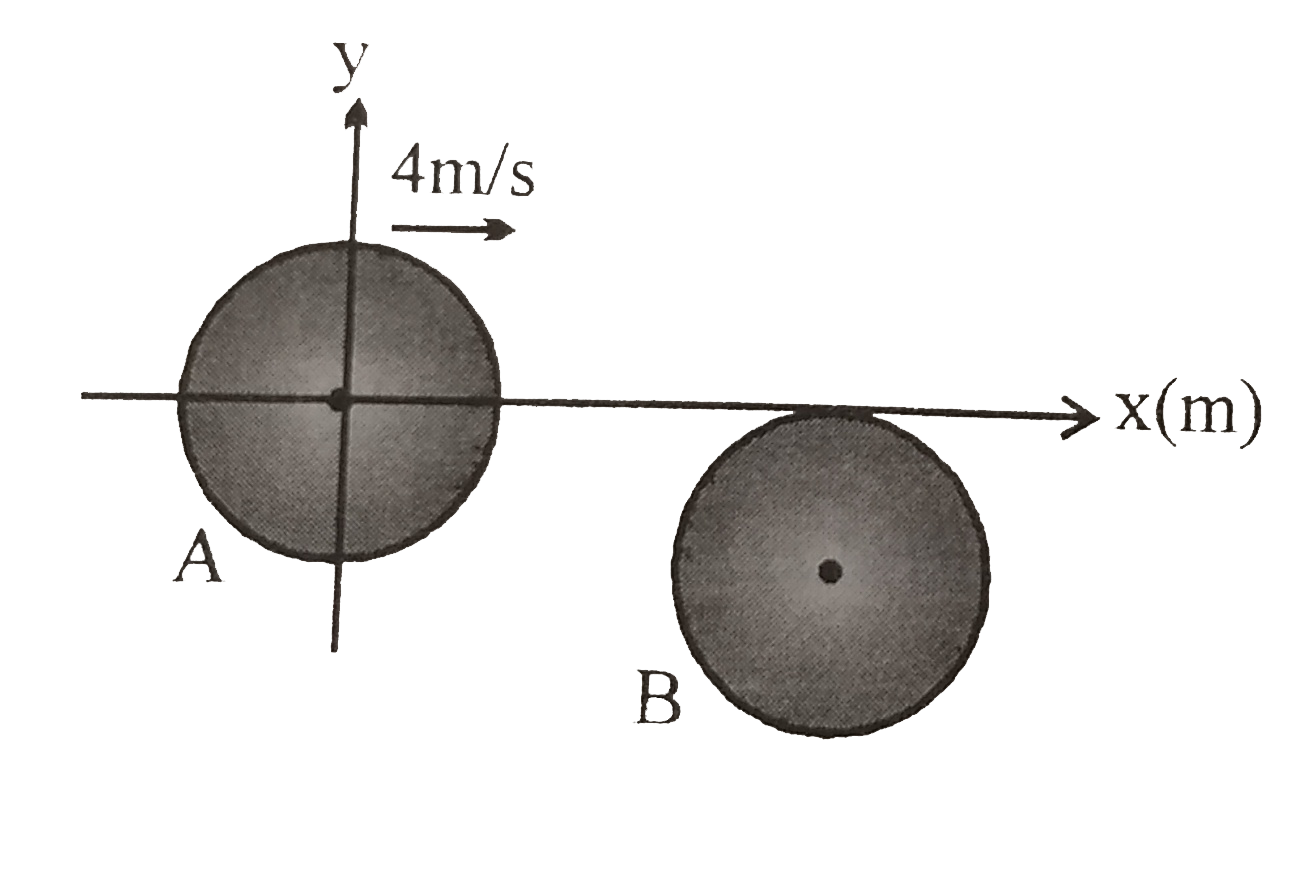

By Newton's experimental law
`(1)/(2)=(v_(2)-v_(1))/((4cos30^(@)))`
`v_(2)-v_(1)=sqrt3` ......(i)
By conservation of momentum along line of collision
`m(4sqrt3)/(2)=mv_(1)+mv_(2)`
`v_(1)+v_(2)=2sqrt3` .....(ii)
From equation(i) & (ii),
`v_(1)=(sqrt3)/(2)m//s," "v_(2)=(3sqrt3)/(2)m//s`
`vecv_(1)=(3sqrt3)/(2)[cos30^(@)hati+sin30^(@)(-hatj)]m//s`
`=((9)/(4)hati-(3sqrt3)/(4)hatj)`
Promotional Banner

Topper's Solved these Questions

  • CENTRE OF MASS & MOMENTUM CONSERVATION

    BANSAL|Exercise Solved Examples|15 Videos
  • CENTRE OF MASS & MOMENTUM CONSERVATION

    BANSAL|Exercise Practice Exercise|20 Videos
  • GRAVITATION

    BANSAL|Exercise EXERCISE -4 Section - B|6 Videos

Similar Questions

Explore conceptually related problems

Two smooth balls A and B , each of mass m and radius R , have their centres as shown in fig. Ball A , moving along positive x-axis, collides with ball B . Just before the collision, speed of ball 'A' is 4m//s and ball 'B' is stantionary. The collision What is velocity of ball 'B' after collision is

Two smooth balls A and B , each of mass m and radius R , have their centres as shown in fig. Ball A , moving along positive x-axis, collides with ball B . Just before the collision, speed of ball 'A' is 4m//s and ball 'B' is stantionary. The collision Velocity of the ball 'A' just after the collision is

Two smooth balls A and B , each of mass m and radius R , have their centres as shown in fig. Ball A , moving along positive x-axis, collides with ball B . Just before the collision, speed of ball 'A' is 4m//s and ball 'B' is stantionary. The collision Impluse of the force exerted by 'A' on 'B' during the collision is equal to

Two smooth balls A and B, each of mass m and radius R, have their centre at (0,0,R) and (5R,-R,R) respectively, in a coordinate system as shown. Ball A, moving along positive x-axis, collides with ball B. Just before the collision, speed of ball A is 4m/s and ball B is stationary. The collision between the balls is elastic. Velocity of the ball A just after the collsion is

Two smooth balls A and B, each of mass m and radius R, have their centers at (0, 0, R) and at (5R, -R, R) respectively, in a coordinate system as shown. Ball A, moving along positive x axis, collides with ball B. Just before the collision, speed of ball A is 4m/s and ball B is stationary. The collision between the ball is elastic. Impulse of the force exerted by A and B during the collision, is equal to

A glass ball collides with an identical ball at rest with v_(0)=2 m/sec. If the coefficient of restitution of collision is e = 0.5, find the velocities of the glass balls just after the collision.

A ball of mass m moving with velocity u strikes another identical ball at rest. Find the velocities of the balls after the collision if the coefficient of restitution is e and the collision is head -on. Also , calculate the loss in K.E.

A 2.5-kg ball and a 5.0-kg ball have an elastic collision. Before the collision, the 2.5-kg ball was at rest and the other ball had a speed of 3.5 m/s. What is the kinetic energy of the 2.5-kg ball after the collision?

A ball moving with velocity of 6 m/s strikes an identical stationary ball. After collision each ball moves at an angle of 30^(@) with the original line of motion. What are the speeds of the balls after the collision ?

