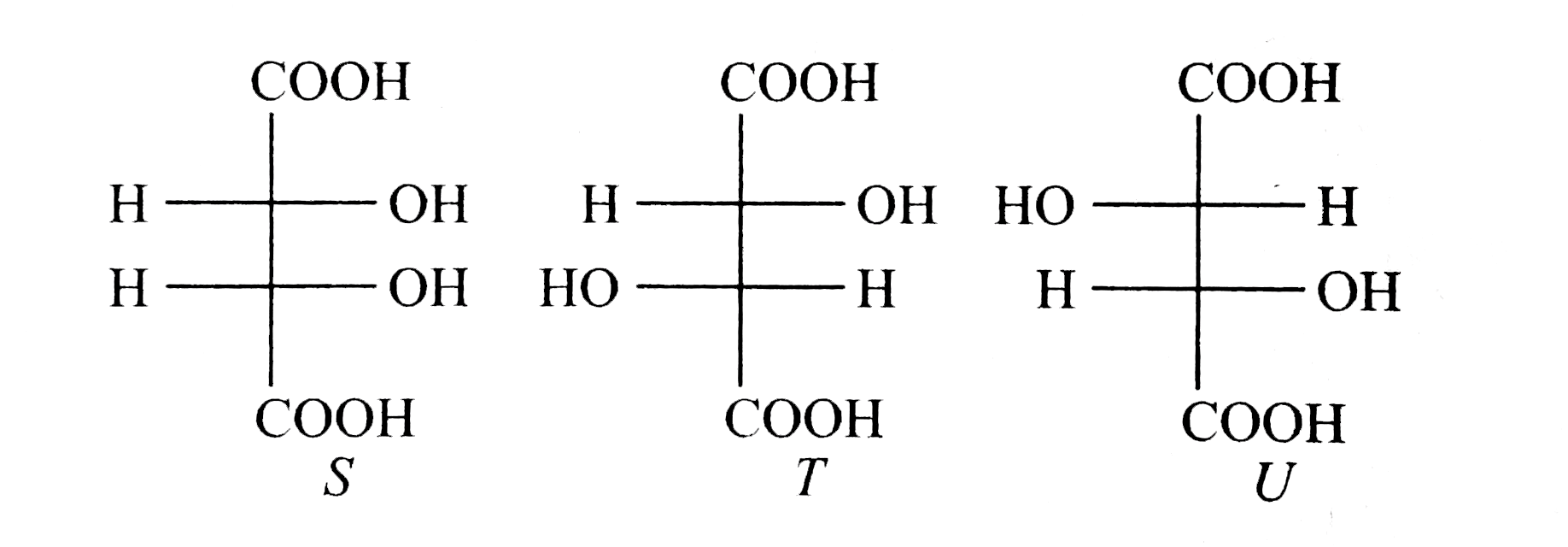
A
B
C
D
Text Solution
Verified by Experts
The correct Answer is:



Topper's Solved these Questions
CARBOXYLIC ACID AND THEIR DERIVATIVES
IIT-JEE PREVIOUS YEAR (CHEMISTRY)|Exercise (Topic II) OBJECTIVE QUASTION|1 VideosCARBOXYLIC ACID AND THEIR DERIVATIVES
IIT-JEE PREVIOUS YEAR (CHEMISTRY)|Exercise Subjective Questions|4 VideosCARBOXYLIC ACID AND THEIR DERIVATIVES
IIT-JEE PREVIOUS YEAR (CHEMISTRY)|Exercise CHAPTER TEST|3 VideosBIOMOLECULES AND CHEMISTRY IN DAILY LIFE
IIT-JEE PREVIOUS YEAR (CHEMISTRY)|Exercise Chapter Test|9 VideosCHEMICAL AND IONIC EQUILIBRIUM
IIT-JEE PREVIOUS YEAR (CHEMISTRY)|Exercise INTEGER_TYPE|1 Videos
Similar Questions
Explore conceptually related problems
IIT-JEE PREVIOUS YEAR (CHEMISTRY)-CARBOXYLIC ACID AND THEIR DERIVATIVES-JEE Main And Advanced
- The reaction of compounf P with CH(3)MgBr (excess) in (C(2)H(5))(2)O f...
Text Solution
|
- The reaction of compounf P with CH(3)MgBr (excess) in (C(2)H(5)(2)O fo...
Text Solution
|
- P and Q are isomer of dicraboxylic acid C(4)H(4)O(4) Both decolourixe ...
Text Solution
|
- P and Q are isomer of dicraboxylic acid C(4)H(4)O(4) Both decolourixe ...
Text Solution
|
- RCONH2 is converted into RNH2 by means of Hofmann bromamide degradatio...
Text Solution
|
- RCONH2 is converted into RNH2 by means of Hofmann bromamide degradatio...
Text Solution
|
- RCONH2 is converted into RNH2 by means of Hofmann bromamide degradatio...
Text Solution
|
- Formic acid when heated with conc . H2 SO4 produces …….. .
Text Solution
|
- The boiling point of propionic acid is more than that of n-butyl alcoh...
Text Solution
|
- Hydrolysis of an ester in the presence of a dilute acid is known as
Text Solution
|
- The total number of carboxylic acid groups in te product P is:
Text Solution
|
- Compound A of molecular formula C(9)H(7)O(2)Cl exists is keto form and...
Text Solution
|
- Identify Z + Y in the following synthetic scheme and write their struc...
Text Solution
|
- Write the structures of products (A) and (B) CH(3) -overset (O) over...
Text Solution
|
- The products (A) and (B) of the reaction CH(3)CH(2)NH(2)underset(hea...
Text Solution
|
- An ester A(C4 H8 O2), on treatement with excess of methyl magnesium bo...
Text Solution
|
- A hydrocarbon A of the molecular formula C8 H10. On ozonolysis gives o...
Text Solution
|
- Complete the following sequence of reactions with appropriate structur...
Text Solution
|
- Which of the following carboxylic acids undergoes decarboxylation easi...
Text Solution
|
- Predict the major product in the following reaction : C(6)H(5) - CH(...
Text Solution
|