

Home
Class 12
PHYSICS
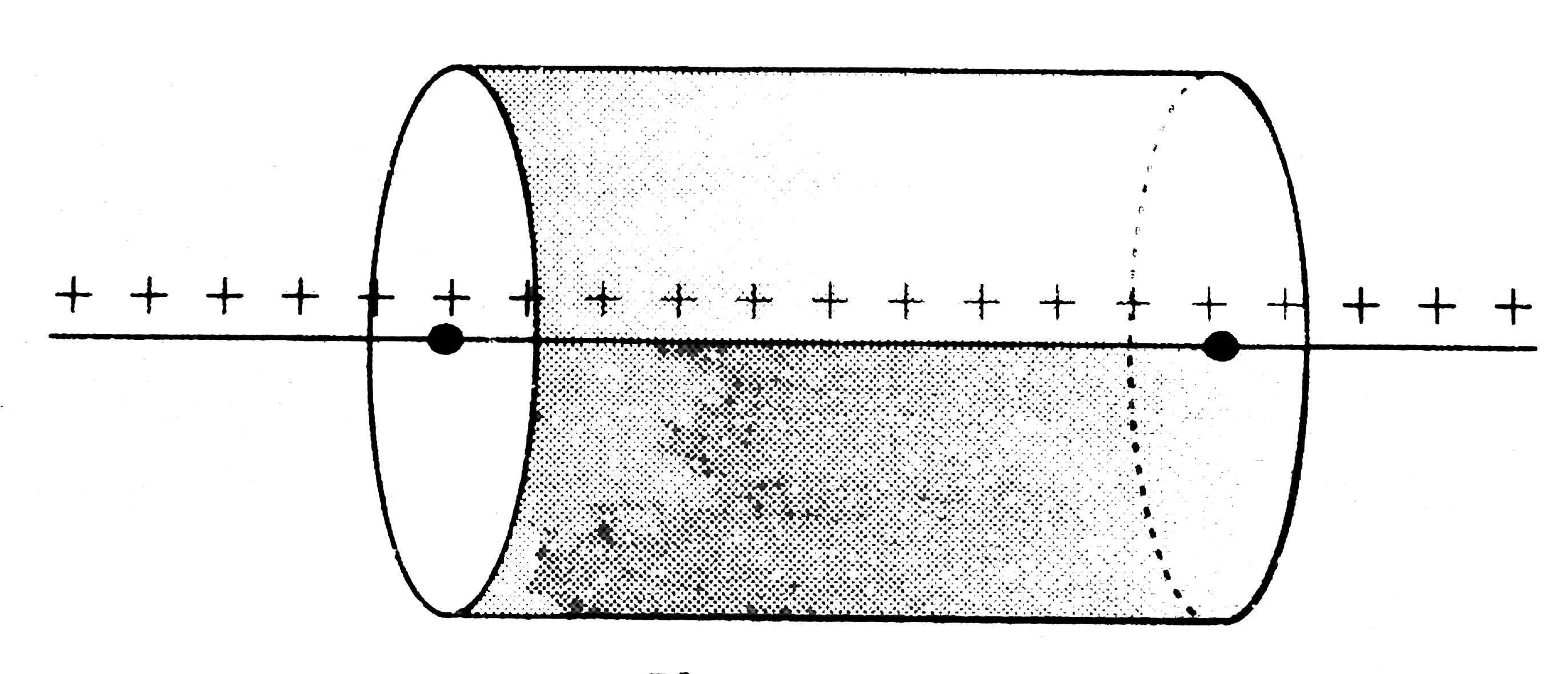
Consider an infinite line charge having ...

Consider an infinite line charge having uniform linear charge density and passing through the axis of a cylinder is removed.

Promotional Banner

Similar Questions

Explore conceptually related problems

Consider an infinite line charge having uniform linear charge density and passing through the axis of a cyclinder. What will be the effect on the flux passing through curved surface if the portions of the line charge outside the cyclinder is removed

Two infinite line charges each having uniform charges density lamdba .pass through the mid points of two pairs of opposite faces of a cube of edge L as shown in figure .The modulue of the total electric flux due to the both the line charges through the face

For an infinite line of charge having linear charge density lambda lying along x-axis the work done in moving a charge q form C to A along CA is

For an infinite line of charge having linear charge density lambda lying along x-axis the work done in moving a charge q form C to A along CA is

For an infinite line of charge having linear charge density lambda lying along x-axis the work done in moving a charge q form C to A along CA is

Twelve infinite long wire of uniform linear charge density (lambda) are passing along the twelve edges of a cube. Find electric flux through any face of cube. ,

Twelve infinite long wire of uniform linear charge density (lambda) are passing along the twelve edges of a cube. Find electric flux through any face of cube. ,

Consider an infinitely long straight uniformly charged wire with linear charge density lambda What is the net charge enclosed by the Gaussian surface ?

Two infinite line charges, each having a uniform density lambda . Pass through the midpoints of two pairs of opposite faces of a cube of edge L as shown in figure. The modulus of the total electric flux due to both the line charges through the face is ABCD is lambda L//(k epsilon_(0)) find the value of k ?

Two infinite line charges, each having a uniform density lambda . Pass through the midpoints of two pairs of opposite faces of a cube of edge L as shown in figure. The modulus of the total electric flux due to both the line charges through the face is ABCD is lambda L//(k epsilon_(0)) find the value of k ?