

Home
Class 12
PHYSICS
Two slits separated by 0.33mm.A beam of ...

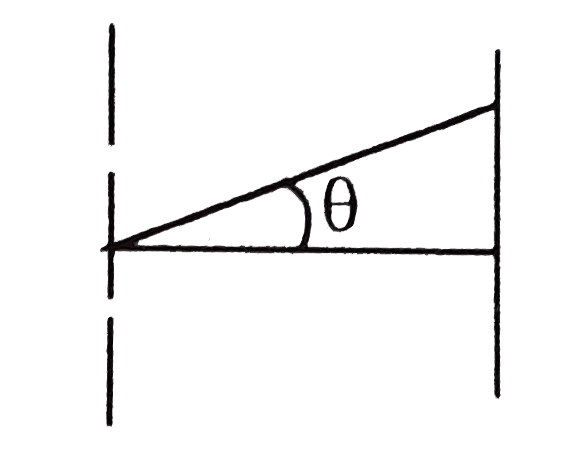
Two slits separated by 0.33mm.A beam of `500nm` light strikes the slits producing an interference pattern.Tegh number of maxiam observed in the angular angle range`-30^(@)ltthetalt30^(@)`

Promotional Banner

Similar Questions

Explore conceptually related problems

Two slits are separated by 0.320 mm. A beam of 500 nm light strikes the slits, producing an interference pattern. Determine the number of maxima observed in the angular range - 30.0^(@) lt theta lt 30.0^(@) .

Two slits are separated by 0.320 mm. A beam of 500 nm light strikes the slits, producing an interference pattern. Determine the number of maxima observed in the angular range - 30.0^(@) lt theta lt 30.0^(@) .

In a Young's double slit experiment, the slits are placed 0.320 mm apart. Light of wavelength lambda =500 nm is incident on the slits. The total number of bright fringes that are observed in the angular range -30^(@)le theta le 30^(@) is :

In a Young's double slit experiment, the slits are placed 0.320 mm apart. Light of wavelength lambda =500 nm is incident on the slits. The total number of bright fringes that are observed in the angular range -30^(@)le theta le 30^(@) is :

Laser light of wavelength 630 nm incident on a pair of slits produces an interference pattern in which the bright fringes are separated by 8.1 mm. A second laser light produces an interference pattern in which the fringes are separated by 7.2 mm. Calculate the wavelength of the second light.

Laser light of wavelength 630 nm incident on a pair of slits prodeuces an interference pattern in which the bright fringes are separated by 8.3 mm .A second light produces an interfernce pattern in which the bright fringes are separated by 7.6 mm .Find the wavelength of the second light.

In a Young's double slit experiment, light of 500 nm is used to produce an interference pattern. When the distance between the slits is 0.05 mm, the angular width (in degree) of the fringes formed on the distance screen is close to:

In a Young's double slit experiment, light of 500 nm is used to produce an interference pattern. When the distance between the slits is 0.05 mm, the angular width (in degree) of the fringes formed on the distance screen is close to: