Home
Class 12
PHYSICS
x and y displacements of a particle are ...

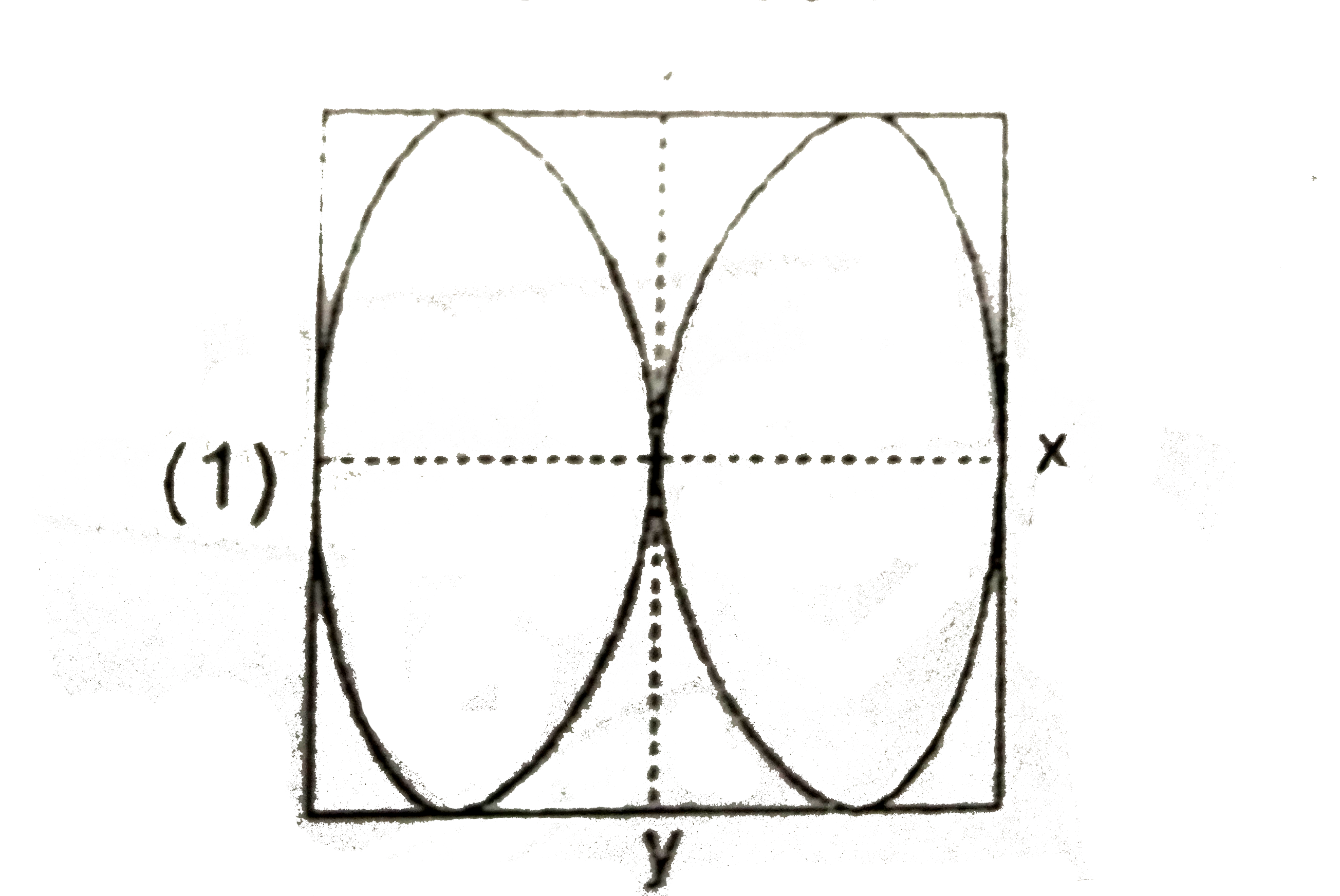
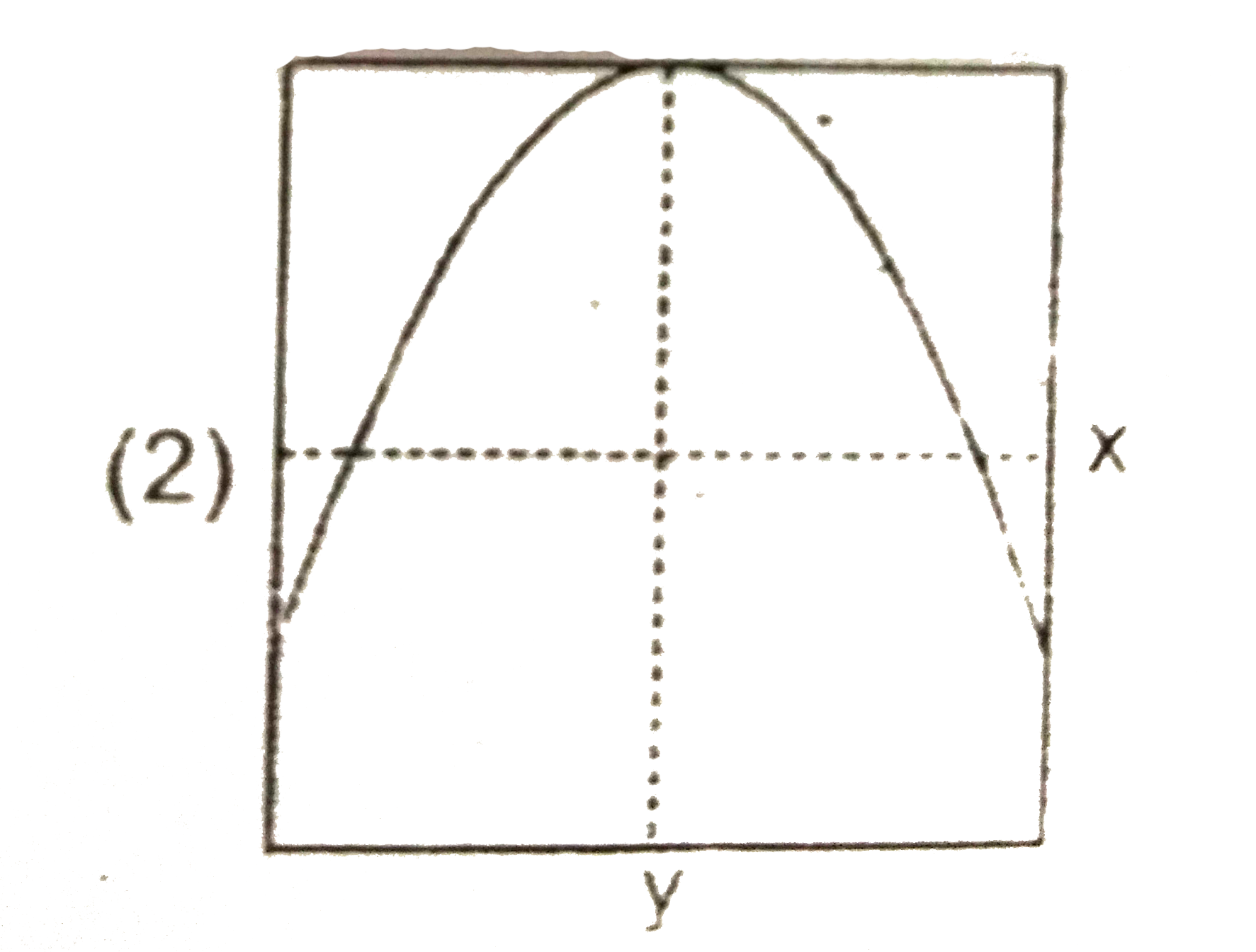
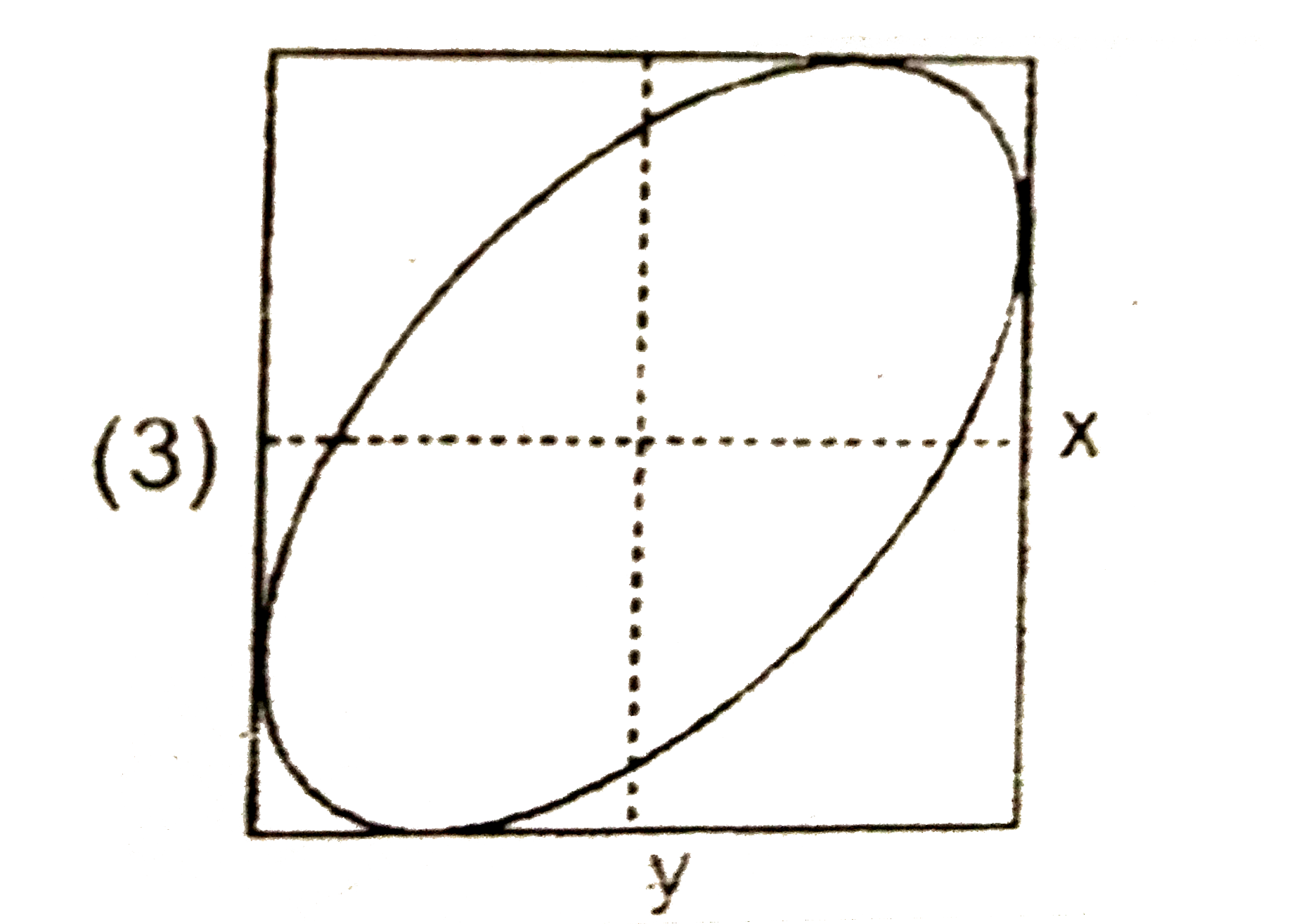
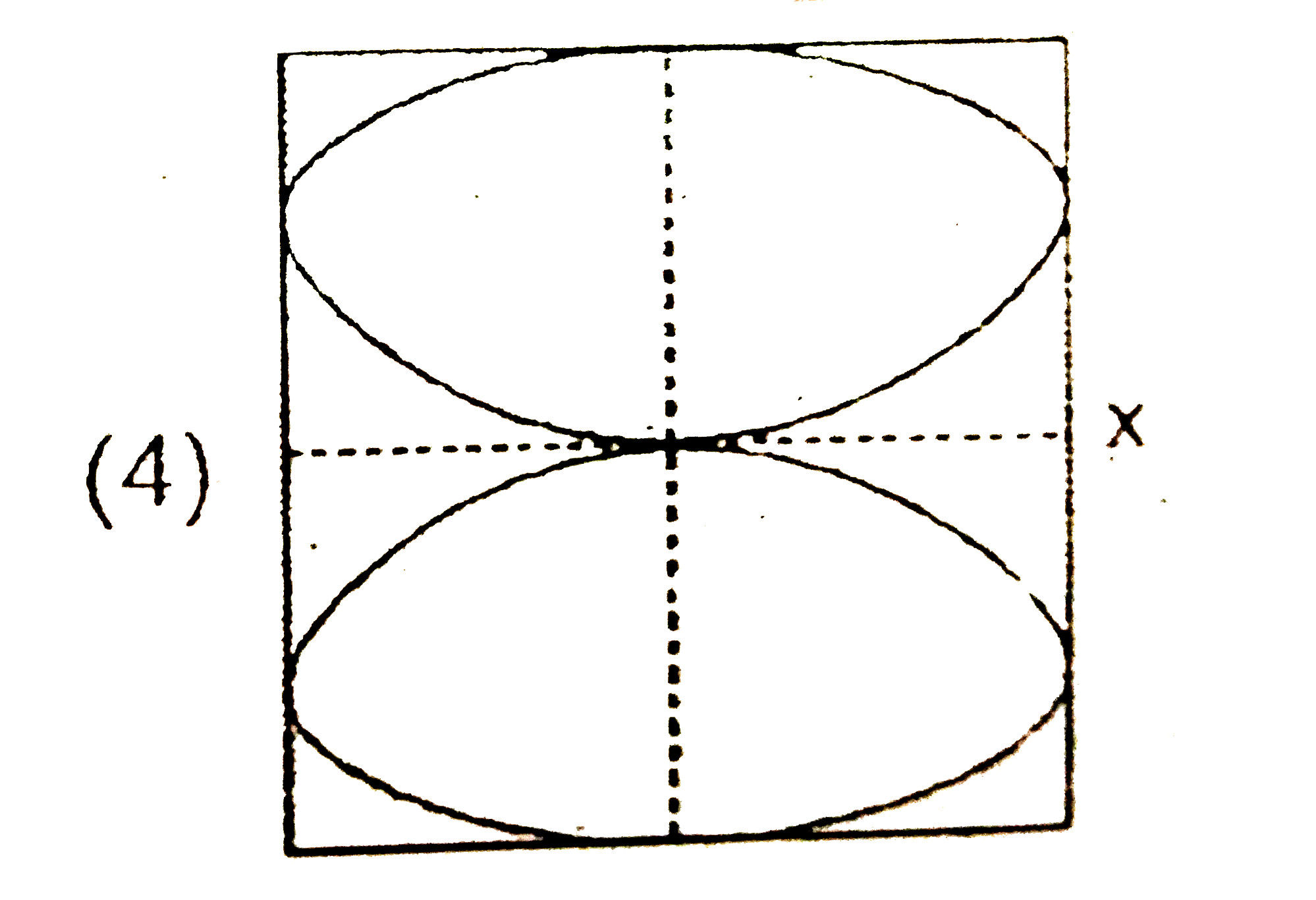
`x` and `y` displacements of a particle are given as `x(t)=-asinomegat` and `y(t)=asin2omegat`. Its trajectory will look like.

A

B

C

D

Text Solution

AI Generated Solution

The correct Answer is:

To determine the trajectory of the particle given the displacements \( x(t) = -a \sin(\omega t) \) and \( y(t) = a \sin(2\omega t) \), we can follow these steps: ### Step 1: Analyze the equations The equations for the displacements are: - \( x(t) = -a \sin(\omega t) \) - \( y(t) = a \sin(2\omega t) \) ### Step 2: Find critical points We will evaluate the displacements at specific time intervals to understand the trajectory. **At \( t = 0 \):** - \( x(0) = -a \sin(0) = 0 \) - \( y(0) = a \sin(0) = 0 \) So, at \( t = 0 \), the particle is at the origin (0,0). ### Step 3: Evaluate at \( t = \frac{\pi}{2\omega} \) **At \( t = \frac{\pi}{2\omega} \):** - \( x\left(\frac{\pi}{2\omega}\right) = -a \sin\left(\omega \cdot \frac{\pi}{2\omega}\right) = -a \sin\left(\frac{\pi}{2}\right) = -a \) - \( y\left(\frac{\pi}{2\omega}\right) = a \sin\left(2\omega \cdot \frac{\pi}{2\omega}\right) = a \sin(\pi) = 0 \) At this point, the particle is at (-a, 0). ### Step 4: Evaluate at \( t = \frac{\pi}{4\omega} \) **At \( t = \frac{\pi}{4\omega} \):** - \( x\left(\frac{\pi}{4\omega}\right) = -a \sin\left(\frac{\pi}{4}\right) = -a \cdot \frac{\sqrt{2}}{2} = -\frac{a\sqrt{2}}{2} \) - \( y\left(\frac{\pi}{4\omega}\right) = a \sin\left(\frac{\pi}{2}\right) = a \) At this point, the particle is at \(-\frac{a\sqrt{2}}{2}, a\). ### Step 5: Evaluate at \( t = \frac{\pi}{2\omega} \) **At \( t = \frac{\pi}{2\omega} \):** - \( x\left(\frac{\pi}{2\omega}\right) = -a \sin(\pi) = 0 \) - \( y\left(\frac{\pi}{2\omega}\right) = a \sin(2\pi) = 0 \) The particle returns to the origin (0,0). ### Step 6: Evaluate at \( t = \frac{3\pi}{4\omega} \) **At \( t = \frac{3\pi}{4\omega} \):** - \( x\left(\frac{3\pi}{4\omega}\right) = -a \sin\left(\frac{3\pi}{4}\right) = -a \cdot \frac{\sqrt{2}}{2} = -\frac{a\sqrt{2}}{2} \) - \( y\left(\frac{3\pi}{4\omega}\right) = a \sin\left(\frac{3\pi}{2}\right) = -a \) At this point, the particle is at \(-\frac{a\sqrt{2}}{2}, -a\). ### Step 7: Evaluate at \( t = \frac{2\pi}{\omega} \) **At \( t = \frac{2\pi}{\omega} \):** - \( x\left(\frac{2\pi}{\omega}\right) = -a \sin(2\pi) = 0 \) - \( y\left(\frac{2\pi}{\omega}\right) = a \sin(4\pi) = 0 \) The particle returns to the origin (0,0). ### Conclusion By plotting these points, we can see that the trajectory of the particle forms a closed loop. The trajectory will look like a sinusoidal wave pattern in the x-y plane.

To determine the trajectory of the particle given the displacements \( x(t) = -a \sin(\omega t) \) and \( y(t) = a \sin(2\omega t) \), we can follow these steps: ### Step 1: Analyze the equations The equations for the displacements are: - \( x(t) = -a \sin(\omega t) \) - \( y(t) = a \sin(2\omega t) \) ### Step 2: Find critical points ...
Promotional Banner

Similar Questions

Explore conceptually related problems

The displacement of a particle is given by x = cos^(2) omegat. The motion is

The displacement s of a particle at time t is given by s=alpha sin omegat+beta cos omegat then acceleration at time t is

The displacement of a particle varies with time according to the relation y=asinomegat+bcoasomegat .

A particle is acted simultaneously by mutually perpendicular simple hormonic motions x=acos omegat and y =asinomegat. The trajectory of motion of the particle will be

A particle is acted simultaneously by mutually perpendicular simple harmonic motions x=a cos omegat and y=asinomegat . The trajectory of motion of the particle will be

A x and y co-ordinates of a particle are x=A sin (omega t) and y = A sin(omegat + pi//2) . Then, the motion of the particle is

A particle is acted simultaneously by mutally perpendicular simple harmonic motion x=acosomegat and y=asinomegat . The trajectory of motion of the particle will be

A particle moves in x-y plane according to rule x=asin omegat and y=-acosomegat . The particle follows
