Home
Class 12
CHEMISTRY
Following titration method is taken to c...

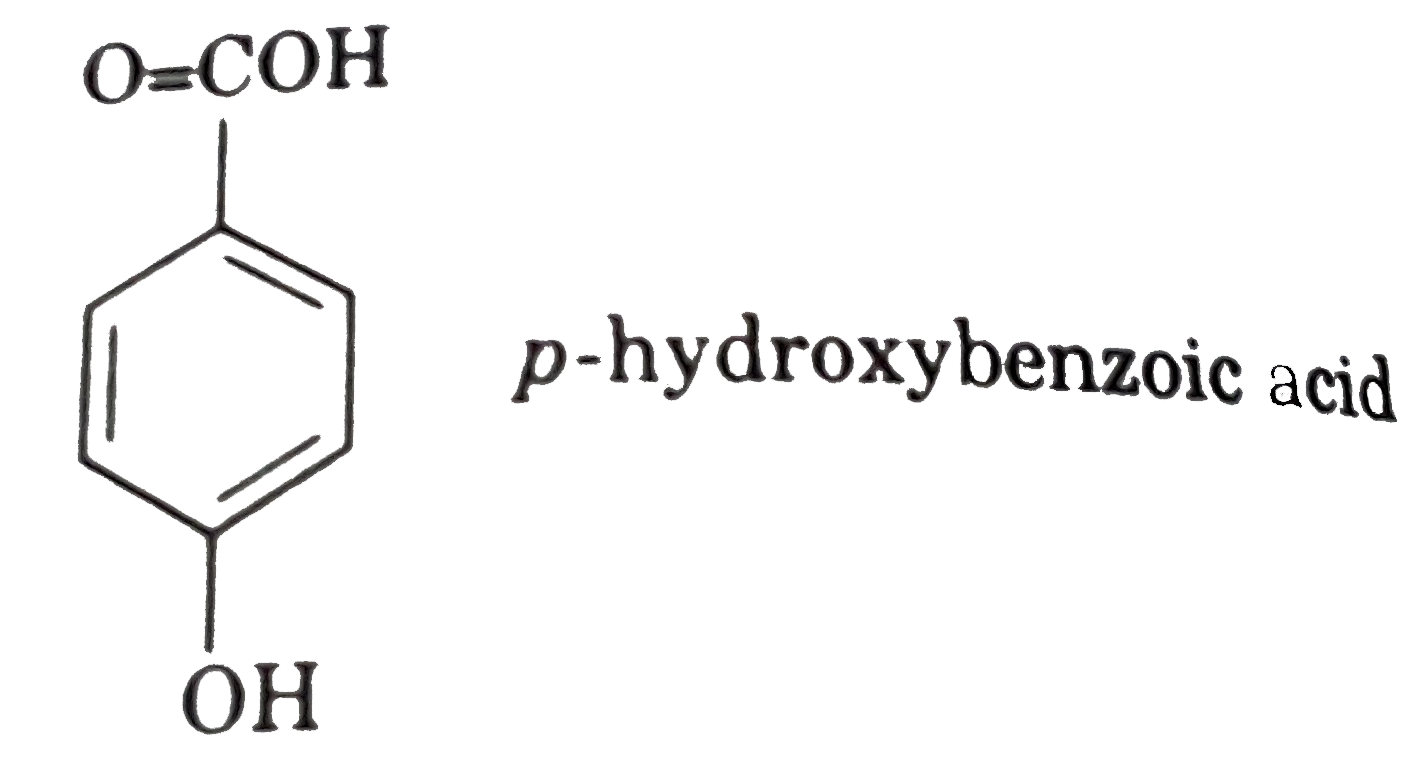
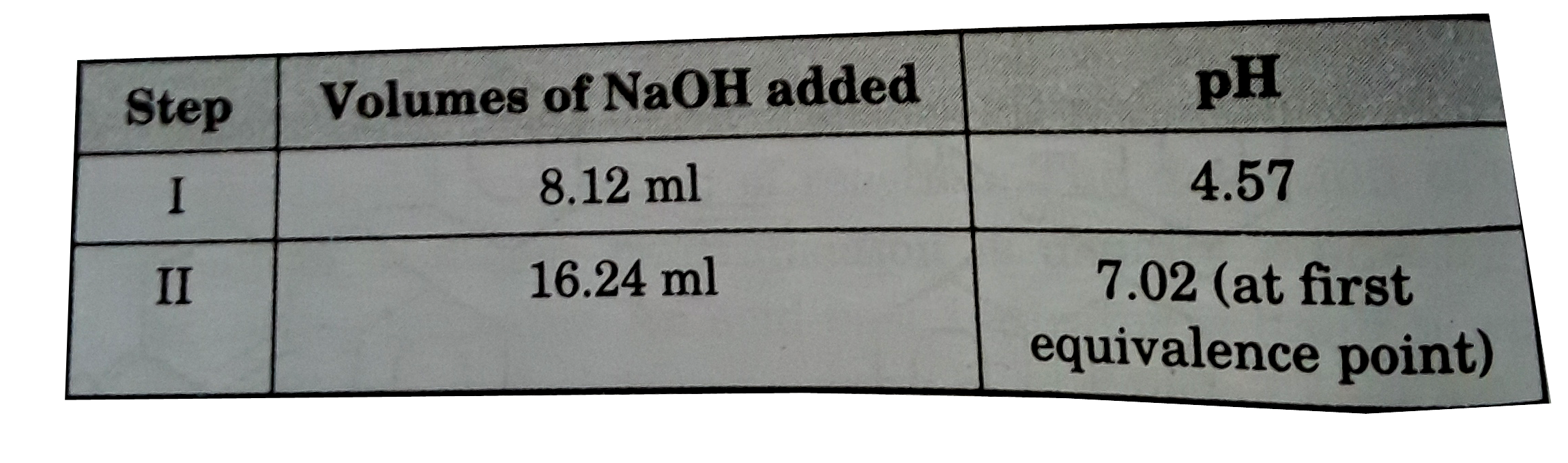
Following titration method is taken to compute stepwise ionisation constant of a weak dibasic acid

has two ionisable protons and there can be stepwise neutralisation by NaOH.
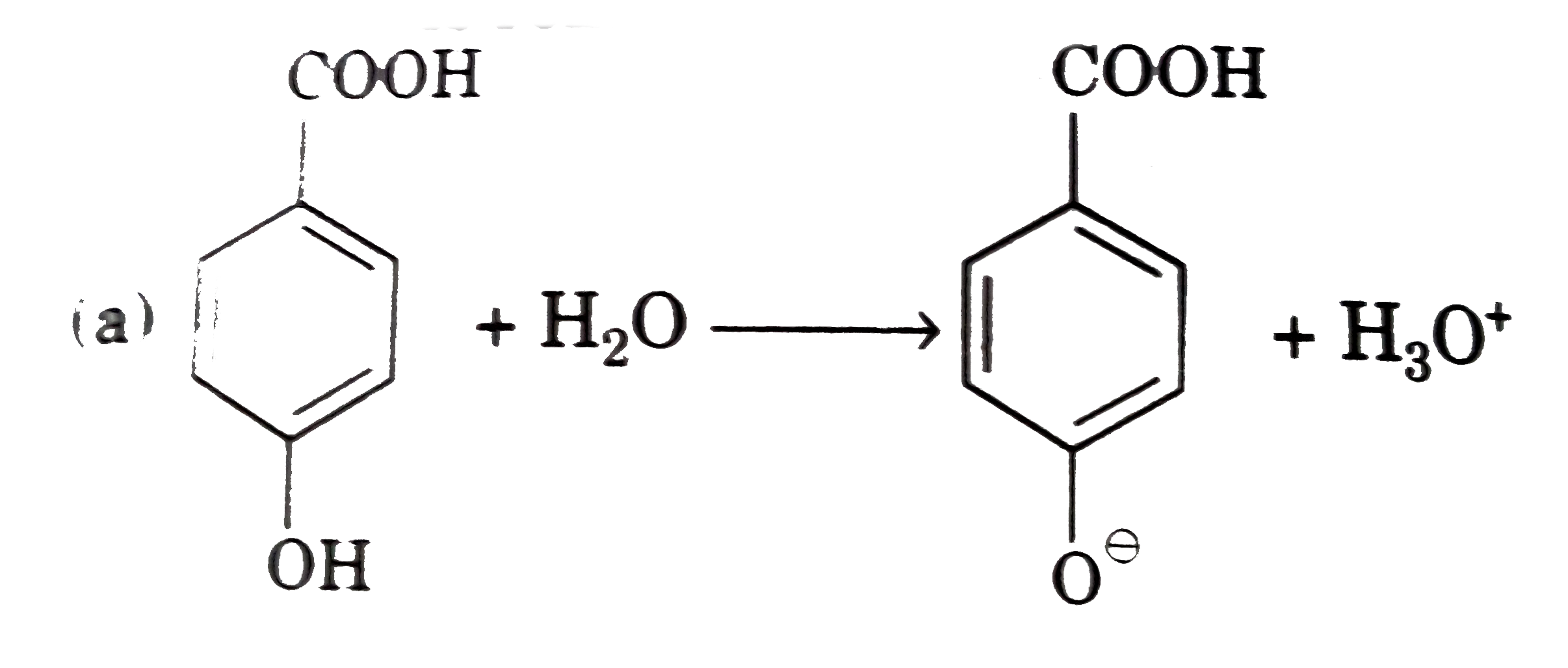
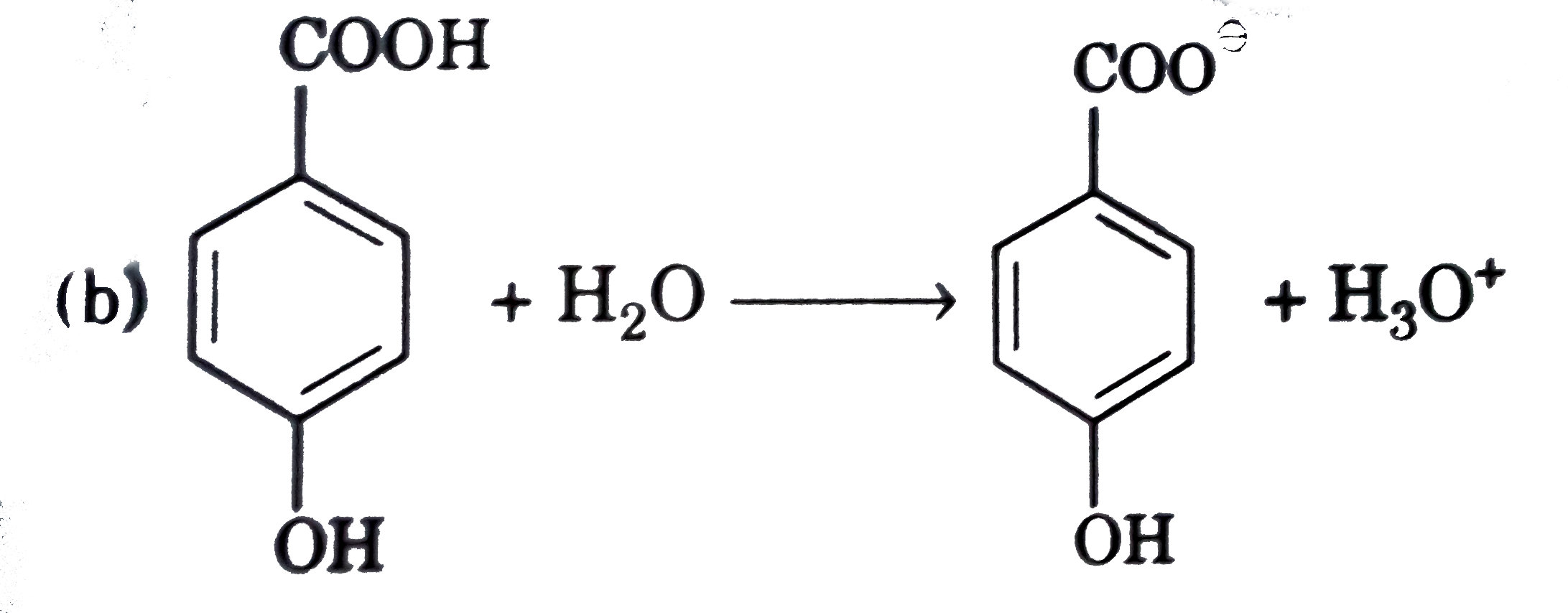
Which `H^(+)` removed in step `I`?

A

B

C

(c) Both 50%in each part

D

`underset(("autoprotolysis of " H_2O))(H_(2)+H_(2)OtoH_(3)O+OH^(-)`

Text Solution

Verified by Experts

The correct Answer is:

b
Promotional Banner

Topper's Solved these Questions

  • HYDROGEN AND ITS COMPOUNDS

    GRB PUBLICATION|Exercise Subjective type|8 Videos
  • LIQUID SOLUTIONS

    GRB PUBLICATION|Exercise 11|12 Videos

Similar Questions

Explore conceptually related problems

A solubility contains one mole each of HA and HB (both are weak acids) in one litre solution. Now 1 mole of NaOH is added to this solution so that both the acids are partly neutralised. Heat of neutralisation for HA and HB are- 11.8 and- 12.4 kcal respectively and the heat produced during partial neutralisation of HA and HB is- 12.25 kcal. The ratio of dissociation constant of two acids are:

When acids an bases react they liberate some amount of energy which is represented as DeltaH neutralization if one equivalent of acid and base reacts. The energy liberated depends on the concentration of acid and base and also on whether the acid is strong or weak. For strong acids and bases, the value is constant and for weaker acids as bases the magnitude is generally lesser. Using this info and the date below answer the question that follow : [Given data : Delta_("neutralization")HCl//NaOH = - 14 Kcal//eq (at infinite dil.) DeltaH_("ionisation")CH_(3)COOH = 2kcal//mol DeltaH_("ionisation")NH_(4)OH = 3kcal//eq] In which of the following will heat released be same ?

During the neutralisation of an acid by a base, the end point refers to the completion of reaction. The detection of end point in acid-base neutralisation is usually made by an acid-base indicator. An acid-base indicator is itself a weak acid (Phenolphthalein) or a weak base (Methyl orange). At 50% ionisation which depends on the medium. the anion furnished by an indicator (acid) cation furnished colour to solution at end point. For example, phenolphthalein dissociation underset("Colourless")(HIn)toH^(+)+underset("Pink")(In^(-)),K_(HIn)=([H^(+)][In^(-)])/([HIn]) is favoured in presence of alkali and pink colour of phenolphthalein ion is noticed as soon as the medium changes to alkali nature. The end point of acid-base neutralisation not necessarily coincides with eqivalence point but it is closer to equivalence point. Also at equivalence point of acid-base neutralisation, pH is not necessarily equal to 7. Bromophenol blue is an acid having dissociation constant 5.48xx10^(-5) . The percentage of coloured ion furnished at a ph of 4.84 is :

During neutralisation of an acid by a base, the end point refers for the completion of reaction. The detection of end point in acid -base neutralisation is usually made by an acid-base indicator. An acid-base indicator is itself a weak acid (Phenolphthlein) or a weak base (Mrthyl orange). At about 50% ionisation which depends on the medium, the anion furnished by an indicator (acid) or cation furnished by indicator (basic) imparts its characteristic colour to solution at point. For example phenolphthalein, the dissociation is underset("Colourless")(H In hArr H^(+))+underset("Pink")(In^(-)), K_(H In)= ([H^(+)][In^(-)])/([H In]) favoured in presence of alkali and pink colour of phenolphalein ion is noticed as soon as the medium changes to alkaline nature. The end point of acid-base neutralisation not necessarily coincides with equivalent point but it is closer and closer to equivalence point. Also at equivalence point of acid-base neutralisation pH is not necessarliy equal to 7. Which among the following statements are correct ? (1) At equivalence point of NaOH and HCI, pH = 7 (2) At equivalence point to of NaOH and CH_(3)COOH,pH gt 7 (3) At equivalence point of NH_(4)OH and HCI, pH lt 7 (4) an indicator shoes best results, if equivalence point is within the pH range pK_(a) of In +1 (5) At equivalence point of NH_(4)OH and formic acid, pH lt 7

The dissociation of weak electrolyte (a weak base or weak acid) id expressed in terms of Ostwald dilution law. An acid is a substance which furnishes a proton or accepts an electron pair whereas a base is proton acceptor or electron pair donor. Storonger is the acid weaker is its conjugate base. The dissociation constants of an acid (K_(a)) and its conjugate base are related by (K_(w)=K_(a)xxK_(b) , where K_(w) is ionic prodcut of water equal to 10-14 at 25^(@)C . The numerical value of K_(w) however increases with temperature. In a solution of an acid or base [H^(+)][OH^(-)]=10^(14) .Thus, the [H^(+)] in a solution is expressed as : [H^(+)]=10^(-pH) and pH+pOH=14 . Buffer solutions are the solutions which do not show appreciable change in the pH on addition of small amount of acid or base. Which of the following statements are correct? (P) At 25^(@)C,pH of 10^(-10)MNaOH is nearly 7. (Q) The degree of dissociation of a weak acid is given by (1)/(1+10^((pk_(a)-pH))) . (R) For weak electrolytes of polyprotic acid nature having no other electrolyte, the anion concentration produced in II step of dissocitation is always equal to K_(2) at reasonable concentration of acid. (S) The concentraion of amide ions produced during self ionisation of NH_(3) is equal to concentration of ammonium ions. Ostwld dilution law is valid for strong electrolytes.

During the neutralisation of an acid by a base, the end point refers to the completion of reaction. The detection of end point in acid-base neutralisation is usually made by an acid-base indicator. An acid-base indicator is itself a weak acid (Phenolphthalein) or a weak base (Methyl orange). At 50% ionisation which depends on the medium. the anion furnished by an indicator (acid) cation furnished colour to solution at end point. For example, phenolphthalein dissociation underset("Colourless")(HIn)toH^(+)+underset("Pink")(In^(-)),K_(HIn)=([H^(+)][In^(-)])/([HIn]) is favoured in presence of alkali and pink colour of phenolphthalein ion is noticed as soon as the medium changes to alkali nature. The end point of acid-base neutralisation not necessarily coincides with eqivalence point but it is closer to equivalence point. Also at equivalence point of acid-base neutralisation, pH is not necessarily equal to 7. Which of the following statements are correct? (P) Phenolphthalein is not a good indicator for weak alkali titrations. (Q) Phenolphthalein does not give pink colour with weak alkalies as NH_(4)OH (R) Phenolphthalein is an basic indicator and imparts colour in basic medium.

GRB PUBLICATION-IONIC EQUILIBRIUM-All Questions
  1. Amino acid glycine (NH(2)-CH(2)-COOH) exists as a zwitter ion in aq. S...

    Text Solution

    |

  2. Amino acid glycine (NH(2)-CH(2)-COOH) exists as a zwitter ion in aq. S...

    Text Solution

    |

  3. Following titration method is taken to compute stepwise ionisation con...

    Text Solution

    |

  4. Following titration method is taken to compute stepwise ionisation con...

    Text Solution

    |

  5. Following titration method is taken to compute stepwise ionisation con...

    Text Solution

    |

  6. Acetic acid tends to form dimer due to formation of intermolcular hydr...

    Text Solution

    |

  7. Acetic acid tends to form dimer due to formation of intermolcular hydr...

    Text Solution

    |

  8. Acetic acid tends to form dimer due to formation of intermolcular hydr...

    Text Solution

    |

  9. 100ml of 0.1M H(3)PO(4) is titrated with 0.05 M NaOH solution till 2nd...

    Text Solution

    |

  10. 100ml of 0.1M H(3)PO(4) is titrated with 0.05 M NaOH solution till 2nd...

    Text Solution

    |

  11. 100ml of 0.1M H(3)PO(4) is titrated with 0.05 M NaOH solution till 2nd...

    Text Solution

    |

  12. Selective precipitation of ions in a mixture in the form of salts can ...

    Text Solution

    |

  13. Selective precipitation of ions in a mixture in the form of salts can ...

    Text Solution

    |

  14. 0.3 g of CH(3) COOH is dissolved in 100ml water to prepare a solution ...

    Text Solution

    |

  15. 0.3 g of CH(3) COOH is dissolved in 100ml water to prepare a solution ...

    Text Solution

    |

  16. The equilibrium equation and K(a) values for the three acids are given...

    Text Solution

    |

  17. The equilibrium equation and K(a) values for the three acids are given...

    Text Solution

    |

  18. The equilibrium equation and K(a) values for the three acids are given...

    Text Solution

    |

  19. Human blood has a narrow Ph range of 7.3-7.4, which must be maintained...

    Text Solution

    |

  20. Human blood has a narrow Ph range of 7.3-7.4, which must be maintained...

    Text Solution

    |
