

Home
Class 12
PHYSICS
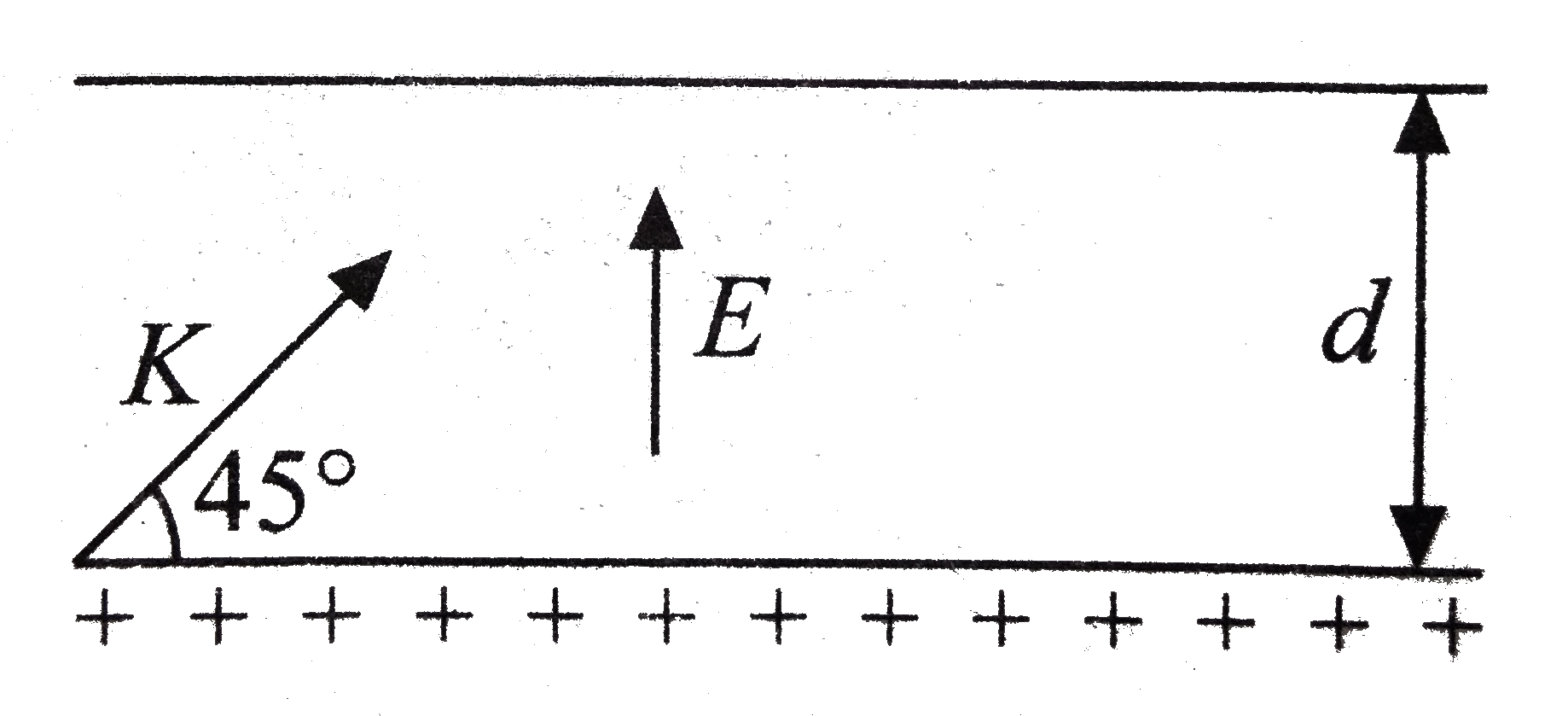
An electron is projected as shown in fig...

An electron is projected as shown in fig. with kinetic energy K, at an angle `theta=45^(@)` between two charged plates. Ignore the gravity.

At what distance from the starting point will the electron strike the lower plate?

Promotional Banner

Similar Questions

Explore conceptually related problems

An electron is projected as in figure with kinetic energy K, at an angle theta=45^(@) between two charged plates. The magnitude of the electric field so that the electron just fails to strike the upper plate, should be greater than:

An electron is projected as in figure with kinetic energy K, at an angle theta=45^(@) between two charged plates. The magnitude of the electric field so that the electron just fails to strike the upper plate, should be greater than:

An electron is projected as in figure with kinetic energy K, at an angle theta=45^(@) between two charged plates. The magnitude of the electric field so that the electron just fails to strike the upper plate, should be greater than:

An electron is projected as shown with speed u . If electron just fails to strike the upper plate, find range. (distance from starting point at which electron strike the lower plate again). Consider only electric force.

An electron is projected as shown with speed u . If electron just fails to strike the upper plate, find range. (distance from starting point at which electron strike the lower plate again). Consider only electric force.

The plate of a capacitor are 2.00cm apert . An electron -prodon pair is released somewhere in the gap between the plates and it is found that the prolon reeaches the negative plate . At what distance from the negative plate was the pair released?

The plate of a capacitor are 2.00cm apart . An electron -proton pair is released somewhere in the gap between the plates and it is found that the proton reaches the negative plate . At what distance from the negative plate was the pair released?

The plate of a capacitor are 2.00cm apart . An electron -proton pair is released somewhere in the gap between the plates and it is found that the proton reaches the negative plate . At what distance from the negative plate was the pair released?

A uniform magnetic field (B) is applied between the plates of a capacitor in the outward direction as shown in the figure. Surface charge density on the capacitor plates is sigma . An electron is fired in between the plates, parallel to them, as shown in the figure. The electron is found to move straight in-between the plates of capacitor. Neglect the gravity. If L is the length of the plates then caleulate the time taken by the electron to cross the plates.