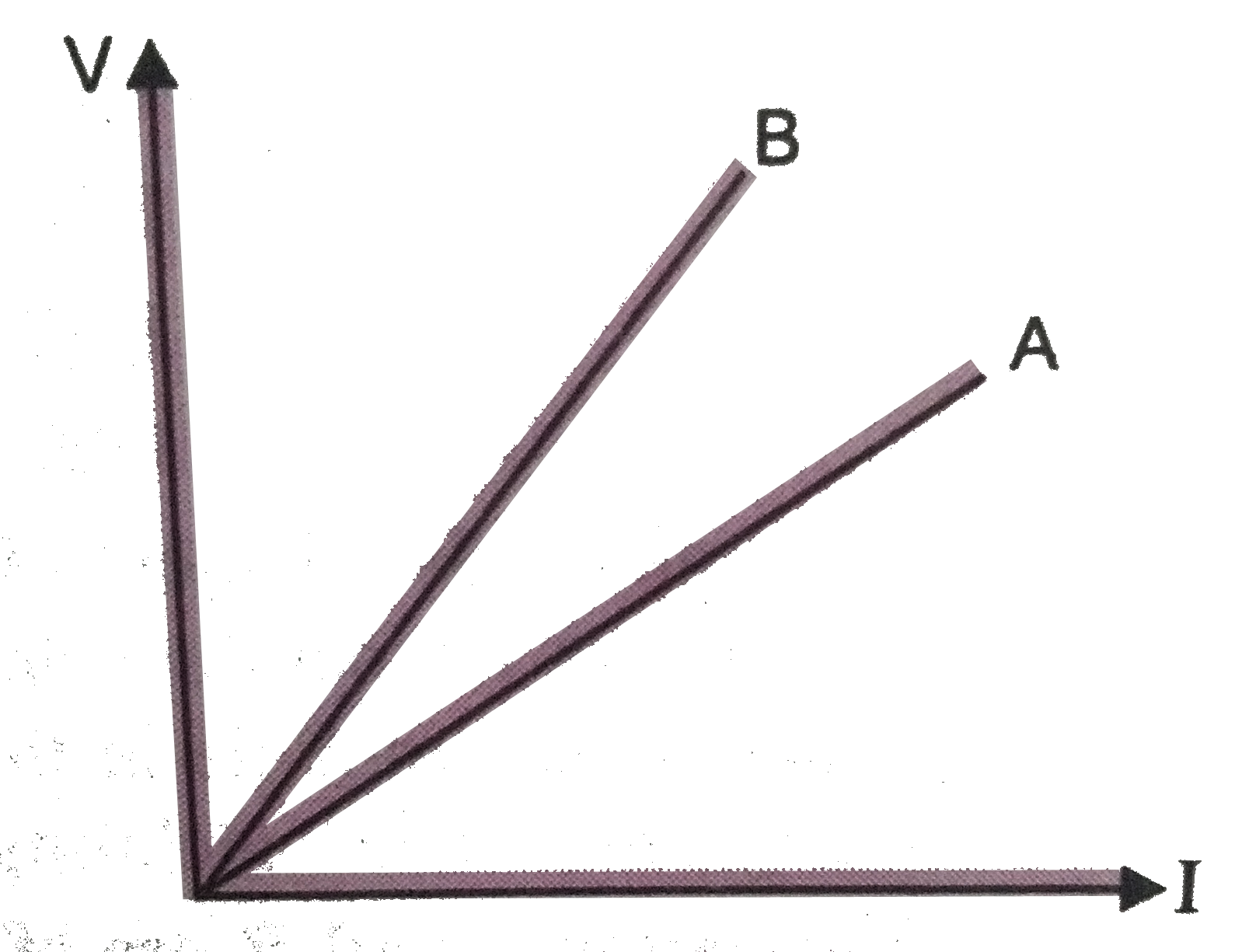
 .
.A
B
C
D
Text Solution
Verified by Experts
The correct Answer is:



Topper's Solved these Questions
ELECTRIC CURRENT & CIRCUITS
CENGAGE PHYSICS|Exercise Combination of Resistance 2|14 VideosELECTRIC CURRENT & CIRCUITS
CENGAGE PHYSICS|Exercise Kirchhoff s Law and Grouping Cells|15 VideosELECTRIC CURRENT & CIRCUITS
CENGAGE PHYSICS|Exercise Kirchhoff s law and simple circuits|15 VideosELECTRIC CHARGES AND FIELDS
CENGAGE PHYSICS|Exercise QUESTION BANK|40 VideosELECTRIC CURRENT AND CIRCUIT
CENGAGE PHYSICS|Exercise Interger|8 Videos
Similar Questions
Explore conceptually related problems
CENGAGE PHYSICS-ELECTRIC CURRENT & CIRCUITS-Combination of Resistance 1
- First a set of n equal resistors of R each are connected in series to ...
Text Solution
|
- Suppose there is a circuit consister of only resistance and batteries ...
Text Solution
|
- Find the equivalent resistance between terminals A and B. Each resisto...
Text Solution
|
- Find the equivalent resistance between A and B in the arrangement of r...
Text Solution
|
- The two ends of a uniform conductor are joined to a cell of e.m.f. E a...
Text Solution
|
- The V-I graphs of parallel and series combinations of two metallic res...
Text Solution
|
- If each resistance in the figure is of 9Omega then reading of ammeter...
Text Solution
|
- Two resistors of resistance R(1) and R(2) having R(1) gt R(2) are conn...
Text Solution
|
- The potential difference between points A and B adjoining figure is
Text Solution
|
- Seven resistance are connected as shown in the firgure. The equivalent...
Text Solution
|
- What is the equivalent resistance between the points A and B of the ne...
Text Solution
|
- A uniform wire of resistance 9 Omega is cut into 3 equal parts. They a...
Text Solution
|
- In the figure shown the current flowing through 2R is:
Text Solution
|
- The equivalent resistance between the points A and B is:
Text Solution
|