

Home
Class 11
PHYSICS
A uniform rod of mass m and length l is ...


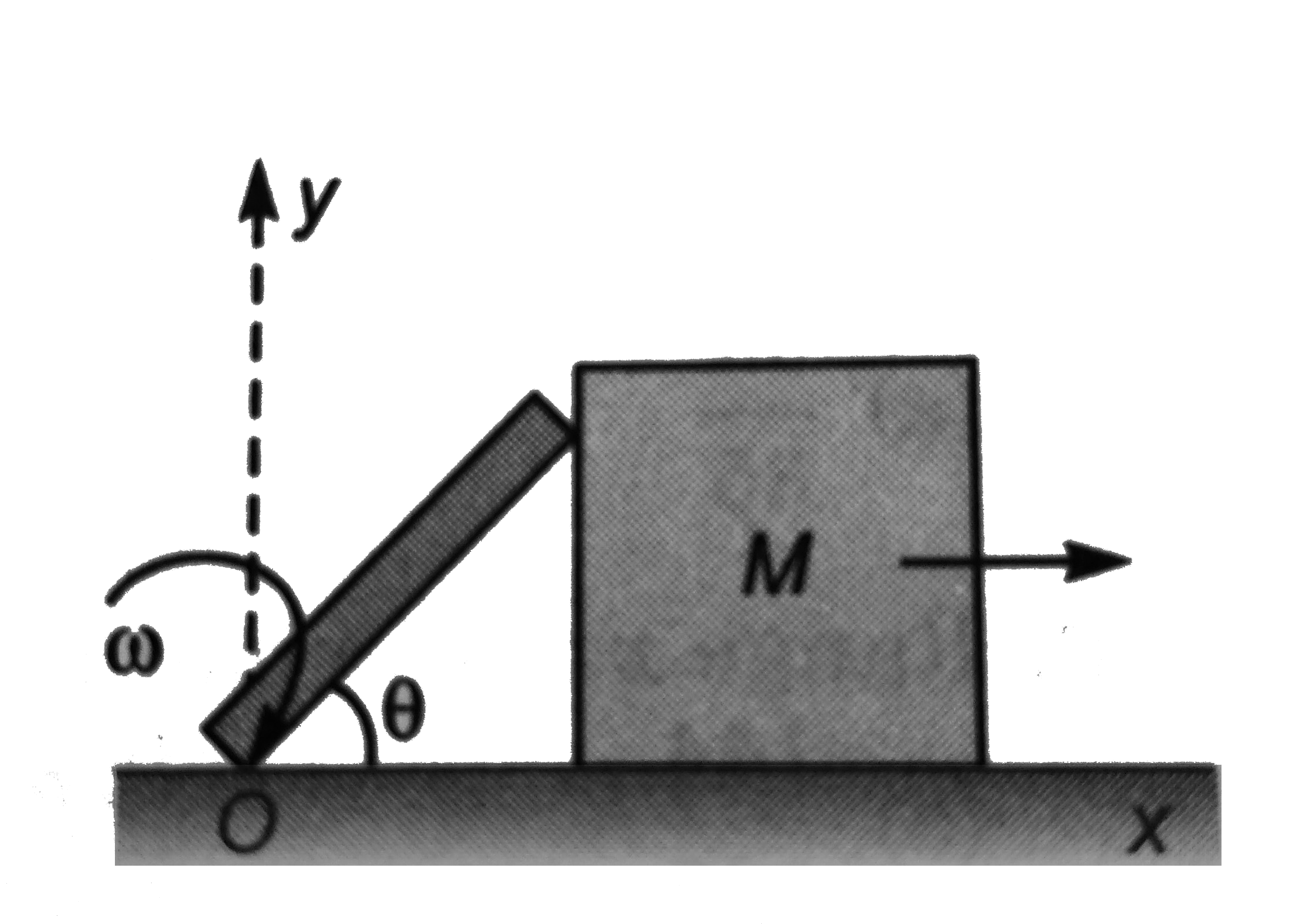
A uniform rod of mass `m` and length `l` is applied pivoted at point `O`. The rod is initially in vertical position and touching a block of mass `M` which is at rest on a horizontal surface. The rod is given a slight jerk and it starts rotating about point `O` this causes the block to move forward as shown The rod loses contact with the block at `theta=30^(@)` all surfaces are smooth now answer the following questions.
Q. The value of ratio `M//m` is

Promotional Banner

Similar Questions

Explore conceptually related problems

A uniform rod of mass m and length l is applied pivoted at point O . The rod is initially in vertical position and touching a block of mass M which is at rest on a horizontal surface. The rod is given a slight jerk and it starts rotating about point O this causes the block to move forward as shown The rod loses contact with the block at theta=30^(@) all surfaces are smooth now answer the following questions. Q. The velocity of block when the rod loses contact with the block is

A uniform rod of mass m and length l is applied pivoted at point O . The rod is initially in vertical position and touching a block of mass M which is at rest on a horizontal surface. The rod is given a slight jerk and it starts rotating about point O this causes the block to move forward as shown The rod loses contact with the block at theta=30^(@) all surfaces are smooth now answer the following questions. Q. The velocity of block when the rod loses contact with the block is

A uniform rod of mass m and length l is applied pivoted at point O . The rod is initially in vertical position and touching a block of mass M which is at rest on a horizontal surface. The rod is given a slight jerk and it starts rotating about point O this causes the block to move forward as shown The rod loses contact with the block at theta=30^(@) all surfaces are smooth now answer the following questions. Q. The hinge reaction at O on the rod when it loses contact with the block is

A uniform rod of mass m and length l is applied pivoted at point O . The rod is initially in vertical position and touching a block of mass M which is at rest on a horizontal surface. The rod is given a slight jerk and it starts rotating about point O this causes the block to move forward as shown The rod loses contact with the block at theta=30^(@) all surfaces are smooth now answer the following questions. Q. The hinge reaction at O on the rod when it loses contact with the block is

A uniform rod of mass m and length l is applied pivoted at point O . The rod is initially in vertical position and touching a block of mass M which is at rest on a horizontal surface. The rod is given a slight jerk and it starts rotating about point O this causes the block to move forward as shown The rod loses contact with the block at theta=30^(@) all surfaces are smooth now answer the following questions. Q. The acceleration of centre of mass of rod, when it loses contact with the block is

A uniform rod of mass m and length l is applied pivoted at point O . The rod is initially in vertical position and touching a block of mass M which is at rest on a horizontal surface. The rod is given a slight jerk and it starts rotating about point O this causes the block to move forward as shown The rod loses contact with the block at theta=30^(@) all surfaces are smooth now answer the following questions. Q. The acceleration of centre of mass of rod, when it loses contact with the block is

A uniform rod of length l and mass m is free to rotate in a vertical plane about A as shown in Fig. The rod initially in horizontal position is released. The initial angular acceleration of the rod is

A uniform rod of mass m and length L is free to rotate in the vertical plane about a horizontal axis passing through its end. The rod initially in horizontal position is released. The initial angular acceleration of the rod is:

A unifrom rod of length l and mass m is free to rotate in a vertical plane about A as shown in Fig. The rod initially in horizontal position is released. The initial angular acceleration of the rod is