


Topper's Solved these Questions
Similar Questions
Explore conceptually related problems
ANURAG MISHRA-FORCE ANALYSIS-Matching type
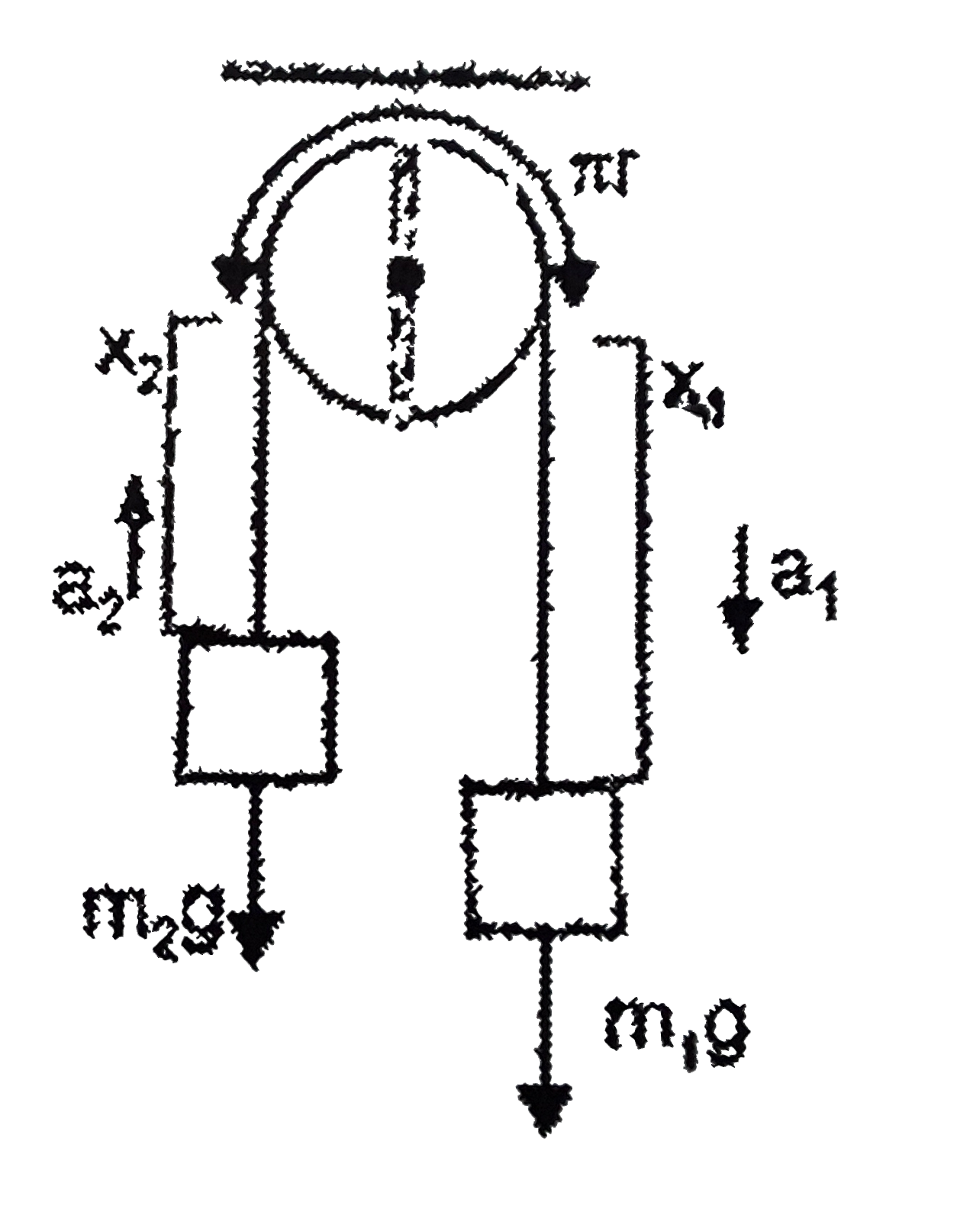
- In the figure shown the masses are attached to the inextensible string...
Text Solution
|
- A motorcycle moves around a vertical circle with a constants speed und...
Text Solution
|
- A block is projected with an initial velocity v("Block") on a long con...
Text Solution
|
- The inclined surface is rough mu = (1)/(2). For different values of m ...
Text Solution
|
- A river is flowing with speed 3 km/hr west to east. A man swims with s...
Text Solution
|
- A particle is moving on a straight line. It is initially at rest v= ...
Text Solution
|
- Match the column: |{:(,"Column -1",,"Column -2"),((A),theta=37^(@...
Text Solution
|
- Lift can move in y-axis as well as along x-axis. A ball of mass m is a...
Text Solution
|
- In the diagram strings, springs and the pulley are light and ideal. Th...
Text Solution
|
- In the situation shown, all surfaces are frictionless and triangular w...
Text Solution
|
- See the diagrams carefully in Column-1 and match each with the obeying...
Text Solution
|
- A block is placed on a rough horizontal surface. A constant force F is...
Text Solution
|
- Column-1 shows certain siruations and column-2 shows information about...
Text Solution
|
- Find unit vector in direction of friction force acting on block vecv...
Text Solution
|