Home
Class 12
CHEMISTRY
Which of the following graphs is correct...

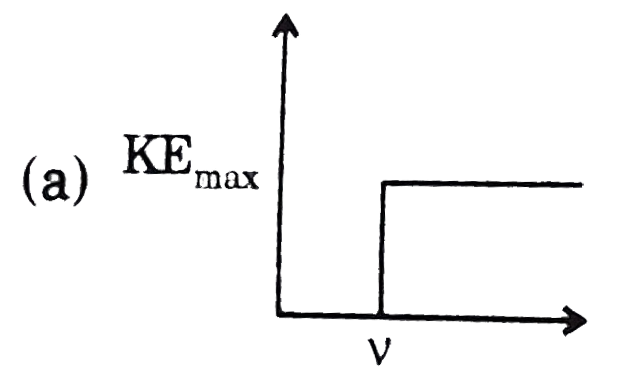
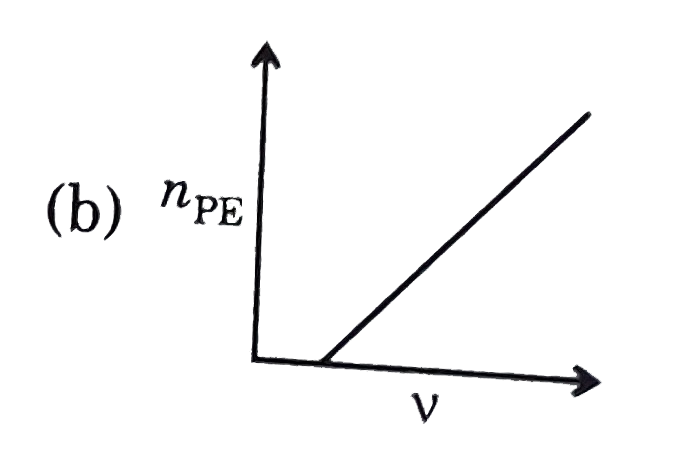
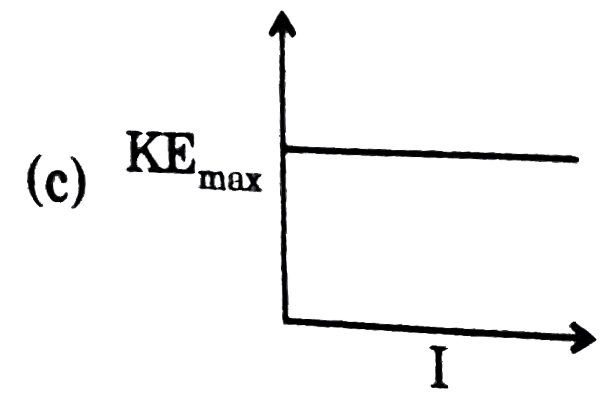
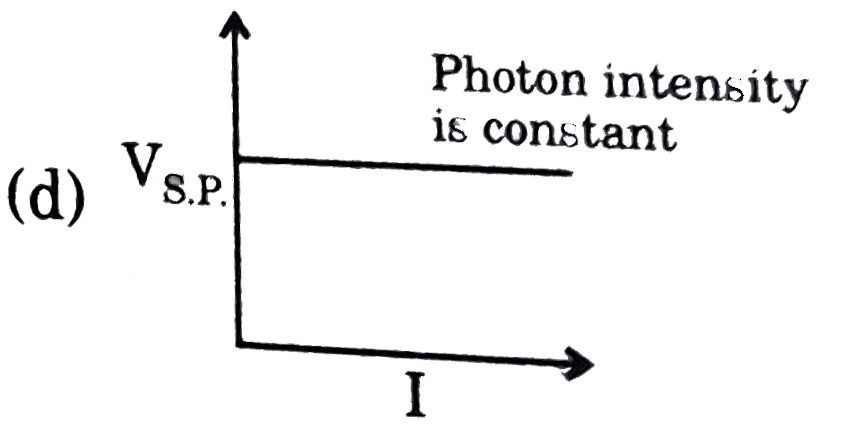
Which of the following graphs is correct with respect to phtotelectric effect ?
Where v `to` Frequency of EMR
`KE_(max) to ` Maximum kinetic energy of photon-electron
`I to ` Intensity of EMR ltbr. `V_(S.P.) to ` Stopping potential
`n_(PE) to ` Number of photon electron

A

B

C

D

Text Solution

Verified by Experts

The correct Answer is:

C
Promotional Banner

Topper's Solved these Questions

  • GRAPHICAL INTERPRETATION

    GRB PUBLICATION|Exercise D. Liquid Solutions|1 Videos
  • GRAPHICAL INTERPRETATION

    GRB PUBLICATION|Exercise Liquid Solutions|12 Videos
  • GRAPHICAL INTERPRETATION

    GRB PUBLICATION|Exercise C. Atomic Sturcture|1 Videos
  • F-BLOCK ELEMENTS

    GRB PUBLICATION|Exercise Subjective type|7 Videos
  • HYDROCARBON (ALIPHATIC)

    GRB PUBLICATION|Exercise Previous years jee questions|28 Videos

Similar Questions

Explore conceptually related problems

The ratio of slopes of K_(max) vs. V and V_(0) vs. v curves in the photoelectric effect gives (v= freqency. K_(max) = maximum kinetic energy, V_(0) =stopping potential) :

Which one of the following graphs represents the variation of maximum kinetic energy (E_K) of the emitted electrons with frequency u in photoelectric effect correctly ?

Which of the following option(s) is/are independent of both n and Z for H- like species? U_(n) = Potential energy of electron in n^(th) orbit KE_(n) = Kinetic energy of electron in n^(th) orbit l_(n) = Angular momentam of electoron in n^(th) orbit v_(n) = Velcity of electron in n^(th) orbit f_(n) = Frequency of electron in n^(th) orbit T_(n) = Time period of revolution of electron in n^(th) orbit

In a photoelectric experiment, the potential required to stop the ejection of electrons from cathode is 4V. What is the value of maximum kinetic energy of emitted Photoelectrons?

For photoelectric effect with incident photon wavelength lamda , the stopping potential is V_0 Select the correct graph.

Which of the following is correct regarding photo-electric effect? (i) The photo-electric effect takes place if lambda le lambda_(0) or upsilon ge upsilon_(0) . maximum K.E. of photo-electron K_(max) =hv=(hc)/(lambda) Einstein photo-electric effect equation hv=hv_(0) + K_(max) (ii) The maximum K.E. of electron or stopping potential V_(s)(K_(max) =eV_(s)) for a given metal depends only on frequency or wavelength of incident light and not on its intensity (iii) The saturation current (i =ne, n: number of photo-electrons ejected per unit time) depends on intensity and not frequency (iv) Normally it is assumed that one photon eject one electron. Practically several incident photons eject one electron. If quantum efficiency is given {"Quantum efficiency" =("Number of electrons ejected")/("Number of photons incident")} Number of electrons ejected must be calculated must be calculated and then calculate saturation current

Of the following statement about the photoelectric effect, which are true and which are false? (a) The greater the frequency of the incident light is, the greater is the stopping potential. (b) The greater the intensity of the incident light is, the greater is the cutoff frequency. (c) The greater the work function of the target material is, the greater is the stopping potential. (d) The greater the work function of the target material is, the greater is the cutoff frequency. (e) The greater the frequency of the incident light is, the greater is the maximum kinetic energy of the ejected electrons. (f) The greater the energy of the photons is, the smaller is the stopping potential.
