Home
Class 11
PHYSICS
Each situation in Table-1 gives graph of...

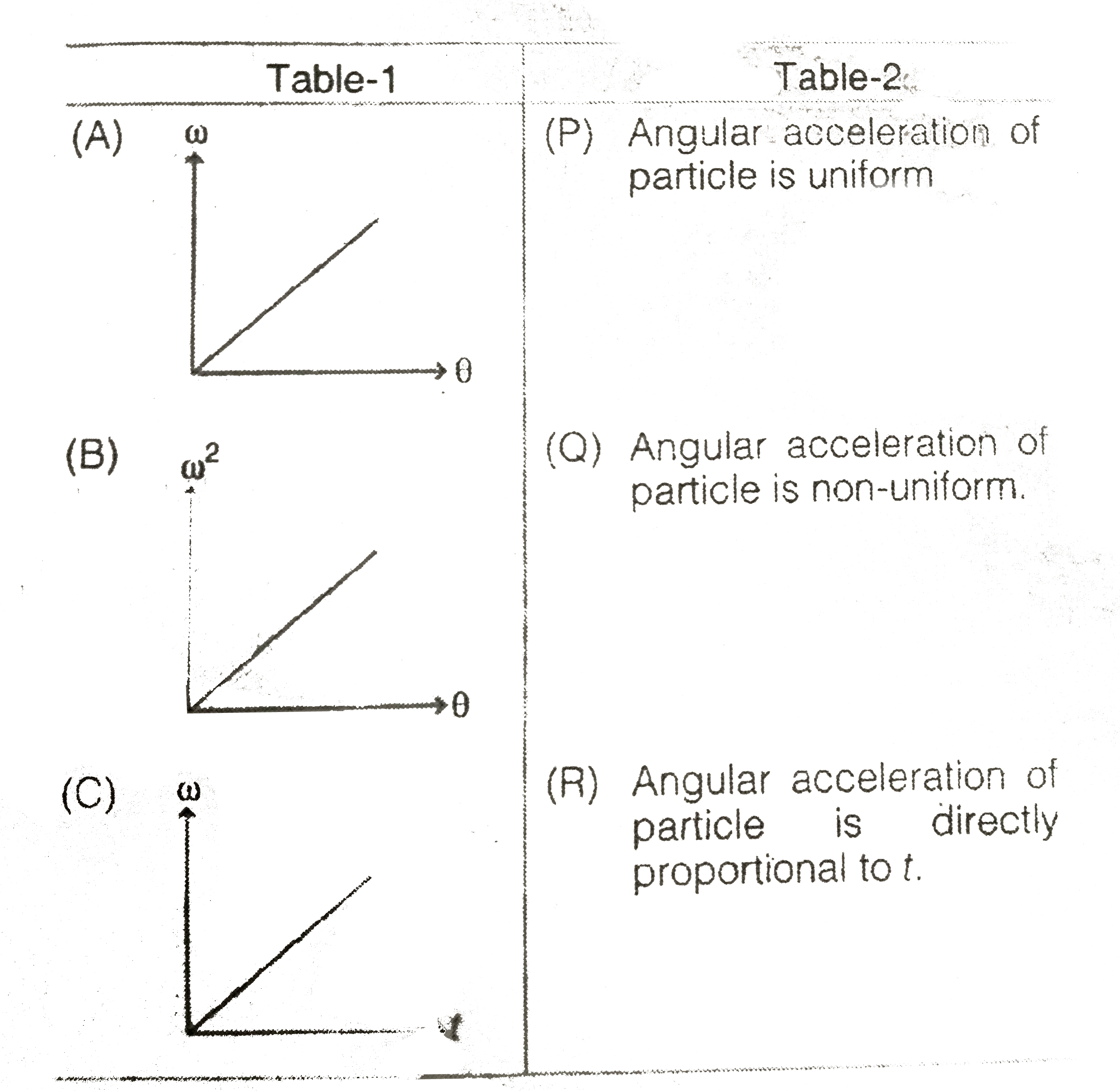
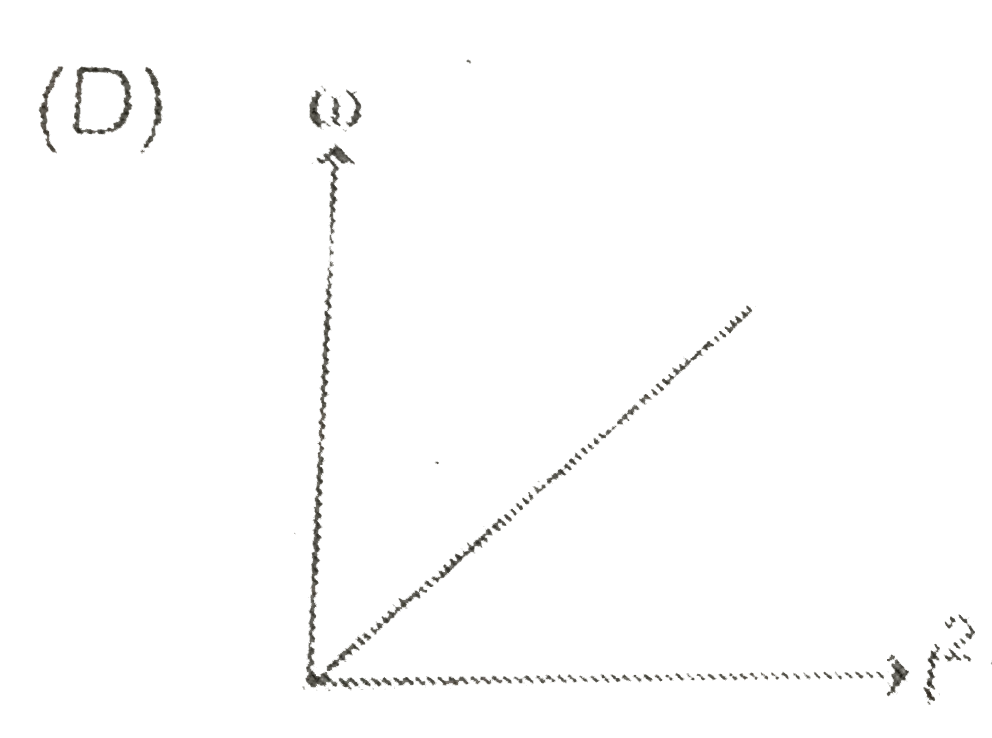
Each situation in Table-1 gives graph of a particle moving in circular path. The variables `omega, theta` and t represent angular speed (at any time t), angular displacement (in time t) and time respectively. Table-2 gives certain resulting interpretation. Match the graphs in Table-1 with statements in Table-2.

0

Text Solution

Verified by Experts

The correct Answer is:

(A)QS,(B)P,(C)P,(D)QR
Promotional Banner

Topper's Solved these Questions

  • CIRCULAR MOTION

    DC PANDEY|Exercise Integer|7 Videos
  • CIRCULAR MOTION

    DC PANDEY|Exercise Check point|45 Videos
  • CIRCULAR MOTION

    DC PANDEY|Exercise Comprehension|13 Videos
  • CENTRE OF MASS, LINEAR MOMENTUM AND COLLISION

    DC PANDEY|Exercise Level 2 Subjective|21 Videos
  • COMMUNICATION SYSTEM

    DC PANDEY|Exercise Only One Option is Correct|27 Videos

Similar Questions

Explore conceptually related problems

Table -1 gives some graph for a particle moves along x -axis in positive x -direction. The variables v,x and t represent speed of particle, x -coordinate of particle and time respectively. Table -2 gives certain resulting interpretation. Match the graph in Table -1 with the statements in Table -2.

The magnitude of displacement of a particle moving in a circle of radius a with constant angular speed omega varries with time t is

A particle is moving on a circular path of radius R with uniform angular speed omega . The magnitude of average velocityof particle during time t=0 to t=(2pi)/(3 omega) :

A particle moves along a circle of radius R with a constant angular speed omega . Its displacement (only magnitude) in time t will be

A particle moves along a circle of radius R with a constant angular speed omega . Its displacement (only magnitude) in time t will be

The displacement of a particle moving in a circular path is given by theta = 3 t^(2) + 0.8 , where theta is in radian and t is in seconds . The angular velocity of the particle at t=3 sec . Is

IF the equation for the displancement of a particle moving on a circular path is given by theta=2t^3+0.5 , where theta is in radius and t is in seconds, then the angular velocity of the particle at t=2 s is

Angular displacement ( theta ) of a flywheel varies with time as theta=2t+3t^2 radian. The angular acceleration at t=2s is given by
