Home
Class 12
CHEMISTRY
Each oxy-acid contains at least one X-OH...

Each oxy-acid contains at least one X-OH unit (X is non-metal). The H-atom of X-OH unit is ionisable and the number of -OH groups directly attach to non-metal decides the basicity of oxy-acid.
Q. Which of the following oxy-acid does not have its peroxy form having two central atoms?

A

`H_(2)N_(2)O_(2)`

B

`H_(4)P_(2)O_(6)`

C

`H_(2)S_(2)O_(6)`

D

`H_(3)PO_(3)`

Text Solution

Verified by Experts

The correct Answer is:
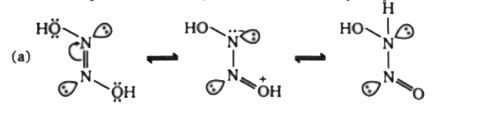
A

Promotional Banner

Topper's Solved these Questions

  • p-BLOCK ELEMENTS

    VK JAISWAL|Exercise ONE OR MORE ANSWERS IS/ARE CORRECT|97 Videos
  • p-BLOCK ELEMENTS

    VK JAISWAL|Exercise MATCH THE COLUMN|24 Videos
  • p-BLOCK ELEMENTS

    VK JAISWAL|Exercise LEVEL 2|97 Videos
  • METALLURGY

    VK JAISWAL|Exercise ASSERTION-REASON TYPE QUESTIONS|30 Videos
  • PERIODIC PROPERTIES

    VK JAISWAL|Exercise ASSERTION-REASON TYPE QUESTIONS|35 Videos

Similar Questions

Explore conceptually related problems

Which of the following in alpha -amino acids having a phenolic -OH group in its backbone ?

Species having X-O-H linkage (X=non-metal with positive oxidation state) are called oxy acids and parent acid of a non-metal may exist in two form (a)-ic form of parent oxy acid (b)-us form parent oxy acid. Q. Which of the following parent oxy acid does not have its pyro-oxy acid?

Oxyacids are acids that generally contain at least one X-OH bond (where X is generally a non-metal). Oxyacid which has same number of X-H and X-OH bonds is (where X is central atom) :

Oxyacids are acids that generally contain at least one X-OH bond (where X is generally a non-metal). (P) one removal of one mole of water produces (Q) underset("An oxyacid")((P))" "-H_(2)Orarr" "underset("An oxyacid")((Q)) Which of the following will not follow the above process?

Oxiacid are compounds in which X-OH bond is present where X is a non-metal generally. For which of the following oxyacids all hydrogen atoms are not replaceable in nature?

Phosphorus forms a number of oxoacids which differ in their structures and oxidation state of phosphorus. All the acids contain phosphorus atom//atoms linked tetrahedrally to four other atoms or groups. Each of them has at least one P=O or P rarr O unit and one P-OH unit. The OH group is ionisable but H atom linked directly to P is non-ionisabl. Structures of all the acids are considered to be derived either from phosphorus acid or phosphoric acid. The acid which forms two series of salts is.

Phosphorus forms a number of oxoacids which differ in their structures and oxidation state of phosphorus. All the acids contain phosphorus atom//atoms linked tetrahedrally to four other atoms or groups. Each of them has at least one P=O or P rarr O unit and one P-OH unit. The OH group is ionisable but H atom linked directly to P is non-ionisabl. Structures of all the acids are considered to be derived either from phosphorus acid or phosphoric acid. Which of the following is a cycle oxoacid ?

Acetone on addition to methyl magnesium bromide froms a complex, which on decomposition with acid gives X and Mg(OH)Br. Which one of the following is X?

VK JAISWAL-p-BLOCK ELEMENTS-LEVEL 3 (PASSAGE TYPE)
  1. Each oxy-acid contains at least one X-OH unit (X is non-metal). The H-...

    Text Solution

    |

  2. Each oxy-acid contains at least one X-OH unit (X is non-metal). The H-...

    Text Solution

    |

  3. Each oxy-acid contains at least one X-OH unit (X is non-metal). The H-...

    Text Solution

    |

  4. Formation of a bridge bond is best explained by molecular orbital theo...

    Text Solution

    |

  5. Formation of a bridge bond is best explained by molecular orbital theo...

    Text Solution

    |

  6. Formation of a bridge bond is best explained by molecular orbital theo...

    Text Solution

    |

  7. (i) P+C("carbon")+Cl(2) to Q+CO uaarr (ii) Q+H(2)O to R+HCl (iii) ...

    Text Solution

    |

  8. (i) P+C("carbon")+Cl(2) to Q+CO uaarr (ii) Q+H(2)O to R+HCl (iii) ...

    Text Solution

    |

  9. (i) P+C("carbon")+Cl(2) to Q+CO uaarr (ii) Q+H(2)O to R+HCl (iii) ...

    Text Solution

    |

  10. Q. Compound (D)+I^(-)+H^(-) to Gas Evolved gas is similar to:

    Text Solution

    |

  11. Q. Yellow ppt. of compound (I) is insoluble in:

    Text Solution

    |

  12. Q. type of hybridization of central atomo of gas (B) is:

    Text Solution

    |

  13. The following flow diagram represent the industrial preparation of nit...

    Text Solution

    |

  14. The following flow diagram represent the industrial preparation of nit...

    Text Solution

    |

  15. Species having X-O-H linkage (X=non-metal with positive oxidation stat...

    Text Solution

    |

  16. Species having X-O-H linkage (X=non-metal with positive oxidation stat...

    Text Solution

    |

  17. Species having X-O-H linkage (X=non-metal with positive oxidation stat...

    Text Solution

    |

  18. Consider the following sequence of reactions, if A is sulphuric acid, ...

    Text Solution

    |

  19. Consider the following sequence of reactions, if A is sulphuric acid, ...

    Text Solution

    |

  20. Consider the following sequence of reactions, if A is sulphuric acid, ...

    Text Solution

    |

