

Home
Class 12
CHEMISTRY
Which of the following curves represent ...

Which of the following curves represent the Henry's law

A

B

C

D

Text Solution

AI Generated Solution

The correct Answer is:
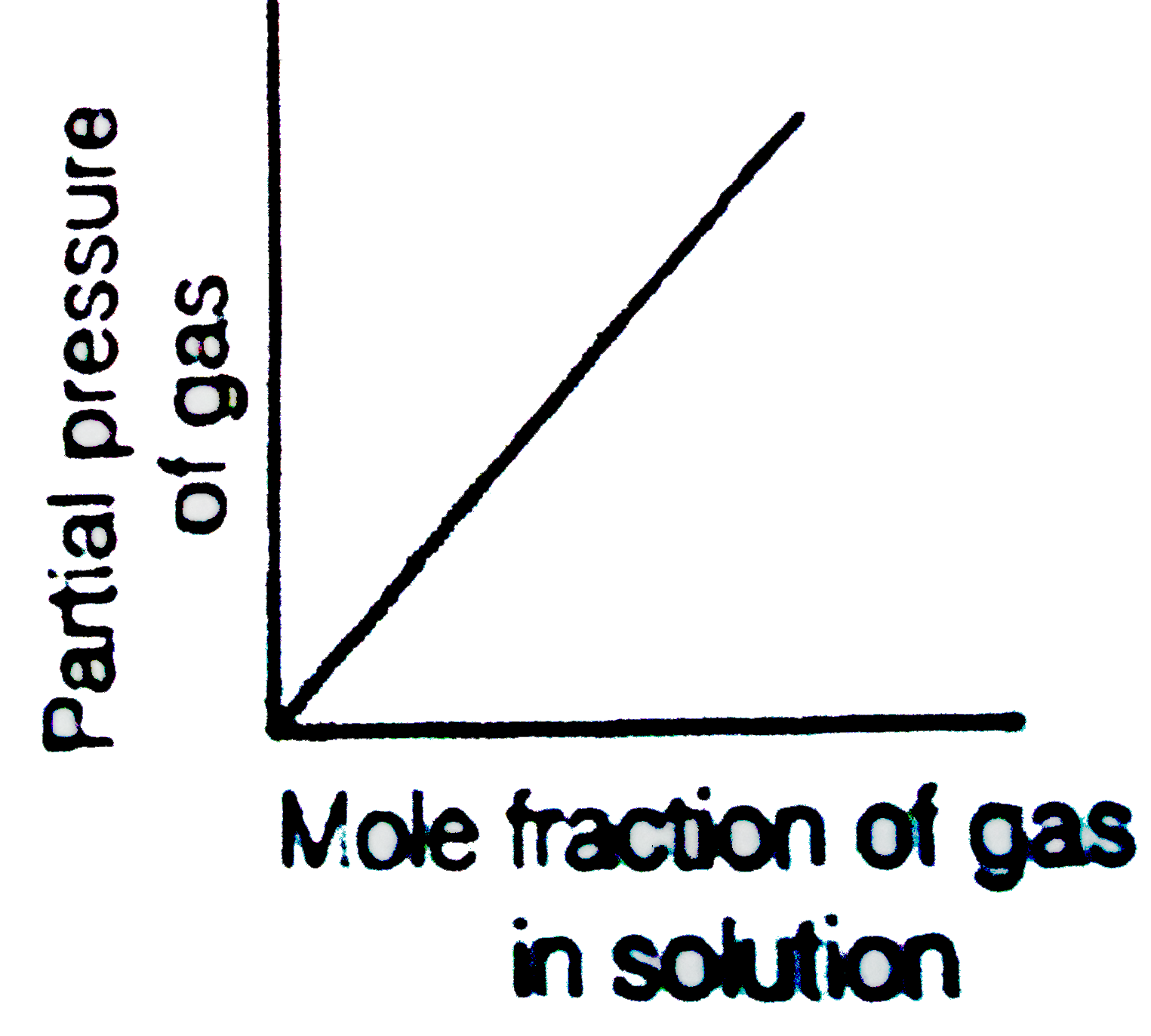
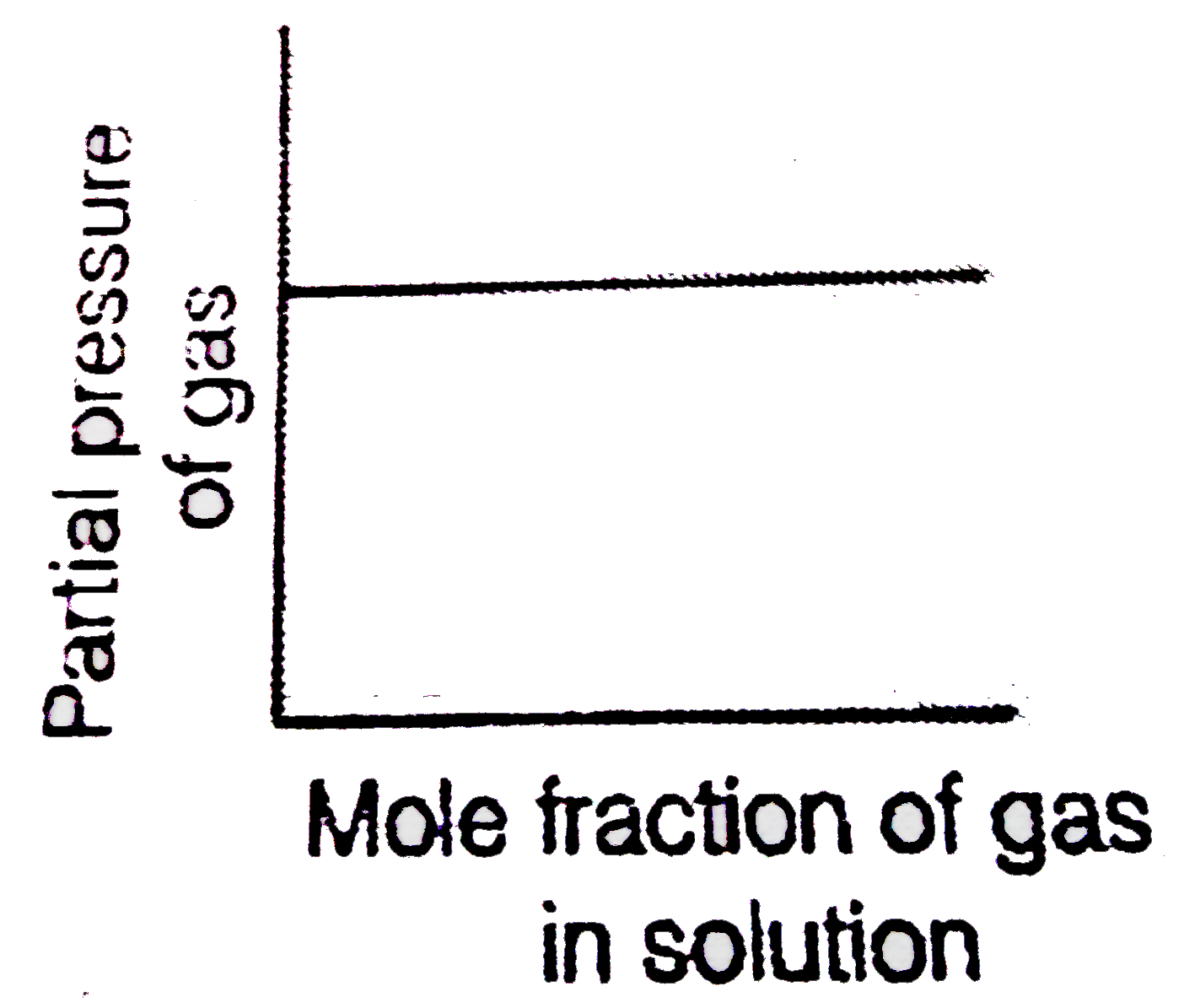
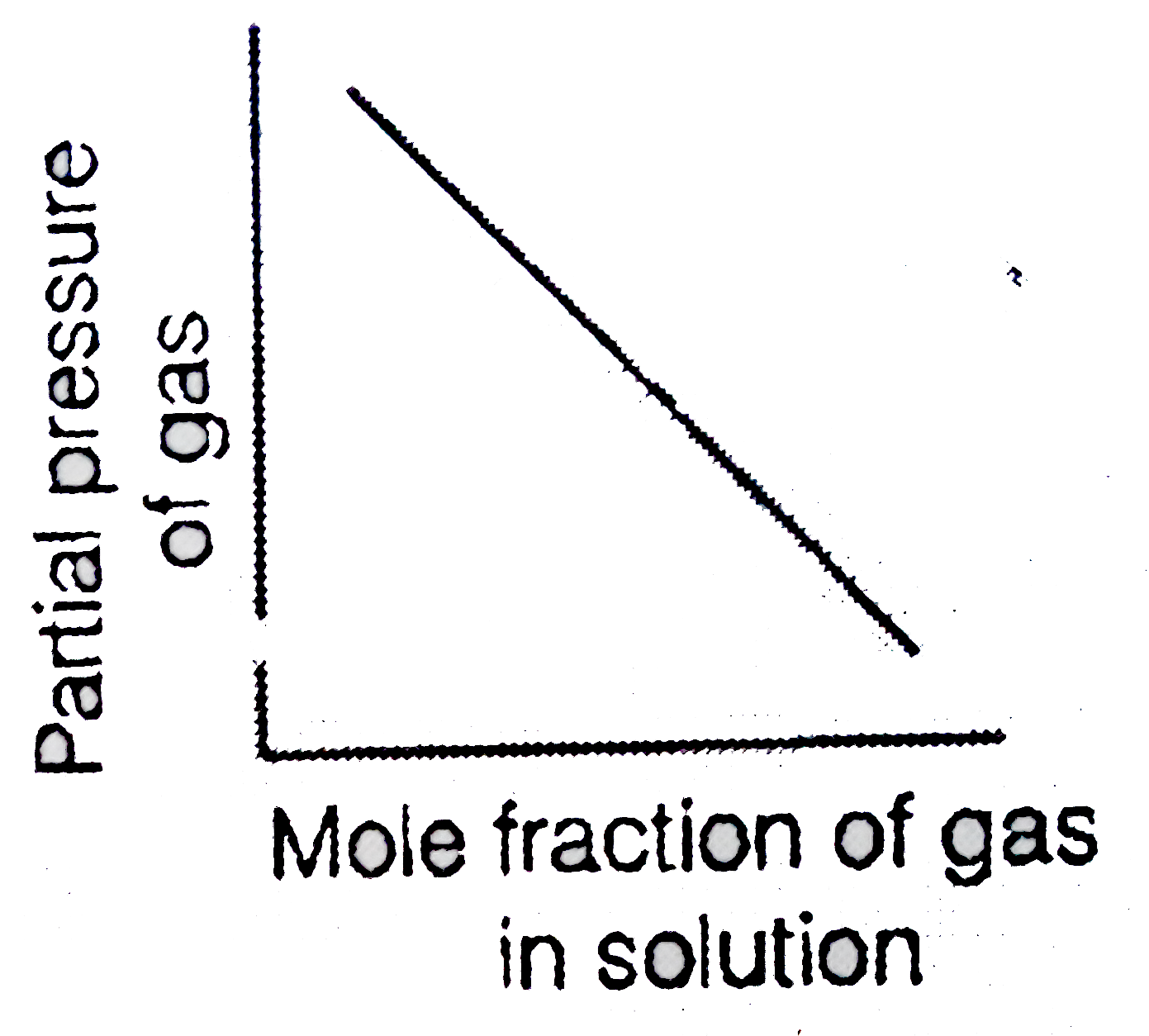
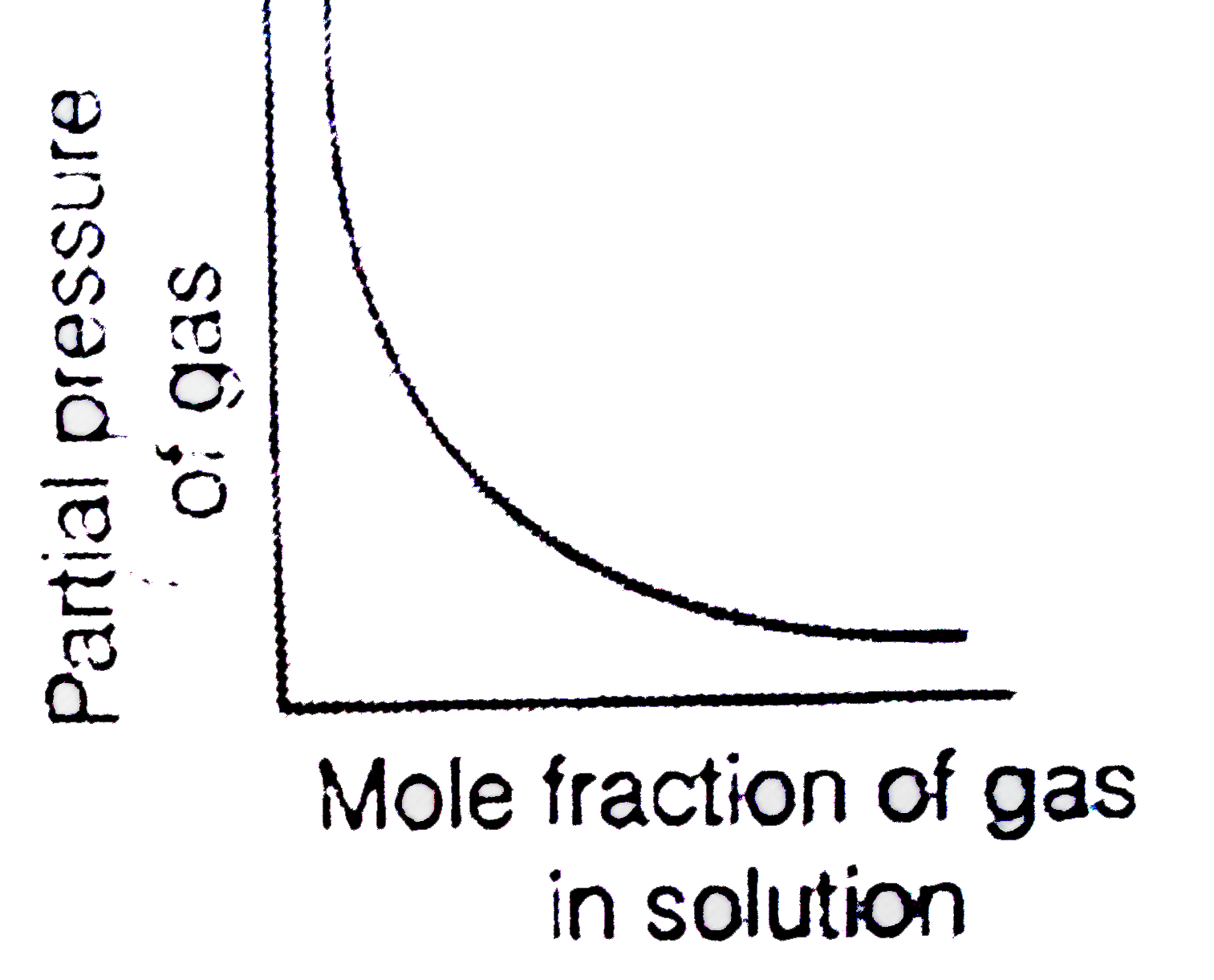
To determine which of the given curves represents Henry's Law, we can follow these steps: ### Step 1: Understand Henry's Law Henry's Law states that the partial pressure of a gas (P) is directly proportional to the mole fraction of that gas (X) in a solution. This relationship can be expressed mathematically as: \[ P = k_H \cdot X \] where \( k_H \) is the Henry's Law constant. ### Step 2: Identify the Variables In the context of the graph provided: - The x-axis represents the mole fraction of the gas in the solution (X). - The y-axis represents the partial pressure of the gas (P). ### Step 3: Analyze the Relationship Since P is directly proportional to X, we can rewrite the equation as: \[ P = k_H \cdot X \] This indicates that as the mole fraction (X) increases, the partial pressure (P) also increases linearly. ### Step 4: Determine the Graph Characteristics A linear relationship between P and X means that the graph will be a straight line. The equation of a straight line can be expressed as: \[ y = mx + c \] In this case: - \( y \) corresponds to \( P \) - \( x \) corresponds to \( X \) - \( m \) is the slope, which is positive since \( k_H \) is a positive constant. - \( c \) is the y-intercept, which is zero in this case because when \( X = 0 \), \( P \) must also be 0 (the line passes through the origin). ### Step 5: Conclusion The correct curve representing Henry's Law will be a straight line that passes through the origin (0,0) on the graph of partial pressure (P) versus mole fraction (X).

To determine which of the given curves represents Henry's Law, we can follow these steps: ### Step 1: Understand Henry's Law Henry's Law states that the partial pressure of a gas (P) is directly proportional to the mole fraction of that gas (X) in a solution. This relationship can be expressed mathematically as: \[ P = k_H \cdot X \] where \( k_H \) is the Henry's Law constant. ### Step 2: Identify the Variables ...
Promotional Banner

Topper's Solved these Questions

  • QUESTION-PAPERS-2018

    BITSAT GUIDE|Exercise CHEMISTRY|40 Videos
  • SOLVED PAPER 2017

    BITSAT GUIDE|Exercise PART II (CHEMISTRY)|40 Videos

Similar Questions

Explore conceptually related problems

Which of the following curves represents the Henry's law ?

Which of the following curves represents the Henry's law?

Which of the following curves represent(s) Boyle's law?

State Henry's law.

Which of the following curves does not represent Boyle's law?

Which of the following curve does not represent Gay-Iusacc's law?

BITSAT GUIDE-SOLUTION-All Questions
  1. Vapour pressure of pure A is 70 mm of Hg at 25^(@)C. If it forms an id...

    Text Solution

    |

  2. Lowering of vapour pressure is highest for

    Text Solution

    |

  3. Which of the following curves represent the Henry's law

    Text Solution

    |

  4. If p^(@) and p(a) are the vapour pressures of the solvent and solution...

    Text Solution

    |

  5. Which one of them is more volatile component?

    Text Solution

    |

  6. The elevation in boiling point would be highest for

    Text Solution

    |

  7. A 0.2 molal aqueous solution of weak acid (HX) is 20% ionised. The fre...

    Text Solution

    |

  8. The vant Hoff factor for a very dilute solution of Fe(2)(SO(4))(3) is

    Text Solution

    |

  9. The latent heat of vaporisation of water is 9700 "Cal/mole" and if the...

    Text Solution

    |

  10. The relative lowering of vapour pressure of an aqueous solution contai...

    Text Solution

    |

  11. The osmotic pressure of one molar solution at 27^(@)C is

    Text Solution

    |

  12. The freezing point of 0.1 M solution of glucose is -1.86^(@)C. If an e...

    Text Solution

    |

  13. The van't Hoff factor for 0.1 M Ba(NO(3))(2) solution is 2.74. The deg...

    Text Solution

    |

  14. In a 0.2 molal aqueous solution of a week acid HX, the degree of ionis...

    Text Solution

    |

  15. Acetic acid exists in benzene solution in the dimeric form. In an actu...

    Text Solution

    |

  16. A compound X undergoes tetramerisation in a given organic solvent. The...

    Text Solution

    |

  17. The freezing point (in .^@C) of solution containing 0.1 g of K(3)[Fe(C...

    Text Solution

    |

  18. 0.004 M Na(2)SO(4) is isotonic with 0.01 M glucose. Degree of dissocia...

    Text Solution

    |

  19. Colligative properties of a solution depends upon

    Text Solution

    |

  20. Among the following 0.10 m aqueous solutions, which one will exhibit t...

    Text Solution

    |