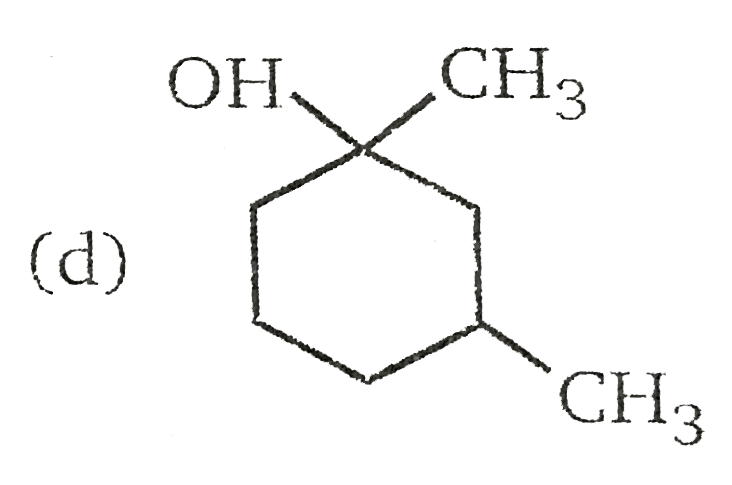
Copper (I) salts have a remarkable effect on organometallic reagents.
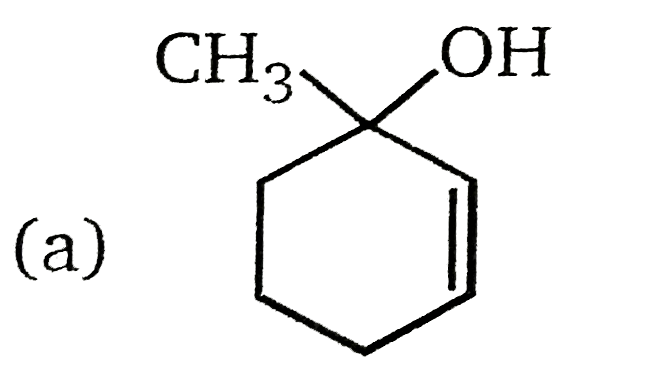
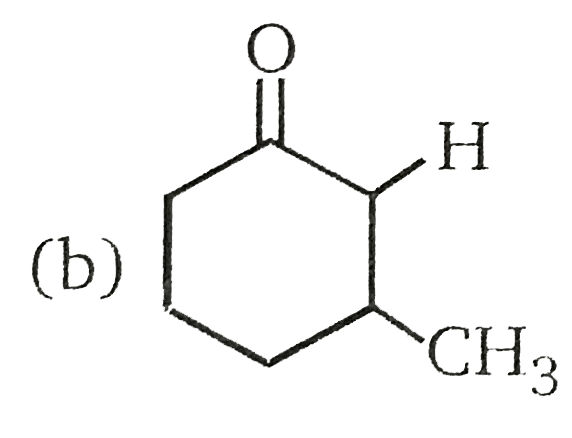
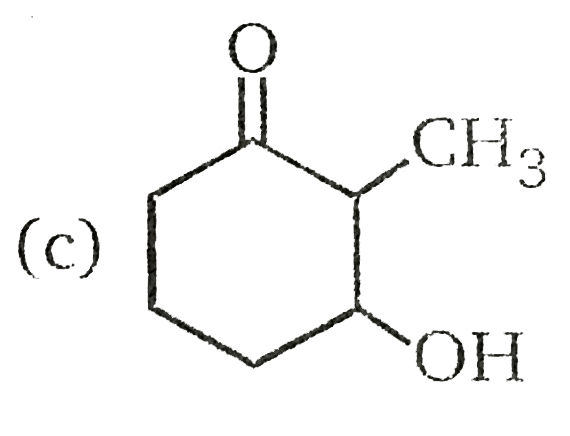
Grignard reagents add directly to the carbonyl group of `alpha, beta`-unsaturated aldehydes and ketones to give allylic alcohols: you have seen several examples of this, and you can now explain it by saying that the hard Grignard reagent prefers to attack the harder C=O rather than the softer C=C electrophilic centre. Here is a further example-the addition of MgBr to a cyclic ketone to give an allylic alcohol, plus , as it happens, some of a diene that arises from this alcohol by loss of water (dehydration). Below this example is the same reaction to which a very small amount (just 0.01 equivalents, that is 1%) of copper (I) chloride has been added. The effect of the copper is dramatic: it makes the Grignard reagent undergo conjugate addition, with only a trace of the diene.
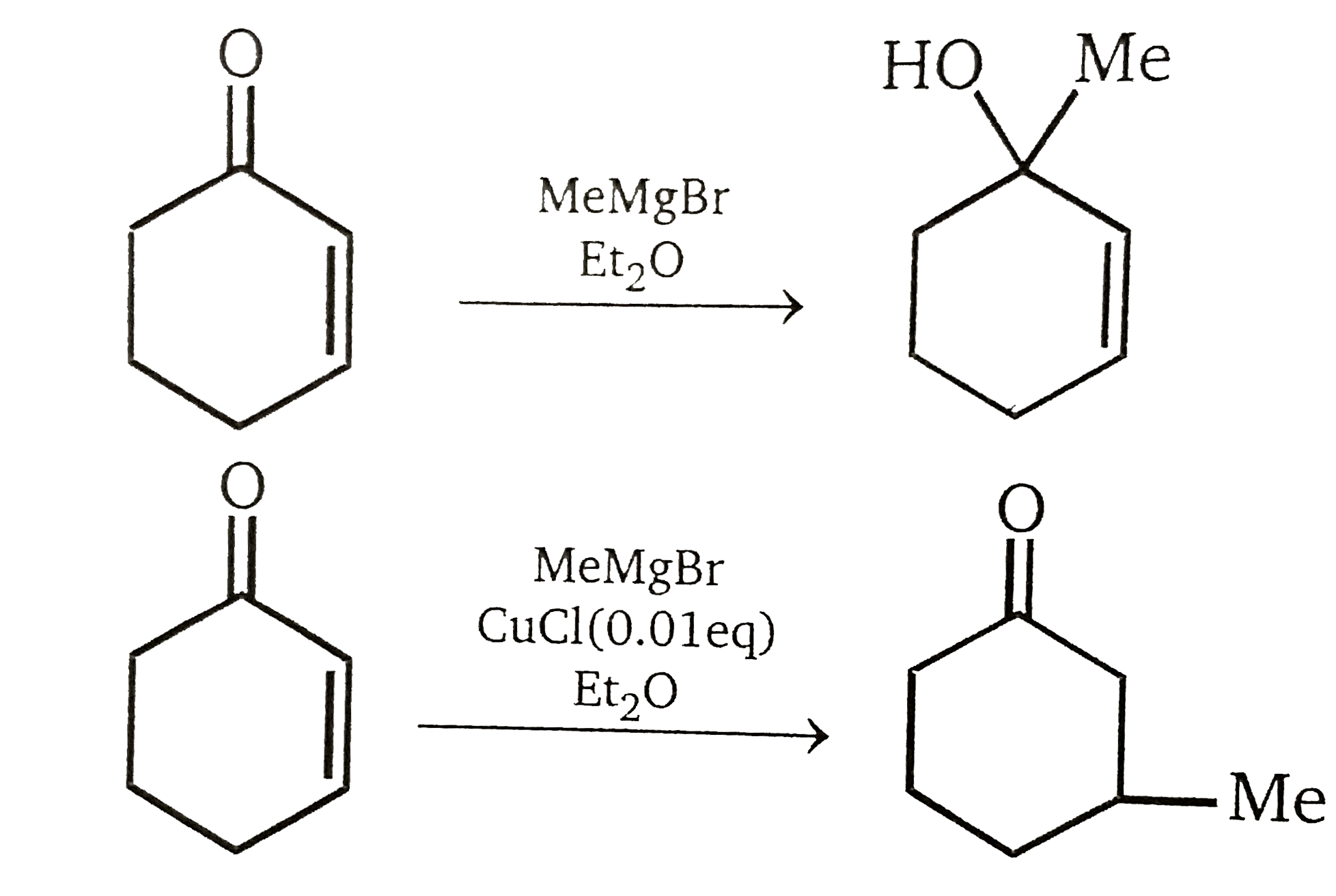
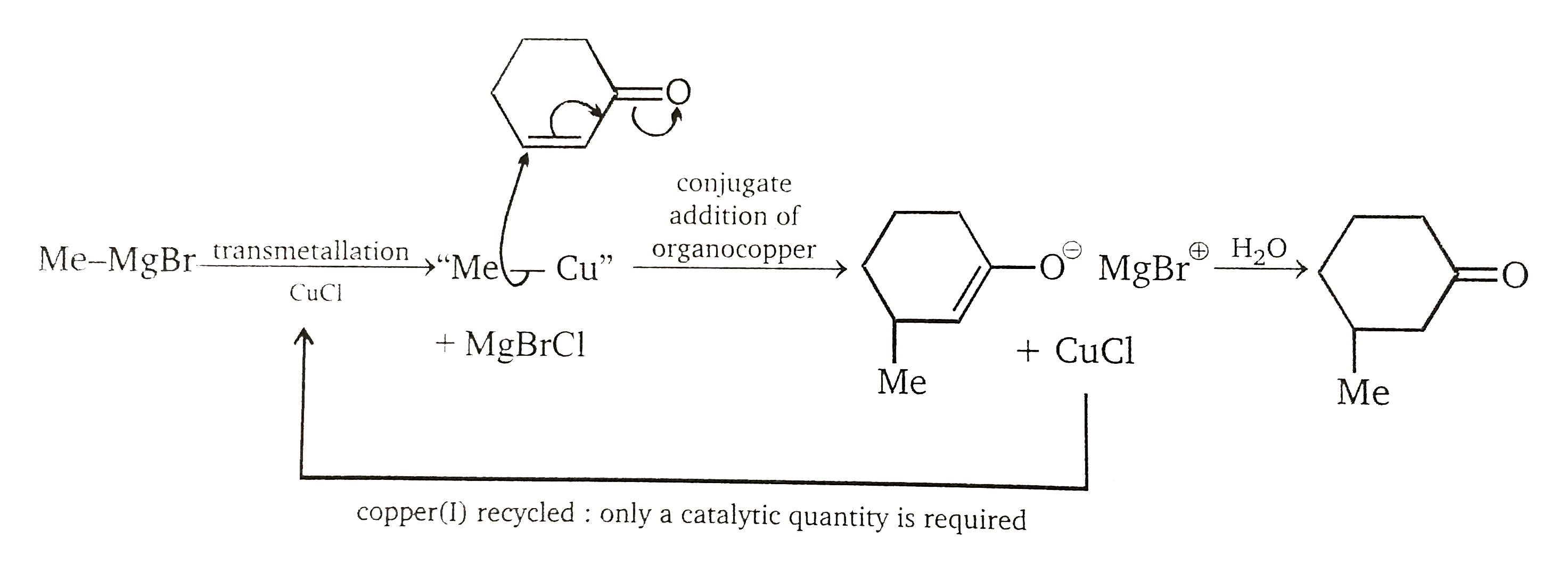
Organocopper reagents undergo conjugate addition:
The copper works by transmetallating the Grignard reagent to give an organocopper reagent. Organocoppers are softer than Grignard reagents, and add in a conjugate fashion to the softer C=C double bond. Once the organocopper had added, the copper salt is available to transmetallate some more Grignard, and only a catalytic amount is required.