Home
Class 12
CHEMISTRY
Which beta-keto acid shown will not unde...

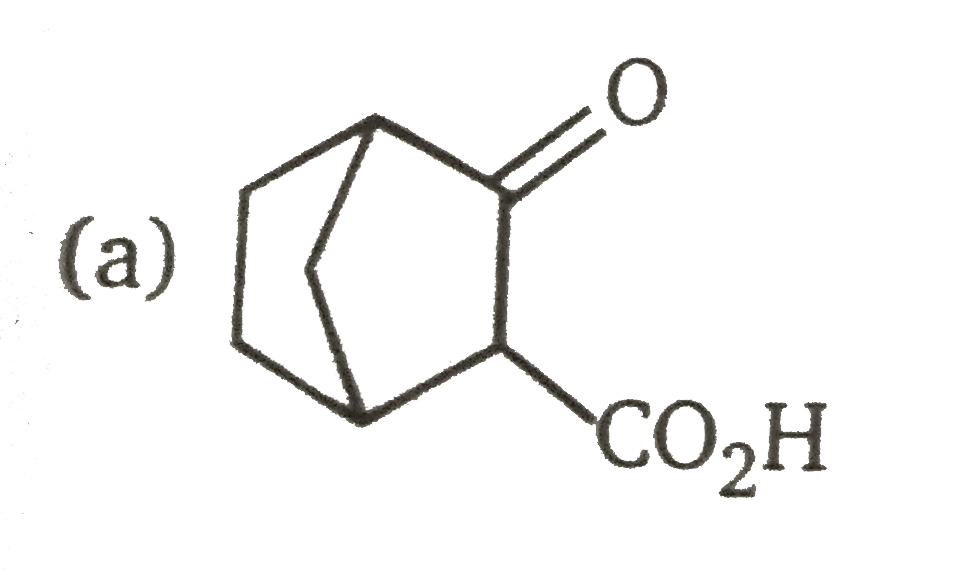
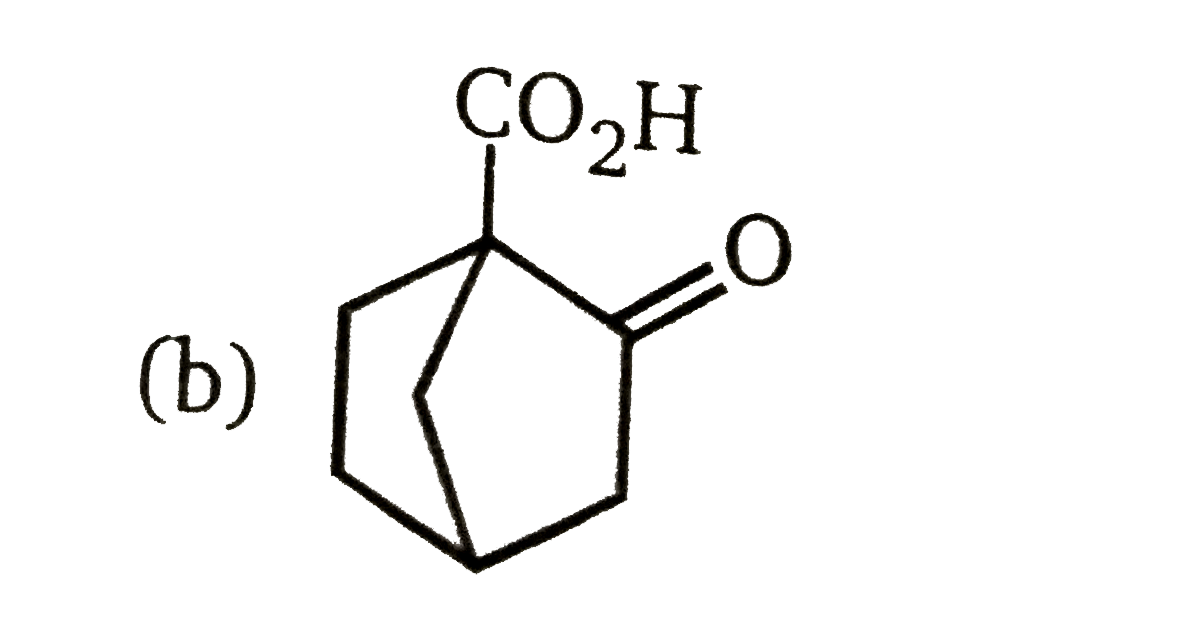
Which `beta`-keto acid shown will not undergo decarboxylation?

A

B

C

`Ph-overset(O)overset(||)(C)-CH_(2)-CO_(2)H`

D

`CH_(3)-overset(O)overset(||)(C)-CH_(2)-CO_(2)H`

Text Solution

AI Generated Solution

The correct Answer is:

To determine which beta-keto acid will not undergo decarboxylation, we need to understand the structure of beta-keto acids and the conditions under which decarboxylation occurs. ### Step-by-Step Solution: 1. **Identify Beta-Keto Acids**: - Beta-keto acids are compounds that contain a carboxylic acid group (-COOH) and a ketone group (C=O) at the beta position relative to each other. The structure can be represented as R1C(=O)C(=O)OH, where R1 is any alkyl or aryl group. 2. **Understand Decarboxylation**: - Decarboxylation is the process where a carboxyl group (-COOH) is removed from a molecule, releasing carbon dioxide (CO2). For beta-keto acids, this typically occurs when the resulting structure after decarboxylation can stabilize the remaining molecule. 3. **Analyze the Structures**: - For each beta-keto acid structure, we need to analyze whether the decarboxylation will lead to a stable compound or if it will violate any rules of organic chemistry, such as the Bredt's rule. 4. **Bredt's Rule**: - Bredt's rule states that a double bond cannot be formed at a bridgehead position in a bicyclic compound. If the decarboxylation of a beta-keto acid leads to a structure that has a double bond at a bridgehead carbon, it will not occur. 5. **Evaluate Each Beta-Keto Acid**: - Examine each beta-keto acid provided in the question. Identify which one, upon decarboxylation, would lead to a structure that violates Bredt's rule. 6. **Conclusion**: - The beta-keto acid that has a structure leading to a double bond at a bridgehead carbon after decarboxylation will not undergo decarboxylation. This is the compound that violates Bredt's rule. ### Final Answer: The beta-keto acid that will not undergo decarboxylation is the one that leads to a structure violating Bredt's rule.

To determine which beta-keto acid will not undergo decarboxylation, we need to understand the structure of beta-keto acids and the conditions under which decarboxylation occurs. ### Step-by-Step Solution: 1. **Identify Beta-Keto Acids**: - Beta-keto acids are compounds that contain a carboxylic acid group (-COOH) and a ketone group (C=O) at the beta position relative to each other. The structure can be represented as R1C(=O)C(=O)OH, where R1 is any alkyl or aryl group. 2. **Understand Decarboxylation**: ...
Promotional Banner

Topper's Solved these Questions

  • CARBOXYLIC ACID AND THEIR DERIVATIVES

    MS CHOUHAN|Exercise Level 1 (Q.1 To Q.30)|1 Videos
  • CARBOXYLIC ACID AND THEIR DERIVATIVES

    MS CHOUHAN|Exercise Level 1 (Q.31 To Q.60)|1 Videos
  • CARBOHYDRATES

    MS CHOUHAN|Exercise MULTIPLE CORRECT CHOICE TYPE (INTEGER TYPE)|1 Videos
  • CARBOXYLIC ACIDS AND THEIR DERIVATIVES

    MS CHOUHAN|Exercise ADDITIONAL OBJECTIVE QUESTIONS (Matrix Match Type)|1 Videos

Similar Questions

Explore conceptually related problems

Which of the following beta -keto carboxylic acid does not undergo decarboxylation on heating ?

A dicarboxylic acid of the form does not undergo decarboxylation on strong heating rather gives anothr stable product of molecular weight 100. Identify n.

Which of the following will undergo decarboxylation easily?

Which one of the following acids undergoes decarboxylation on strong heating:
